Beyond the Battlefield: How History Informs Your Strategic Decisions
8 minGolden Hook & Introduction
SECTION
Nova: Atlas, I've got a challenge for you. We're talking about how history, of all things, can profoundly inform strategic decisions. In five words, give me your gut reaction to that idea. Go!
Atlas: History... strategic... insights... patterns... future.
Nova: Ooh, that's a good five. Not a 'meh' in sight. I like 'insights, patterns, future.' It perfectly encapsulates why we're diving into some truly foundational texts today. We’re exploring how looking backward can actually propel you forward in ways you might not expect.
Atlas: That makes me wonder, though. For a lot of people, history is just... dates and names, right? Like, a dusty textbook. How do we make that relevant, especially for someone trying to navigate a fast-evolving market or build the next big thing?
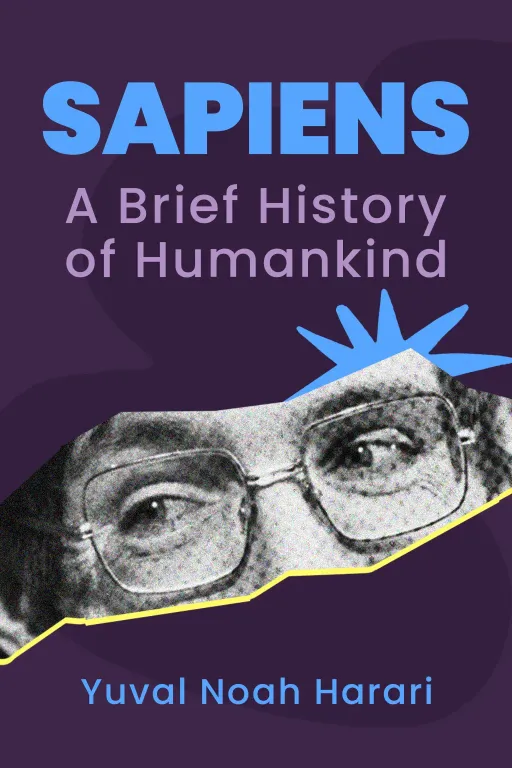
Nova: Exactly, and that's where these two incredible books come in. We're talking about Yuval Noah Harari's global phenomenon,, and the absolute classic, by Will and Ariel Durant. Harari, a historian with a knack for blending biology, anthropology, and economics, gives us this sweeping, interdisciplinary view of humanity. And the Durants, after writing their monumental 11-volume, distilled millennia of human experience into this incredibly concise and insightful little book. They weren't just chroniclers; they were synthesizers of human patterns.
Atlas: So, we're not just reading old stories; we're extracting frameworks. I like that.
Nova: Precisely. And the first big idea we need to tackle, something both these works address, is what we're calling "The Blind Spot."
The Blind Spot – Overcoming Short-Termism
SECTION
Nova: Many strategists, especially in our data-driven age, focus intensely on the immediate. They're looking at quarterly reports, real-time analytics, the latest market trends. All crucial, of course. But this hyper-focus can create a significant blind spot: missing the deep, recurring patterns woven throughout human history.
Atlas: Wait, hold on. Our world changes at light speed now. How is ancient history relevant when we're dealing with AI breakthroughs, global supply chain disruptions, and overnight social media movements? That sounds a bit out there.
Nova: That’s a totally fair question, and it's the one many people ask. The key isn't to look for exact historical parallels, like "Rome fell, so my startup will too!" It's about understanding the of human behavior, power dynamics, economic cycles, and societal reactions that repeat, even if the technological wrapping paper is different.
Atlas: Can you give an example for someone in a high-stakes, fast-moving environment? Like, how does knowing about, say, Roman economic cycles help a modern tech company or an architect designing for the next decade?
Nova: Absolutely. Think about the dot-com bubble of the late 90s, or the housing market crash of 2008. These weren't unique events. History is littered with examples of speculative bubbles, irrational exuberance, and subsequent corrections. The Dutch Tulip Mania in the 17th century, for instance. People were paying insane amounts for tulip bulbs! The specifics are different—tulips versus tech stocks—but the human psychology, the herd mentality, the belief that "this time is different," that's the recurring pattern.
Atlas: Right, like the underlying of human behavior in financial markets haven't fundamentally changed, even if the assets have. So, understanding that historical pattern of boom and bust can help a modern strategist anticipate potential market corrections, or at least build more resilient plans that aren't solely predicated on infinite growth.
Nova: Exactly. Or consider societal reactions to disruptive technology. When the printing press emerged, it wasn't just a new way to make books; it transformed religion, politics, and education. There was immense excitement, but also fear, censorship attempts, and societal upheaval. Understanding those historical reactions to massive information shifts can inform how a company rolls out a revolutionary AI or genetic editing technology today, anticipating both the opportunities and the ethical and social backlashes.
Atlas: That’s a great way to put it. It's not about predicting the future with a crystal ball, but seeing the invisible forces that have always influenced human systems. So, zooming out actually helps you see the immediate data more clearly.
Shared Fictions & Repeating Patterns – Unpacking Human Nature
SECTION
Nova: And that naturally leads us to the fundamental question: what these recurring patterns, and how do books like and illuminate them? Harari, in, introduces this incredibly powerful concept of "shared fictions" or "inter-subjective realities."
Atlas: Shared fictions? So, like, Santa Claus? Or the Tooth Fairy?
Nova: Kind of, but on a grander, more impactful scale. Harari argues that humans dominate the planet not because we're the strongest or fastest, but because we can cooperate flexibly in large numbers, often around things that don't physically exist. Things like nations, money, human rights, corporations, even laws—they’re all powerful collective stories we agree to believe in. They are 'fictions' in the sense that they are human constructs, not biological realities.
Atlas: Wow, that’s profound. So, like, a company's brand identity, its mission statement, even the perceived value of its stock—those are all shared fictions, and if they're compelling enough, people cooperate, invest, and build around them?
Nova: Precisely! Think about the power of a compelling brand narrative, or a strong company culture. These are shared fictions that align thousands, sometimes hundreds of thousands, of people towards a common goal. They influence market psychology, team cohesion, and even economic stability. When those shared fictions begin to crumble, you see market crashes, political instability, or corporate failures.
Atlas: That gives me chills. And then Durant comes in, showing us the of those fictions over millennia.
Nova: Beautifully put. While Harari gives us a mechanism for cooperation, Durant, through his, distills the that emerge from that cooperation. He looks at governance, economics, war, social change, and human nature across thousands of years. He shows that while technology changes, fundamental human behaviors often repeat.
Atlas: So, Harari explains we cooperate—through these shared stories—and Durant shows us the of what happens when we do, like the rise and fall of empires, the accumulation and redistribution of wealth, the constant tension between liberty and order. For someone designing complex systems or trying to understand market dynamics, recognizing those cycles feels absolutely critical.
Nova: Exactly. Durant highlights the enduring human desire for power, security, and meaning. He observes that things like the concentration of wealth, the dynamics of revolution, or the constant struggle between individual liberty and social order have played out repeatedly in different guises across civilizations. Understanding these patterns allows you to see current challenges not as isolated events, but as part of a grand, evolving human story. It's about recognizing the deep currents beneath the surface waves.
Synthesis & Takeaways
SECTION
Nova: So, what we're really talking about here is moving beyond the immediate battlefield of data. It's about equipping yourself with a strategic foresight that comes from understanding the grand sweep of human endeavor. Harari and Durant challenge us to zoom out, to see that our current challenges—whether in business, personal growth, or societal structures—are echoes of patterns that have played out before.
Atlas: I guess that makes sense. It's not about being a historian, but about being a more informed strategist. It's about understanding that the human element, the 'soft skills' of cooperation, belief, and behavior, are actually the hardest and most enduring variables in any strategic equation. And history is our best textbook for that.
Nova: Absolutely. It provides a crucial advantage, allowing you to anticipate shifts and build more robust, resilient plans precisely because you're tapping into a deeper understanding of cause and effect, of human nature, and of the powerful, invisible forces that shared fictions create.
Atlas: That makes me wonder for our listeners, especially those who are strategists, architects, or seekers of mastery: how might a long-term historical perspective change your approach or predictions for a current strategic challenge you're facing right now? Think about it.
Nova: Indeed. This is Aibrary. Congratulations on your growth!