Beyond the Battlefield: How History Informs Your Strategic Decisions
9 minGolden Hook & Introduction
SECTION
Nova: What if the very data you rely on to make strategic decisions, the meticulously gathered metrics and projections, is actually blinding you to the most crucial patterns?
Atlas: Whoa. Blinding us? That feels almost heretical, Nova. For a strategist, data is king. We live and die by the numbers. Are you really suggesting our most trusted resource might be a strategic vulnerability?
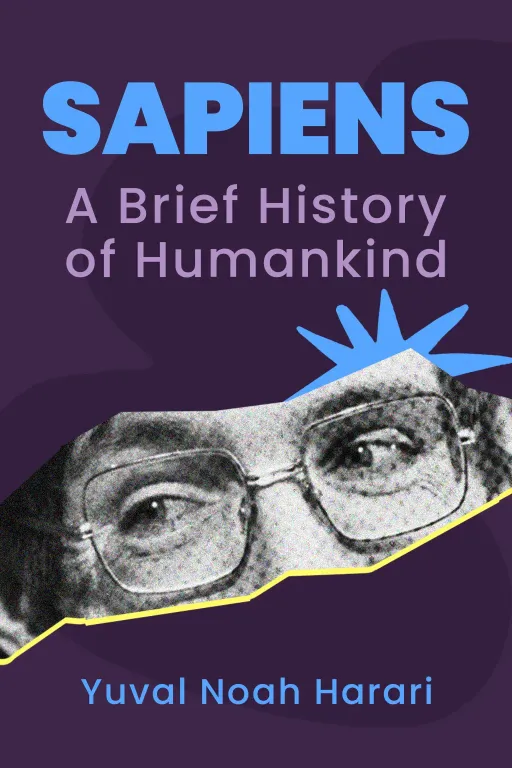
Nova: Absolutely, Atlas. It's a profound blind spot. Because while immediate data shows us is happening right now, it often fails to tell us it's happening, or more importantly,. And today, we're cracking open two intellectual giants that reveal this blind spot and offer a powerful remedy: Yuval Noah Harari's and Will and Ariel Durant's.
Atlas: Ah, Harari, the historian who truly redefined how we see humanity’s journey, using biology and narrative to explain our past. And the Durants, who spent a lifetime distilling millennia of human experience into a remarkably concise set of observations. That's a powerful pairing.
Nova: It truly is. Harari, with his incredible interdisciplinary approach, shook the world by explaining how human history isn't just about dates and battles, but about invisible forces like shared fictions and collective belief. And the Durants, well, their is like a masterclass in pattern recognition, showing us that while the scenery changes, the play itself often repeats.
Atlas: Okay, so we're talking about going beyond the spreadsheet. I'm intrigued. For anyone who designs with purpose and seeks mastery, understanding these foundational principles is key. So, how does this "blind spot" actually manifest in the real world?
The Blind Spot: Why Short-Term Data Fails Us
SECTION
Nova: It manifests as strategic myopia, Atlas. We become so fixated on the quarter-to-quarter, the immediate market shifts, the latest tech trends, that we miss the deep, almost geological shifts happening beneath the surface. Imagine a captain navigating a ship by only looking at the waves directly in front of the bow, completely ignoring the long-term ocean currents or the distant weather patterns.
Atlas: I know that feeling. The pressure to deliver immediate results can be intense. It’s natural to focus on what's right in front of you when the stakes are high. But you're saying that's precisely where the danger lies?
Nova: Precisely. Take Blockbuster, for instance. They had all the immediate data. They knew what movies people were renting that week, their customer demographics, their store performance. What they missed was the long-term historical pattern of technological disruption and changing consumption habits. Netflix pitched them an online streaming service, and Blockbuster, looking at its current profitable model, famously scoffed.
Atlas: That's a classic. They were so focused on optimizing the horse and buggy business, they couldn't see the car coming. So, their data wasn't wrong, it was just incomplete, lacking that historical context.
Nova: Exactly. Their short-term data told them they were thriving. Their strategic blind spot was their inability to recognize the historical precedent of new distribution models disrupting old ones, or how human desire for convenience consistently reshapes industries. The cause was their tunnel vision, the process was clinging to a familiar but fading model, and the outcome was, well, we all know how that story ended.
Atlas: That's a powerful example. It makes me wonder, how many modern companies are making similar mistakes today, just in different forms? It seems like this isn't about ignoring market analytics altogether, but about contextualizing them.
Unlocking Foresight: Lessons from 'Sapiens' and 'The Lessons of History'
SECTION
Nova: Not ignore them at all, Atlas, but contextualize them. And that's where these books become incredibly powerful tools for strategic foresight. Let's start with Harari and his concept of "shared fictions" from. He argues that human cooperation, which allows us to build cities, nations, and massive economies, is driven by shared stories, beliefs, and narratives that exist only in our collective imagination. Things like money, laws, corporations, even brands themselves are shared fictions.
Atlas: Shared fictions? Like what, a brand loyalty? How does that influence my strategic planning for a new product launch, for example?
Nova: Absolutely. Consider the rise of cryptocurrency. Initially, it was a fringe concept, but a shared fiction of decentralization, financial freedom, and a new digital economy gained traction. People in it, invested in it, and built entire industries around it. A strategist who only looked at traditional financial data in the early 2010s would have dismissed it. But someone understanding the historical pattern of new "shared fictions" creating new forms of cooperation and value, might have seen its potential.
Atlas: So, understanding these invisible forces, these collective beliefs, helps us predict where new value might emerge or where old structures might crumble. That's a fascinating macro lens on market dynamics. But what about the lens? What does add to this?
Nova: That's where the Durants come in, providing the perfect complement. Their central insight is that while technology, cultures, and specific events change, fundamental human behaviors often repeat. Greed, fear, ambition, tribalism, the desire for status, the struggle for power – these are constant. They're the underlying code of human nature, and they play out in predictable patterns across millennia.
Atlas: So basically, human nature is constant. How does that help me, say, in managing a complex team or predicting organizational resistance to change? Because that's a very real strategic challenge for architects of new systems.
Nova: It gives you a profound predictive advantage. Think about organizational change. History is littered with examples of established powers resisting innovation, even when it's clearly superior. The Luddites smashing looms, the Roman Empire's reluctance to adopt certain technologies for fear of disrupting social order. In a modern corporation, this might manifest as departments resisting new software, or teams clinging to outdated methodologies.
Atlas: Right, like that one department that just to adopt the new CRM system, even though it would make everyone's lives easier. It's not about the software, is it? It's about fear of the unknown, loss of perceived control, or just plain inertia.
Nova: Exactly. It's the human element repeating. The Durants show us that these are not isolated incidents but echoes of ancient patterns. A strategist who understands this knows that resistance isn't necessarily logical; it's often psychological and deeply rooted in human behavioral history. So, instead of just pushing harder with new data, they might look to historical examples of how change was successfully introduced, or how tribal loyalties were navigated.
Atlas: That's incredibly insightful. So, gives us the grand narrative of collective belief and cooperation, explaining the macro dynamics. And gives us the repeating patterns of individual and group psychology, explaining the micro mechanics. Together, it’s like having a 4D map for strategic planning.
Synthesis & Takeaways
SECTION
Nova: It is, Atlas. This isn't about becoming a historian who memorizes dates; it's about becoming a more profound architect of the future, someone who sees the underlying currents shaping the landscape. It's about moving from merely reacting to data to truly anticipating the future by understanding the deep past.
Atlas: That's a powerful reframing. So for our listeners, who are navigating their own strategic challenges right now—be it scaling a startup, managing a complex project, or even personal career planning—how might a long-term historical perspective fundamentally change their approach or predictions for its outcome?
Nova: It means recognizing that your current challenge isn't an isolated event. It's a chapter in a much longer human story. Ask yourself: what shared fictions are at play in this situation? And what recurring human behaviors, what ancient patterns of fear, ambition, or cooperation, are shaping the actions of the people involved? By asking these questions, you move beyond the immediate data and tap into a wellspring of millennia-old wisdom. It's about seeing your current moment not as unique, but as a fractal repeating a grand design.
Atlas: And that, for any strategist, is the ultimate advantage. It's not just about winning the current battle; it's about understanding the entire war, past, present, and future.
Nova: Absolutely. It’s about building plans that are robust enough to withstand the predictable patterns of human nature and the inevitable shifts in our collective fictions.
Atlas: That’s a truly empowering way to think about strategy. Thanks, Nova.
Nova: My pleasure, Atlas.
Nova: This is Aibrary. Congratulations on your growth!