Beyond Logic: The Power of Story in Shaping Reality
8 minGolden Hook & Introduction
SECTION
Nova: Atlas, five words. Describe the most powerful, yet often invisible, force shaping human civilization. Go.
Atlas: Oh, that's a good one. Invisible, binding, ancient, future-making, stories.
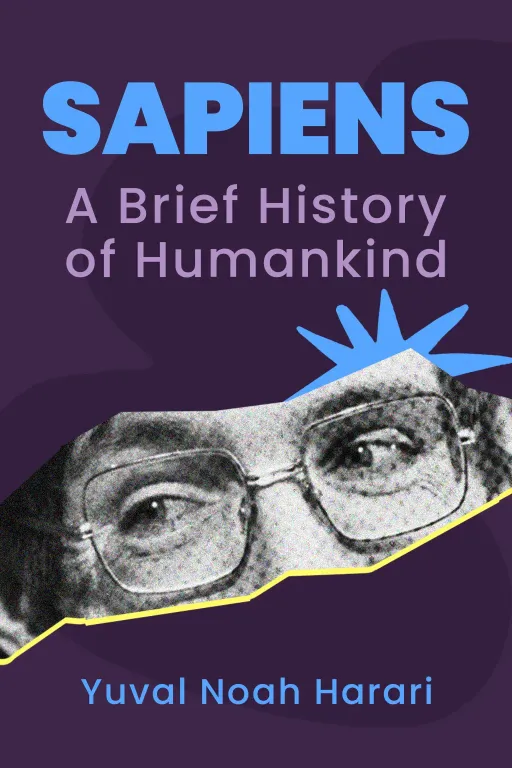
Nova: Ooh, "future-making," I like that. You just perfectly encapsulated the essence of what we're diving into today with by Yuval Noah Harari. What's truly fascinating is Harari, a medieval historian by training, actually first published this as in Hebrew before it became the global phenomenon. It was this incredible leap from academic history to this sweeping, interdisciplinary view of humanity.
Atlas: That's amazing. A medieval historian cracking the code of modern society? That sounds like a story in itself. But wait, "future-making stories"? Are we talking about science fiction, or something... deeper?
The Primacy of Shared Fictions
SECTION
Nova: Much deeper. Harari argues that Homo Sapiens dominate the planet not because we're the strongest or fastest, but because of our unique ability to believe in what he calls "shared fictions" or "collective myths." These aren't lies; they're stories we all agree to believe, even though they don't physically exist anywhere else.
Atlas: Hold on. So, things like... money? Or nations? You're saying those are "fictions"? I mean, my bank account feels incredibly real when I look at it.
Nova: Exactly! That's the brilliance of it. Money is a perfect example. A dollar bill, a digital number on a screen – it has no inherent value. It's just a piece of paper or a data point. But because billions of people across the globe collectively believe in its value, it becomes a powerful, tangible force that allows strangers to cooperate on a massive scale. You can trade it for food, shelter, technology, even though the person selling you those things has no personal relationship or trust with you.
Atlas: That makes me wonder... how does that translate to something like a modern company? As someone who thinks about building systems for people, I'm always looking at how organizations function.
Nova: It’s the same underlying principle. Think about a massive corporation – let’s say, a global tech giant. It's not a physical entity you can touch. It's a legal fiction, a story we've invented and collectively agreed upon. This "company" has rights, responsibilities, assets, and liabilities. Millions of people, from engineers to marketers to shareholders, cooperate daily towards its goals. They don't all know each other; they don't personally trust every single individual within that vast network.
Atlas: Right, like how could you? It's impossible.
Nova: Precisely. They cooperate because they all believe in the story of the company – its brand, its mission, its legal structure, its value. This shared belief allows for complex division of labor, investment, and innovation that no other species can achieve. A chimpanzee troop can only cooperate with about 150 individuals, based on personal knowledge and trust. We, thanks to these shared fictions, built cities, nations, and global supply chains.
Atlas: Wow. So basically, you're saying our ability to tell and believe in stories is literally the operating system of human civilization. It's not just a nice-to-have; it's the foundational code.
Crafting Compelling Visions for Collective Action
SECTION
Nova: That’s a great way to put it, Atlas. And once you understand that stories are the bedrock, you realize that overlooking their power is a huge blind spot, especially for leaders and innovators. This naturally leads us to our second core idea: how understanding this allows us to intentionally craft more compelling visions and foster deeper collective action.
Atlas: Okay, so if everything is a story, how do we, as founders and builders, use that to our advantage? How do we go from recognizing these fictions to actually creating something meaningful and sustainable?
Nova: It's about moving from passive observation to active creation. If our reality is shaped by narratives, then we can consciously design narratives that inspire, unite, and drive progress. It's not about deception; it's about articulating an authentic purpose in a way that resonates deeply. Think about the space race. The objective facts were daunting: immense technical challenges, huge costs, high risk.
Atlas: Yeah, incredible risk.
Nova: But the story wasn't just "put a rocket into space." It was "we choose to go to the moon... not because it is easy, but because it is hard; because that goal will serve to organize and measure the best of our energies and skills." That was a story of human potential, national pride, and pushing boundaries. This narrative mobilized an entire nation, countless scientists, and vast resources, all united by a shared, compelling vision.
Atlas: That's a powerful example. So, it's about framing a vision not just as a goal, but as a narrative that people can emotionally invest in. But how do you, as a leader, identify or create foundational story for your team or organization? How do you ensure it’s not just a fancy mission statement?
Nova: It starts with deep reflection, which, ironically, is one of our growth recommendations for our listeners. What are your core values? What future are you genuinely trying to build? What problem are you solving that truly matters? The story isn't invented out of thin air; it's distilled from the authentic "why" of your existence. For founders and leaders, it's about connecting the objective facts – the product, the market, the technology – to a larger human narrative of progress, impact, and meaning.
Atlas: So you're saying the "Architect" side of our listeners, who build systems, needs to connect with the "Psychologist" side, who understands human connection and motivation. It's not just about the blueprint; it's about the story the blueprint tells.
Nova: Exactly! It’s about recognizing that whether it's a startup, a community project, or even your own personal journey, you're always operating within and contributing to ongoing narratives. The question isn't you're telling a story, but story you're telling, and if it's truly serving the path you want to create.
Synthesis & Takeaways
SECTION
Atlas: That's honestly a profound shift in perspective. We often prioritize objective facts, data-driven decisions, and logical frameworks, which are all crucial. But overlooking the power of story limits our ability to lead, innovate, and even understand ourselves. The idea that everything from money to nations, to even our personal identities, are ultimately shared fictions we've agreed upon… that's a massive unlock.
Nova: It truly is. It's the ultimate meta-insight. The stories we tell ourselves, about who we are, what our purpose is, and what our organizations stand for – these aren't just feel-good sentiments. They are the invisible architecture of our reality. They dictate our cooperation, our conflicts, our progress, and our limitations. Recognizing this means you can stop being a passive participant in pre-existing narratives and start intentionally crafting ones that truly serve your highest aspirations.
Atlas: That makes me wonder, then, for everyone listening right now, what foundational stories – personal, team, or societal – are currently shaping your path, and are they truly serving you? It's a deep question, but one we all need to ask. For those who are seeking deeper product empathy, or wanting to build unbreakable teams, understanding this narrative power is absolutely essential.
Nova: Absolutely. Take the time for that reflection. Journal your insights. Because the answers, as always, are within you, waiting to be articulated into a story that can move mountains.
Nova: This is Aibrary. Congratulations on your growth!