

History's Echoes: Understanding Our Present Through the Past
Golden Hook & Introduction
SECTION
Nova: What if the biggest technological innovations of our time aren't actually new, but just sophisticated echoes of ancient human desires and cognitive biases that have been playing out for tens of thousands of years?
Atlas: Whoa. Okay, that’s a pretty bold claim. When I think of AI, or quantum computing, or even just our hyper-connected social media, I think 'unprecedented,' 'never before seen.' How can something so cutting-edge be, well, ancient?
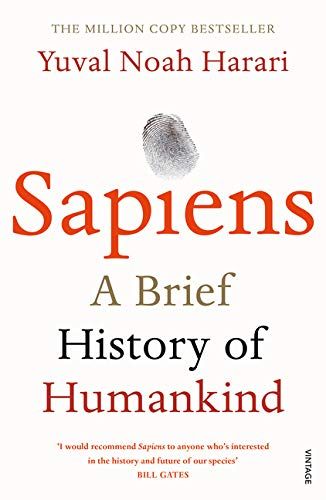
Nova: It’s a fantastic question, and it's precisely what we're diving into today, drawing on two monumental works that reshape how we see our past and, by extension, our future. First, we'll explore Yuval Noah Harari's global phenomenon, "Sapiens: A Brief History of Humankind." This book, which became a bestseller and sparked conversations across every continent, is renowned for its sweeping, interdisciplinary narrative, blending history with biology, economics, and philosophy. Harari, a historian by trade, truly challenged conventional historical narratives by focusing on the collective fictions that bind us.
Atlas: Right, "Sapiens." It really makes you think differently about what makes us.
Nova: Absolutely. And then, we'll turn to "The Lessons of History" by Will and Ariel Durant. This concise masterpiece distills a lifetime of historical study by the Pulitzer Prize-winning husband-and-wife team. It's acclaimed for its synthesis of millennia of human experience into profound, often stark, observations on the nature of civilization, human behavior, and progress, offering wisdom that resonates across generations. Together, these books offer a powerful lens through which to view our supposedly novel modern world.
Atlas: So, you're saying our tech isn't as new as we think. That's a fascinating reframe.
Nova: Exactly. Let's start with Harari and his concept of the Cognitive Revolution. He argues that around 70,000 years ago, a shift in our cognitive abilities allowed Homo sapiens to create and believe in shared fictions. Think about it: myths, religions, nation-states, even corporations. These aren't tangible things, but they allow millions of strangers to cooperate effectively.
The Cognitive and Agricultural Revolutions: Ancient Echoes in Modern Tech
SECTION
Atlas: Are you saying our social media algorithms are just digital versions of ancient tribal myths? Binding us with shared stories, but now at a global scale? That’s wild.
Nova: It's an incredibly powerful analogy, Atlas! Consider the early stories of gods or spirits. They provided a common framework for behavior, rules, and identity. Fast forward to today: what are brands, national identities, or even the shared narratives around a tech startup's mission, other than powerful, collective fictions? They dictate how we interact, who we trust, and what we strive for. Our brains are still wired for narrative, for belonging, and for belief in something larger than ourselves. Social media taps directly into that ancient need, just with a much faster feedback loop and global reach.
Atlas: That makes me wonder about the Agricultural Revolution, too. Harari talks about it as humanity's first big 'trap.' How does that connect to modern tech?
Nova: Ah, the Agricultural Revolution, about 12,000 years ago. It was arguably humanity's first major technological leap, right? We went from nomadic hunter-gatherers to settled farmers. On the surface, it seemed like progress: more food, stable settlements. But Harari brilliantly points out it was often a "luxury trap." We started working harder, for longer hours, to produce more food, but our diets became less varied, and our lives often became less fulfilling. It led to hierarchy, property, and the constant pressure to produce more.
Atlas: So, the 'hustle culture' we see today, constantly chasing more, despite often feeling less fulfilled – that's a direct lineage from deciding to farm wheat ten thousand years ago? That's kind of heartbreaking, but it makes so much sense.
Nova: Precisely. The drive for efficiency, for accumulation, for control over resources – these are all ancient echoes amplified by modern technology. The invention of the plow led to the need for fences, which led to property laws, which led to states to enforce those laws. Today, we see companies constantly optimizing, pushing for growth, often at the expense of employee well-being or environmental health, all because we're caught in this historical loop of believing 'more' is always 'better.' Our tech tools just make it easier to pursue that 'more' with incredible speed and scale.
Atlas: It’s like we built this incredibly complex digital world on top of a very ancient, almost hardwired, operating system that still runs on these core programs of shared fiction and the pursuit of perceived abundance.
Nova: Exactly. And the unintended consequences often reflect those ancient traps. For instance, the sheer amount of data we generate and the systems we build to manage it are a direct descendant of the need to categorize and control the surpluses created by agriculture. We went from counting bushels of wheat to counting clicks and engagement metrics, but the underlying drive for management and control remains eerily similar.
Enduring Patterns of Civilization: Are We Trapped in History's Loops?
SECTION
Nova: Now, if these early patterns suggest a deeper, unchanging human nature, what do the grand cycles of civilization tell us? This is where the Durants come in with "The Lessons of History." They argue that despite all our advancements, certain patterns in human behavior and societal development tend to repeat.
Atlas: With AI and genetic engineering, aren't we fundamentally changing the game? Or are the Durants suggesting that even with god-like tools, our human impulses for power, status, or even self-destruction will just find new avenues? It feels like we're on the cusp of something truly different.
Nova: That's the million-dollar question, isn't it? The Durants would likely argue that while the tools change dramatically, the human impulses driving their use often do not. They observed recurring patterns: the concentration of wealth, the rise and fall of empires, the constant tension between individual freedom and social order, the cyclical nature of morality, and the role of innovation. For example, they noted that wealth tends to concentrate until it's distributed by force or legislation. Does that sound familiar in our current debates about economic inequality and tech monopolies?
Atlas: Oh man, yeah. We see that playing out right now with the incredible fortunes being amassed in the tech sector, and the subsequent calls for regulation or wealth taxes. So, it's not that history repeats itself exactly, but that the do?
Nova: Precisely. Mark Twain famously said, "History doesn't repeat itself, but it often rhymes." The Durants saw these rhymes everywhere. Consider the fear of new technologies. When the printing press emerged, there were widespread concerns about misinformation and the breakdown of established authority, much like today's anxieties about AI and deepfakes. The industrial revolution brought unprecedented wealth but also severe social disruption and calls for new forms of governance. The underlying human reactions – fear, greed, hope, resistance – remain constant.
Atlas: So, if history keeps rhyming, what's the point of learning it? Is it just to predict the next crash, or can we actually intervene and break these cycles, especially when it comes to designing ethical tech, or building more equitable societies?
Nova: That’s the profound challenge, and it speaks directly to our quest for meaning and human flourishing. The Durants weren't fatalistic. They believed that understanding these patterns gives us a degree of foresight, allowing us to anticipate challenges and perhaps mitigate the worst outcomes. It's about informed action. If we understand that power tends to corrupt, or that wealth tends to concentrate, we can design our technological and social systems with checks and balances, with ethical guidelines, to counteract those ancient tendencies.
Atlas: It's like, instead of letting history just happen us, we can consciously choose how we navigate its currents. That's a much more empowering thought.
Nova: It absolutely is. By recognizing these 'echoes' from Harari and the 'lessons' from the Durants, we move from being passive recipients of history to active participants in shaping our future. It’s about leveraging ancient wisdom for modern challenges.
Synthesis & Takeaways
SECTION
Nova: So, to synthesize, history isn't just a chronicle of past events; it's a profound mirror reflecting enduring human patterns. Understanding these echoes from Harari's "Sapiens" and the Durants' "Lessons of History" allows us to see how our cutting-edge technology is often built on ancient cognitive foundations and driven by age-old human desires, whether for cooperation, control, or accumulation.
Atlas: It sounds like understanding these deep historical currents is crucial for anyone trying to build a more meaningful future. Especially when we're thinking about the ethics of AI, or just navigating the relentless pace of societal change that our technology is accelerating. Without that historical context, we might just be building new versions of old traps.
Nova: Exactly. This awareness doesn't mean we're trapped in an endless loop. Instead, it gives us agency – not to escape history, but to consciously choose how we participate in its ongoing narrative. It's about recognizing the human element that persists, despite exponential technological growth.
Atlas: So, as we build our future, whether it's the next big AI model or a new social platform, what ancient echo are we inadvertently amplifying, and what lesson from history are we perhaps ignoring at our peril? That’s a question that stays with you.
Nova: Indeed. It's a call to profound reflection for all of us.