

Building for Tomorrow: Sustainable Innovation & Future Trends
Golden Hook & Introduction
SECTION
Nova: Atlas, quick game. I'll give you a big, abstract concept, and you give me the first thing that comes to mind, but it has to be a surprising, almost counterintuitive association. Ready?
Atlas: Oh, I like that. Hit me. Let's see if my brain can keep up.
Nova: Alright, here's the concept: 'The Future of Humanity.'
Atlas: Hmm, the future of humanity... I'm going to say... a really comfortable armchair.
Nova: A comfortable armchair? Really? Why an armchair for the future of humanity?
Atlas: Well, think about it. If Harari is right in 'Homo Deus,' maybe we'll achieve so much, solve so many problems, that our biggest challenge will be what to do with all that comfort and leisure. Maybe it’s about finding meaning when everything is too easy.
Nova: That’s actually a surprisingly profound, and slightly terrifying, take, Atlas. And it perfectly sets the stage for today's deep dive. We're talking about building for tomorrow, but to do that, we need to understand where we've been, where we're going, and the forces propelling us.
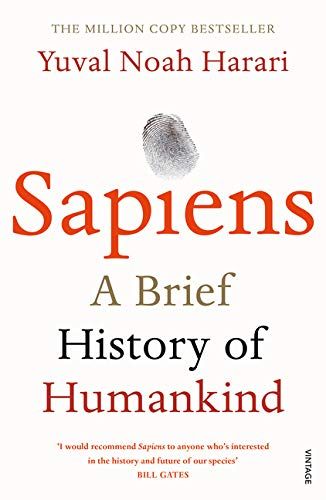
Atlas: Exactly. And the books we're exploring today are the ultimate cheat codes for that kind of foresight. We're looking at Yuval Noah Harari's sweeping epics, "Sapiens: A Brief History of Humankind" and "Homo Deus: A Brief History of Tomorrow," alongside Kevin Kelly's incredibly insightful "The Inevitable: Understanding the 12 Technological Forces That Will Shape Our Future."
Nova: Harari, a historian from Israel, became this global phenomenon almost overnight with 'Sapiens.' What's fascinating is how he manages to weave together biology, anthropology, economics, and history into these narratives that are both incredibly academic and utterly gripping. He's not just cataloging facts; he's telling the story of us, from the cognitive revolution to the scientific. It’s no wonder these books have sparked conversations in boardrooms and classrooms alike.
Atlas: Oh, absolutely. And then Kelly, a co-founder of Wired magazine, brings that deep understanding of technology and culture to the forefront. He's got this knack for spotting patterns in the chaos of innovation, making sense of what often feels like a relentless, unpredictable tide. He’s not just predicting; he’s describing the underlying currents that are already here.
Nova: So, for anyone out there who's a strategic builder, a curious historian, or a resilient leader, these books aren't just good reads; they're essential tools. They help us understand the grand narrative of human progress and the specific forces shaping our technological landscape. Because, ultimately, that's key to building sustainable and impactful innovations.
The Grand Narrative of Human Progress: From Sapiens to Homo Deus
SECTION
Nova: Let's start with Harari, because you can't really talk about building for tomorrow without understanding the foundations of yesterday. 'Sapiens' blew the doors off how many people thought about human history. He argues that our ability to create and believe in shared fictions—things like nations, money, religions, corporations—is what allowed us to cooperate on a massive scale and dominate the planet.
Atlas: That makes sense. It’s like, without believing in the abstract concept of a currency, an entire global economy just… collapses. Or without the idea of a 'nation,' how do millions of strangers rally under one flag? But honestly, Nova, for someone trying to innovate in, say, a tech startup, how is the cognitive revolution from 70,000 years ago relevant today? It feels a bit abstract.
Nova: That’s a fantastic question, and it gets to the heart of what makes Harari so compelling. It's not just about historical facts; it's about the of human behavior that emerge. Think about it: the very same cognitive ability that allowed our ancestors to tell stories around a campfire about invisible spirits, is the same ability that allows us today to create complex business plans for companies that exist only as lines of code, or to believe in the value of cryptocurrencies.
Atlas: So, you're saying the 'fictions' have just evolved? From ancient gods to modern algorithms?
Nova: Precisely! And the implications for innovation are huge. When you're building a new product or a new company, you're essentially creating a new shared fiction. You're asking people to believe in a new way of doing things, a new value proposition, a new community. Understanding the deep human wiring for collective belief, for narrative, gives you an incredible advantage. It’s not about logic alone; it’s about crafting a compelling story that people want to be a part of.
Atlas: That’s actually really inspiring. It means that even the most cutting-edge tech still needs that human element, that narrative, to truly take hold. For our listeners who are constantly trying to get buy-in for new projects or strategies, this is gold. You're not just selling a feature; you're selling a belief.
Nova: Exactly. And then Harari takes us to 'Homo Deus,' which is essentially the sequel. If 'Sapiens' was about how we conquered the world, 'Homo Deus' is about what we'll do once we've conquered death, disease, and even unhappiness. He posits that the new grand narratives are dataism, the idea that the universe is essentially a flow of data, and that algorithms will become the ultimate authorities.
Atlas: That sounds a bit… dystopian. Like we’re just becoming cogs in a giant data machine. What ethical considerations should guide our approach to innovation if this is our future?
Nova: It’s a crucial point. Harari isn't necessarily advocating for dataism, but observing it as a potential trajectory. The ethical considerations are paramount. If data becomes the ultimate authority, who controls it? What happens to human free will or individual experience when algorithms know us better than we know ourselves? For innovators, this means consciously designing for human agency, privacy, and meaning, not just efficiency and data collection. It’s about building technology that serves humanity, rather than humanity serving the technology.
Atlas: Wow, that’s a heavy thought. It pushes us beyond just the 'what' of innovation to the 'why' and 'how' in a really profound way. It’s not just about creating the next big thing; it’s about creating it responsibly, with an eye on the long game of human flourishing.
The Inevitable Forces: Understanding Technological Imperatives
SECTION
Nova: And that naturally leads us to Kevin Kelly’s 'The Inevitable,' which acts as a practical guidebook for navigating this future Harari describes. Kelly isn't predicting specific gadgets, but rather 12 fundamental technological forces that are already in motion and will shape the next 30 years. He calls them 'inevitable' because they are fundamental trends, not fads.
Atlas: Okay, so what are some of these 'inevitable' forces? Give me a taste. And more importantly, how do they actually impact someone building a business today?
Nova: One of the big ones is 'Becoming.' This is the idea that everything is in a state of perpetual upgrade, continuous flow, and endless beta. Nothing is ever truly finished; it's always evolving. Think about software that updates constantly, or products that are services, not just goods.
Atlas: So, like, my phone's operating system? It's never 'done'; it's always 'becoming' something new?
Nova: Exactly. For a business, this means your strategy can't be static. You have to build adaptability into your core, design for continuous improvement, and embrace a mindset of perpetual learning. If you're not 'becoming,' you're falling behind. It’s a shift from product-centric to process-centric thinking.
Atlas: That’s a great way to put it. It’s going to resonate with anyone who struggles with feeling like they constantly have to be "on" and adapting. So what's another one?
Nova: Another crucial force is 'Cognifying.' This is about adding artificial intelligence to everything. Not just robots, but embedding AI into everyday objects, services, and processes. It’s making things smarter, making them think.
Atlas: So, my smart home devices are cognified? My car that parks itself?
Nova: Precisely. Kelly argues that anything that can be cognified, will be cognified. For businesses, this is a massive opportunity. How can you embed intelligence into your existing products or services to make them more efficient, more personalized, or more intuitive? It’s not about replacing humans, but augmenting everything with intelligence. It's about finding the 'smart' layer in every interaction.
Atlas: Okay, so if 'Becoming' means constant evolution and 'Cognifying' means adding AI to everything, then a strategic builder needs to be thinking about how their products or services can continuously evolve with embedded intelligence. That’s a powerful combination. It sounds like Kelly is saying we shouldn't fight these waves; we should learn to surf them.
Nova: Absolutely. He’s not saying these are necessarily good or bad, but that they are fundamental forces, like gravity. Our choice is how we respond to them. Another one, 'Flowing,' is about the continuous, real-time streams of data and experiences. It's the opposite of static files; it's the endless feed, the live stream. For businesses, this means understanding how to operate in a world where information is constantly moving and attention is fluid.
Atlas: So, it’s about building systems that can handle and make sense of constant change, and products that live in that flow, rather than being isolated entities. It's not just about a single transaction, but an ongoing relationship.
Nova: Exactly. And the combination of these forces—the deep human drive for narrative, the inevitable march of intelligent 'becoming' and 'flowing' technologies—it all points to a future where innovation isn't just about efficiency or novelty. It's about deeply understanding the human condition, anticipating these technological tides, and then consciously choosing to build things that serve a sustainable, ethical, and meaningful future.
Synthesis & Takeaways
SECTION
Nova: So, bringing it all together, Atlas, what's the big takeaway for our listeners who are trying to build for tomorrow, today?
Atlas: Honestly, it’s a profound shift in perspective. It’s not enough to just react to trends or even to try and predict them. Harari gives us this incredible lens to see the deep historical patterns of human cooperation and belief, and then the potential, sometimes frightening, trajectory of our species.
Nova: And Kelly then provides the practical roadmap, saying, 'Look, these 12 forces are coming, or they're already here. How are you going to integrate them into your strategy, rather than be overwhelmed by them?'
Atlas: Right. It’s about building with foresight, not just ambition. It’s recognizing that the ethical considerations Harari raises in 'Homo Deus' about AI and dataism aren't distant philosophical debates; they're immediate design challenges that we face when we 'cognify' everything.
Nova: Precisely. The ethical considerations aren't an afterthought; they're integral to sustainable innovation. It’s about asking: 'What kind of future are we actually building?' not just 'What can we build?' Because the technology we create today will shape the human experience for generations.
Atlas: And for anyone who leads a team or is trying to scale their business wisely, this kind of thinking is indispensable. It's about mastery, impact, and connecting more deeply, not just with customers, but with the grand narrative of human progress itself. It’s a call to build with purpose.
Nova: It truly is. This is Aibrary. Congratulations on your growth!