

Personalized Podcast
Golden Hook & Introduction
SECTION
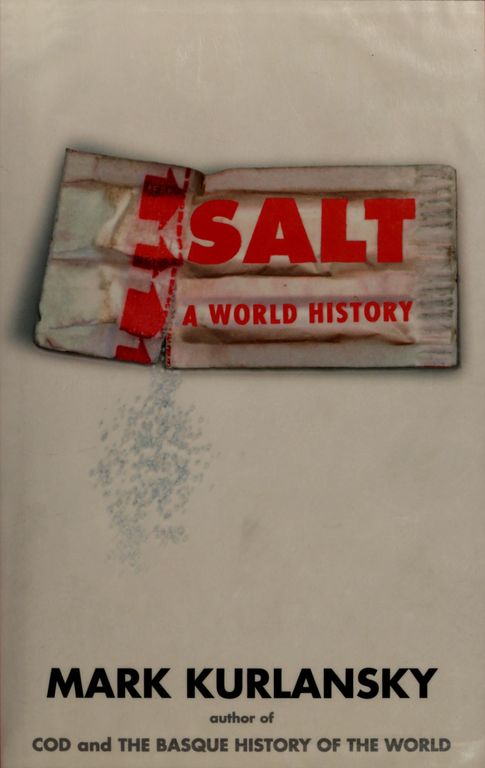
Albert Einstein: Imagine a substance so powerful that without it, your nerves couldn't fire, your muscles couldn't contract, and your cells would collapse. Yet, this very same substance built the roads of Rome, funded the French monarchy, and sparked revolutions across the globe. I am not talking about gold, nor am I talking about oil. I am talking about common table salt. Sodium chloride. A simple, elegant crystal that has quietly engineered the trajectory of human civilization. Welcome to the podcast. I am Albert Einstein, and joining me today is Eugene, a mechanical engineering student with a wonderfully analytical mind. Eugene, it is a pleasure to have you here to help us unpack Mark Kurlansky's fascinating book, Salt.
Eugene: Thanks, Albert. It is fantastic to be here. You know, as an engineer, I tend to look at the world through the lens of systems, materials, and energy. When we think of salt today, we just see a cheap shaker on a diner table. But historically, salt was a high-value technology. It was the ultimate thermodynamic hack for preserving energy—specifically, food energy. I am really excited to dive into the mechanics of how we extracted it and how its physical properties literally shaped human geography.
Albert Einstein: Beautifully put, Eugene! A thermodynamic hack indeed. Today, we are going to tackle Kurlansky's book from two distinct, fascinating angles. First, we will explore the incredible engineering feats of ancient salt extraction, looking at how the quest for brine led to the birth of deep-well drilling. Then, we will shift our focus to the microscopic level, examining the physical chemistry of osmotic pressure and how this simple biological pause button became a tool of imperial power and, ultimately, revolutionary resistance. Shall we begin our thought experiment?
Eugene: Let's do it. Where are we starting our journey?
Deep Dive into Core Topic 1
SECTION
Albert Einstein: Let us travel back in time to the Sichuan province of China, around the first century BC. Imagine a landscape of rolling hills, but instead of just farms, you see towering wooden derricks, some over a hundred feet tall. These were not built for oil, Eugene. They were built to extract brine from deep within the earth. Kurlansky describes how the Chinese engineered a method of percussion drilling that was centuries ahead of its time. They used heavy iron drill bits suspended by cables made of bundled bamboo. Eugene, when you look at this from a mechanical perspective, what strikes you about this system?
Eugene: Honestly, Albert, the material science and the dynamics of that system are mind-blowing. Think about the constraints they had. They didn't have steel cables or steam engines. They used bamboo. Now, from an engineering standpoint, bamboo is a natural composite material. It has an incredibly high tensile strength-to-weight ratio. If they had used heavy hemp ropes, the weight of the rope itself would have snapped under its own gravity at those depths. But bamboo was light, flexible, and incredibly strong.
Albert Einstein: Ah, yes! Nature's own carbon fiber! And the mechanism of percussion drilling itself is a beautiful demonstration of kinetic energy transfer, is it not?
Eugene: Exactly. It's all about potential energy converting to kinetic energy. They would have a team of men jumping on and off a lever system, which would raise the heavy iron bit and then let it drop. Gravity did the work of fracturing the rock. They would do this repeatedly, pulverizing the stone foot by foot. And they didn't just drill shallow holes. By the eleventh century, they were drilling wells that were over three thousand feet deep! To put that in perspective, that is nearly a kilometer into the earth, using nothing but muscle power, wood, iron, and bamboo.
Albert Einstein: It is absolutely staggering. I wonder, how did they retrieve the brine once they reached those depths? The fluid dynamics must have been a nightmare.
Eugene: It really was a major mechanical challenge. They couldn't just drop a bucket down a three-thousand-foot hole that was only a few inches wide. So, they engineered long tube-like buckets made of hollowed-out bamboo trunks, equipped with a simple leather check valve at the bottom. When the tube plunged into the brine, the valve opened, letting the liquid in. When they pulled the tube back up, the weight of the liquid pushed the valve shut. It’s a classic one-way check valve, a fundamental component we still use in hydraulic systems today.
Albert Einstein: And once they got this salty water to the surface, the thermodynamic challenge began. You cannot eat liquid brine; you must separate the solute from the solvent. You must evaporate the water to leave the salt crystals behind. In many parts of the world, like the Mediterranean, they used the sun—solar evaporation in shallow clay pans. But in rainy Sichuan, they could not rely on the sun. So, what did they do? They engineered a way to harvest natural gas from the very same wells!
Eugene: That is one of the most elegant examples of co-generation in ancient history. They would hit pockets of methane gas while drilling for brine. Instead of seeing it as a hazard, they captured it. They built pipelines made of bamboo—sealed with lime and tung oil—to transport both the brine and the natural gas to boiling stations. There, they burned the gas under massive cast-iron pans to boil off the water. It was a closed-loop, vertically integrated chemical plant operating two thousand years ago!
Albert Einstein: It makes one realize that the industrial revolution did not start in eighteenth-century Europe; its seeds were sown in the salt wells of ancient China. The sheer curiosity and analytical problem-solving of those ancient engineers is inspiring. They looked at the constraints of their environment and used basic physical laws to overcome them.
Eugene: Absolutely. And it wasn't just China. Look at the Romans. They built the Via Salaria—the Salt Road—specifically to transport salt from the coastal pans of Ostia to Rome. Their soldiers were sometimes paid in salt, which is where we get the word 'salary' and the phrase 'worth his salt.' From a logistics and civil engineering perspective, the Romans treated salt as a critical infrastructure asset. If you controlled the salt pans, you controlled the population's ability to survive.
Deep Dive into Core Topic 2
SECTION
Albert Einstein: This brings us beautifully to our second topic: the physical chemistry of preservation and its geopolitical consequences. Let us perform a microscopic thought experiment. Imagine you are a bacterium, happily floating along, looking for some organic matter to colonize. Suddenly, you are surrounded by a high concentration of sodium and chloride ions. What happens to you?
Eugene: Ah, the classic battle of osmotic pressure! From a thermodynamic perspective, nature hates concentration gradients. It wants to achieve entropy, to balance things out. So, when a cell is placed in a highly saline environment, the water molecules inside the cell's semi-permeable membrane rush outward to dilute the surrounding salt. This process of osmosis literally dehydrates the bacterium, collapsing its cellular structure. Without water, the chemical reactions necessary for bacterial life and reproduction simply stop.
Albert Einstein: Yes! It is a beautiful demonstration of physical chemistry. Salt does not necessarily kill the bacteria through toxicity, but through thermodynamic starvation of water. It forces the water out. And by doing so, it acts as a biological pause button. Before refrigeration, food was a highly perishable, highly volatile source of energy. If you slaughtered a pig, you had to eat it immediately or it would rot. But with salt, you could store that energy for months, even years.
Eugene: That is a profound way to look at it, Albert. Salt as an energy storage technology. In engineering, we talk about energy density and storage. Salt allowed societies to store protein and calories, which meant they could decouple food consumption from food production. This is what made long-distance ocean voyages, massive standing armies, and urbanization possible. You couldn't have the Age of Discovery without salted cod and salted pork. The ships would have run out of food within weeks.
Albert Einstein: Exactly. The ability to project power across oceans was entirely dependent on this simple chemical preservation. But because salt was so vital for survival, it also became the ultimate tool of state control. Governments quickly realized that since everyone salt, taxing it was the perfect way to generate revenue. Kurlansky writes extensively about the French salt tax, known as the. It was not just a tax; it was a highly complex, oppressive system of forced consumption.
Eugene: The is a fascinating study in systemic feedback loops and unintended consequences. The French government divided the country into different tax zones. In some regions, salt was heavily taxed; in others, it was relatively cheap. And to make matters worse, the state enacted the —a law forcing every citizen over the age of eight to buy a certain amount of salt every week at a fixed, high price.
Albert Einstein: Imagine that! Being legally forced to buy a commodity at an inflated price from a state monopoly. It is a recipe for absolute outrage. It violates the natural flow of economic equilibrium.
Eugene: It really does. And what happens when you create a massive artificial price differential between neighboring regions? You create a powerful incentive for smuggling. A whole shadow economy emerged. People would smuggle salt in their clothes, in hollowed-out walking sticks, even training dogs to carry salt across regional borders. The state responded with brutal enforcement—smugglers were sent to the galleys, tortured, or executed. This constant friction, this systemic oppression over a basic biological necessity, became one of the primary catalysts for the French Revolution.
Albert Einstein: It is remarkable how a microscopic phenomenon—osmosis—leads to macroscopic historical shifts like the fall of a monarchy. And we see a very similar dynamic play out in modern history with Mahatma Gandhi and the British Empire in India. The British had established a strict monopoly on salt production in India, making it illegal for Indians to harvest their own salt, even if they lived right on the coast where the sun evaporated the seawater naturally.
Eugene: That British salt policy was a masterclass in colonial extraction. They actually built a physical barrier—the Great Hedge of India—a twelve-hundred-mile-long hedge of thorny bushes patrolled by thousands of officers, just to prevent the smuggling of untaxed salt! It’s an unbelievable engineering of the landscape for economic exclusion.
Albert Einstein: Yes, a living wall to enforce a monopoly on a natural crystal! And Gandhi, with his brilliant understanding of human psychology and symbolic action, realized that salt was the perfect unifying issue. In 1930, he embarked on the Salt March, walking twenty-four miles a day for twenty-four days to the coastal village of Dandi. There, he walked down to the shore, picked up a lump of natural, salty mud, and said, 'With this, I am shaking the foundations of the British Empire.'
Eugene: As an INTP, I find that incredibly elegant. It’s a high-leverage move. Gandhi identified the single point of vulnerability in the entire imperial system. By making salt—something so simple, so abundant, and so biologically necessary—the focal point of civil disobedience, he made the British monopoly look absurd and morally indefensible. He didn't need weapons; he just needed to evaporate seawater. It was a direct, peaceful reclamation of a fundamental physical resource.
Synthesis & Takeaways
SECTION
Albert Einstein: What a journey we have taken, Eugene! From the deep bamboo wells of Sichuan, where ancient engineers defied gravity and harnessed thermodynamics, to the microscopic battlefields of osmotic pressure, and finally to the shores of Dandi, where a pinch of salt shook an empire. It is mind-boggling to think how much of our world has been engineered by our relationship with this simple compound of sodium and chlorine.
Eugene: It really is, Albert. Looking at history through the lens of Kurlansky's book makes me realize that engineering isn't just about building machines or writing code. It's about understanding the fundamental constraints of our physical reality and finding creative ways to work within them. Salt was the catalyst that forced us to develop drilling technologies, transport systems, and preservation methods. It’s a reminder that the most mundane things in our daily lives often have the deepest scientific and historical roots.
Albert Einstein: Yes! Wonder is the starting point of all true science. When we look at a grain of salt and see not just a seasoning, but a geological marvel, a biological necessity, and a historical revolutionary, we are truly practicing the art of thinking. Eugene, what is one actionable takeaway you would leave our listeners with today, especially those with an analytical, curious mind like yours?
Eugene: I would challenge everyone to pick one everyday object in their room—whether it's a pencil, a glass of water, or a pinch of salt—and trace its lineage. Ask yourself: What physical laws govern this object? What engineering challenges had to be solved for it to sit on my desk today? And how did the quest for this object shape human society? When you start looking at the world as a web of interconnected physical and historical systems, even the most ordinary things become extraordinary.
Albert Einstein: A magnificent challenge! Let us all look at the mundane with eyes of wonder. Thank you, Eugene, for this wonderfully stimulating conversation. And to our listeners, keep wondering, keep questioning, and remember: the universe is full of beautiful secrets waiting to be decoded. Until next time!
Eugene: Thanks, Albert. It was a blast!