

The Invisible Hand of Geography: How Land Shapes Our Destiny
Golden Hook & Introduction
SECTION
Nova: Atlas, if I told you that a mountain range, a climate pattern, or even just the amount of rainfall in a specific region could literally decide the fate of entire empires, would you believe me?
Atlas: Oh, I love a good 'fate of empires' story, Nova! But my initial thought is, 'Come on, we're humans, we adapt!' We build cities in deserts, we farm in harsh climates. Surely our ingenuity trumps mere dirt and weather?
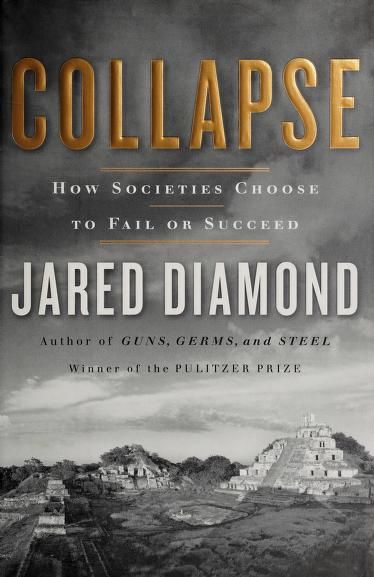
Nova: That's the common perception, isn't it? We often see ourselves as masters of our environment. But today, we're diving into a fascinating concept, woven through works like Jared Diamond's "Collapse" and Mark Kurlansky's "Salt: A World History," that suggests our environment isn't just a backdrop; it’s an active, often invisible, participant in the human story.
Atlas: Right, these aren't just history books, they're like geological thrillers, showing how the very ground beneath our feet dictates our possibilities and challenges.
Nova: Exactly. Diamond, a Pulitzer Prize-winning author and polymath — he's a geographer, historian, ornithologist, and even a physiologist — brings this incredible interdisciplinary lens to understanding why some societies flourished and others vanished. His work often challenges the conventional narratives of human exceptionalism, suggesting that our deepest societal structures are often responses to environmental pressures.
Atlas: That's a great way to frame it. It’s not just about what we with the land, but what the land, or rather,.
Geography as a Master Sculptor of Civilizations
SECTION
Nova: Precisely. Let's start with this idea of geography as a master sculptor. We often think of history as driven by great leaders, technological innovations, or ideological shifts. But Diamond, in 'Collapse,' pulls back the curtain to reveal that the most fundamental forces are often environmental. Take Easter Island, for instance. A tiny, isolated speck in the Pacific.
Atlas: Ah, the famous mystery of the giant stone heads! Always fascinated by that. But what does that have to do with geography?
Nova: More than you'd imagine. Easter Island's isolation and limited natural resources were its geographical destiny. The early settlers, Polynesian voyagers, arrived on an island lush with forests. They thrived, built those iconic moai statues, and developed a complex society. But their very success, combined with the island's finite resources, sowed the seeds of their destruction.
Atlas: So, their environment was both their initial blessing and their ultimate curse?
Nova: In a way, yes. They relied heavily on the trees – for fuel, for building homes, for moving those massive statues, and even for building canoes for fishing. But the island was small, and the forests grew slowly. As the population grew, the demand outstripped the supply.
Atlas: I’m curious, did they just not it happening? I mean, clear-cutting seems like a pretty obvious problem.
Nova: That's the million-dollar question, isn't it? Diamond argues it wasn't a sudden, catastrophic event but a gradual, almost imperceptible decline. Each generation might have seen slightly fewer trees, slightly less fertile soil, slightly fewer birds. It's the classic 'tragedy of the commons' played out on an isolated stage. Eventually, the forests were gone. No trees meant no canoes for deep-sea fishing, no logs to move statues, no timber for housing, and severe soil erosion.
Atlas: Wow, that’s kind of heartbreaking. So, their society literally collapsed because they ran out of wood? That's a stark example of how deeply intertwined human destiny is with ecological limits. It sounds like they just couldn't adapt quickly enough to a changing, and increasingly depleted, environment.
Nova: Exactly. The societal response, or lack thereof, to those environmental pressures was key. They went from a thriving, complex civilization to one marked by internal warfare, cannibalism, and a drastic population reduction. Another compelling example is the Mayan civilization. We often romanticize them, their sophisticated calendars, their monumental pyramids. But they too faced a geographical reckoning.
Atlas: The Mayans! I always thought their collapse was some grand, mysterious event, maybe an invasion or a sudden plague.
Nova: Not quite. While there were certainly political and social factors, the core issue, according to Diamond and other researchers, was environmental degradation exacerbated by prolonged drought. The Mayans lived in a region prone to periodic droughts. Their agricultural system, primarily slash-and-burn, worked well initially. But as their population boomed, they expanded agriculture into more marginal lands, deforesting vast areas.
Atlas: And deforestation, of course, means less moisture retention, more soil erosion, and a higher vulnerability to drought. It’s a vicious cycle.
Nova: Precisely. When a series of severe droughts hit, their highly centralized and interdependent society couldn't cope. The kings and priests, who were supposed to mediate with the gods for rain, lost legitimacy. Food shortages led to social unrest, warfare between city-states intensified, and people abandoned the great cities. It was a slow, agonizing process, not a sudden collapse.
Atlas: So, in both cases, Easter Island and the Mayans, it wasn't just the environment, but the between human actions and environmental limits. It makes you wonder about our modern predicament, doesn't it?
Resource Scarcity and Societal Response
SECTION
Nova: It absolutely does, Atlas. And that naturally leads us to the second key idea: how the availability and control of specific resources have profoundly shaped human history. Mark Kurlansky's "Salt: A World History" is a phenomenal dive into this. It illustrates how a single, seemingly simple commodity like salt has dictated trade routes, fueled economies, and even sparked wars.
Atlas: Salt? I mean, it's essential, but how can something so common be so historically powerful? We just buy it for a dollar at the grocery store.
Nova: That's the modern perspective, but go back in time, and salt was literally currency. Before refrigeration, salt was the only way to preserve food, especially meat and fish, allowing for armies to march, navies to sail, and populations to survive winters. Without salt, large-scale civilization as we know it would have been impossible.
Atlas: That makes sense. It’s a bit like how oil is today – indispensable for industry and transport.
Nova: Exactly! Kurlansky details how the control of salt mines and trade routes led to immense wealth and power. Venice, for instance, rose to prominence largely because of its strategic control over salt production and distribution in the Mediterranean. They had a near monopoly for centuries.
Atlas: So, a city built on salt. It really puts a different spin on 'essential commodities.'
Nova: It does. And the lack of salt could be devastating. Roman soldiers were sometimes paid in salt, which is where the word "salary" comes from. Deprive an army of salt, and you threaten their food supply and their very health. This made salt a strategic resource, worth fighting over. Kurlansky recounts numerous conflicts, even revolutions, that had salt at their core. The Gabelle, a hugely unpopular salt tax in pre-revolutionary France, was a significant grievance that fueled the French Revolution.
Atlas: Hold on, so a salt tax actually contributed to the French Revolution? That sounds a bit out there, but also, I can totally see how something so fundamental, when controlled and taxed unfairly, could spark outrage.
Nova: Absolutely. It wasn't the sole cause, of course, but it was a deeply resented burden on the common people. The Gabelle made salt incredibly expensive for the poor, while the wealthy often had exemptions. It became a symbol of royal extravagance and injustice. Kurlansky also highlights how salt drove exploration and trade. Ancient salt routes crisscrossed continents, fostering cultural exchange and economic development. The Sahara Desert had major salt caravans, where salt was traded ounce for ounce for gold.
Atlas: Wow, that’s incredible. So, geography, in the form of salt deposits and access to them, literally shaped ancient economies and political power. It's a profound reminder that what we consider 'common' today was once a king-maker.
Nova: It truly is. These books force us to confront the reality that our relationship with the environment, and our response to its constraints and opportunities, is the most enduring story of humanity.
Synthesis & Takeaways
SECTION
Nova: So, bringing it all together, what these works like 'Collapse' and 'Salt' really illuminate is that geography isn't just a physical space; it's a dynamic force with an 'invisible hand' that shapes our destiny. Understanding how environmental factors led to the collapse of past societies, or how the control of a resource like salt dictated power, offers us crucial lessons.
Atlas: It makes me wonder, then, how understanding the environmental factors that shaped past civilizations better equips us to address contemporary global challenges like climate change and resource scarcity? Because it sounds like we're still grappling with very similar problems, just on a larger scale.
Nova: That's the deep question, isn't it? The past shows us that environmental collapse isn't always sudden; it's often a slow, compounding series of decisions and ignored warning signs. For Easter Island, it was deforestation; for the Mayans, drought and agricultural strain; for salt, it was control and unequal access. Today, the stakes are global. Climate change isn't just about rising temperatures; it's about disrupted ecosystems, water scarcity, forced migrations, and potentially, new resource conflicts.
Atlas: So, recognizing these patterns from history might give us a roadmap, or at least a warning sign. It’s a call to action, really, to view our relationship with the planet not as one of endless resources, but as a delicate balance. We need to understand our geographical limits and respond with foresight, rather than repeating the mistakes of the past.
Nova: Absolutely. It's about recognizing that the 'invisible hand' of geography is still at play, perhaps more powerfully than ever. Our destiny, much like those ancient civilizations, is inextricably linked to how we manage our planet's resources and adapt to its changing climate. The future isn't predetermined, but it is profoundly influenced by the choices we make today, informed by the echoes of past collapses and resource struggles.
Atlas: That’s such a hopeful way to look at it – that history isn't just a record of failures, but a guide for better choices. It’s a powerful reminder that our destiny is, in many ways, still in our hands.
Nova: Indeed. This is Aibrary. Congratulations on your growth!