

The Resilience Blueprint: How Running Rewires the Anxious Mind
Golden Hook & Introduction
SECTION
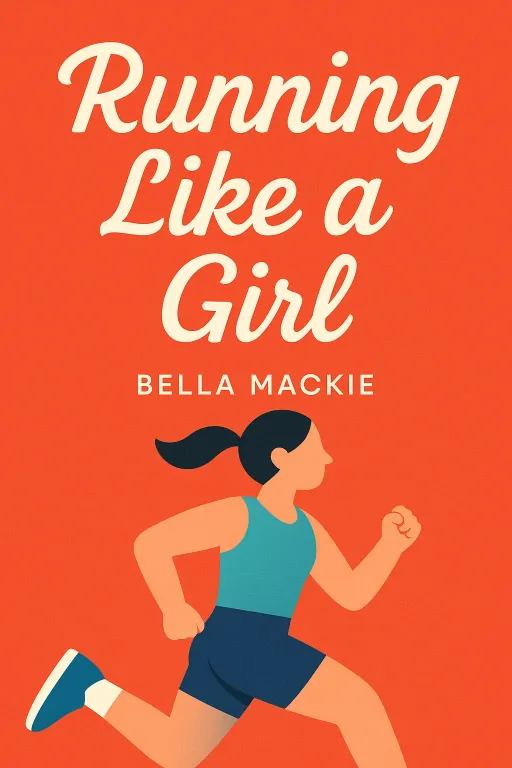
Albert Einstein: What do you do when your world collapses? Not slowly, but in an instant. The author Bella Mackie describes it as a feeling that 'somewhere, something in your body has savagely ruptured.' It’s a feeling of total freefall. Most of us try to brace for impact, but what if the only way out is to… run? Not away from the problem, but straight into a new way of being. That's the radical idea at the heart of Mackie's memoir, 'Running Like a Girl.'
Albert Einstein: Today we'll dive deep into this from two perspectives. First, we'll explore the raw power of hitting 'rock bottom' as a catalyst for profound change. Then, we'll dissect how a simple act like running can become a powerful tool to re-engineer our own minds against anxiety.
Albert Einstein: I’m your host, Albert Einstein, and I'm joined today by Ding, an analytical thinker and product manager in the finance world who is also on the verge of a massive and wonderful life change: becoming a parent. Welcome, Ding.
Ding: Thanks for having me, Albert. That introduction really hits home. The idea of preparing for a huge, wonderful, and undoubtedly stressful life change means this concept of a resilience toolkit is definitely on my mind.
Albert Einstein: I thought it might be. This book isn't really a running manual; it's a human manual. It's about what we do when our existing coping mechanisms fail spectacularly.
Deep Dive into Core Topic 1: The Rock Bottom Catalyst
SECTION
Albert Einstein: So let's go to that moment of rupture for Bella. Her marriage has just ended, suddenly and painfully. She's back in her flat, and she's being consumed by an anxiety she's had her whole life, but now it's amplified by heartbreak. She has, in her own words, absolutely no coping skills for this level of emotional fallout.
Ding: It's a terrifying thought. To be in that much pain and feel like you have an empty toolbox.
Albert Einstein: Precisely. And in that desperation, one week after her husband leaves, she does something completely out of character. She's never been an athlete. She's never done any strenuous exercise. But she decides, impulsively, to run. She puts on some old trainers, finds a dark, dingy alleyway near her flat because she's too ashamed to be seen, puts on some angry music, and just… goes.
Ding: In an alleyway? Wow.
Albert Einstein: Yes, she’s hiding. The first attempt is brutal. Her lungs feel like they're on fire, her legs ache, she has to stop every few seconds. She feels utterly absurd and pathetic. She runs in these tiny, desperate bursts, and in total, she manages to run for maybe three minutes. And at the end of it, she doesn't feel good. She doesn't feel euphoric. She just feels… ridiculous. But then she realizes something profound. For the first time in a week, she hasn't cried for fifteen minutes. And that, right there, is the spark.
Ding: That's the key, isn't it? It's not about achieving some grand, transformative goal on day one. It's about finding a single, repeatable action that produces a tiny, positive result. In product management, we call that a 'Minimum Viable Product,' or an MVP. Her MVP for sanity wasn't 'feel happy' or 'get over my heartbreak.' It was simply 'stop crying for 15 minutes.' It's a brilliant, unintentional experiment.
Albert Einstein: A 'Minimum Viable Product' for sanity! I love that. It’s a perfect description. It was an experiment born of pure desperation. She wasn't following a plan; she was just trying to make the pain stop, even for a moment. And it leads to this fascinating question: do we have to wait for that kind of crisis to find our 'anything'?
Ding: I don't think so. It makes you think about the concept of proactive mental health. We plan for retirement, we plan our careers, we read books to prepare for a newborn… but do we actively plan and build our coping mechanisms for the inevitable stresses of life? This story suggests we can, and that the solution might be surprisingly simple and physical. It's about identifying a simple input—a three-minute run—for a desired output: a moment of mental calm.
Albert Einstein: And what's so powerful is that she decides to do it again the next day. And the day after that. That tiny, almost insignificant success was enough to build upon.
Deep Dive into Core Topic 2: The Runner's Mind: Engineering Calm
SECTION
Albert Einstein: And that simple, physical act starts to compound. The benefits grow. It's not just about not crying anymore. It becomes a tool for actively reshaping her world. This is where it gets truly fascinating from a psychological engineering perspective.
Ding: So it moves from a reactive patch to a proactive feature of her life.
Albert Einstein: Exactly. Bella had suffered from agoraphobia for years. The thought of being in crowded, open spaces was terrifying. Central London was a no-go zone, a place of panic. But after a few months of running, of building this small, consistent habit, she feels a new kind of confidence. One day, she decides to just… keep running. She runs past her usual turn-around point and heads straight into the heart of the city.
Albert Einstein: She runs through Parliament Square, across the Thames, through Soho. These are places that would have previously triggered a panic attack. But now, her mind is focused on something else: the rhythm of her feet, her breathing, the music in her ears. She's looking at the buildings, the people, the sky. And she realizes she's not panicking. She's actually enjoying it. She's not just running the city; she's running her agoraphobia. Each step is a vote for a larger, less frightening world.
Ding: That is such a powerful image. It's a perfect example of exposure therapy, but it's self-directed and on her own terms. It’s like she's expanding her personal 'operating system.' Anxiety had installed this malicious code in her brain that said, 'These areas are off-limits; danger!' Running became the tool to systematically debug that code. She was actively testing the boundaries and proving the system's warnings false.
Albert Einstein: Debugging the code of fear! Another brilliant analogy. And what’s more, the science backs this up. It's not just a feeling. A survey by Glasgow Caledonian University looked at thousands of participants in Parkrun—those free, weekly 5k runs. They found that on a happiness scale of 1 to 6, the general population averages a 4.1. Parkrun participants? They averaged 4.4. That's a significant, measurable increase in well-being.
Ding: And the community aspect of something like Parkrun adds a whole other layer. The book talks about how loneliness can be so detrimental to health. So with group running, you get the individual psychological benefit of quieting the mind and the physical endorphins, but you also get the social benefit of connection and community. It combats isolation. As a product manager, you'd be thrilled to find a single feature that has that many positive, cascading impacts on the user's life.
Albert Einstein: It's a multi-faceted solution, as you say. It addresses the chemical, the psychological, and the social. It's a remarkably elegant system for improving the human condition, all disguised as just going for a jog.
Synthesis & Takeaways
SECTION
Albert Einstein: So, when we step back, we see this incredible journey. It goes from a moment of pure, unmanageable chaos to the creation of a personal, resilient system. It starts with a desperate, tiny action—that three-minute run in an alley—and it evolves into a powerful tool for rewiring the brain and reclaiming one's life from the clutches of anxiety.
Ding: Exactly. It's a blueprint. It demonstrates that we have more agency over our mental state than we often believe, and the tools for that change can be incredibly simple, accessible, and grounded in the physical world. It’s not about thinking your way out of a problem, but sometimes, it’s about moving your way through it.
Albert Einstein: Which brings us to the final thought for our listeners. Bella Mackie's life-altering journey started with something that was not glorious. It was not heroic. It was a three-minute run in a dark alley. But it was a start.
Ding: And that's the real takeaway. The question for all of us, especially when we're anticipating big changes or just dealing with the daily grind, isn't 'How do I solve everything at once?' It's 'What is my three-minute run?' What is the smallest, simplest, most repeatable action I can take, starting today, to build the resilience I'll need tomorrow?









