

Designing for Dignity: Crafting Ethical AI for Women's Health
Golden Hook & Introduction
SECTION
Nova: We often think of technology as this neutral, benevolent force, especially when it comes to health. It's supposed to optimize, to personalize, to make everything better, right? But what if the very algorithms designed to help us are quietly, systematically, making things worse for half the population?
Atlas: Whoa. Wait. That's a pretty strong claim. I mean, we're talking about AI in women's health here. Surely, that's one area where the intention is always pure, always aimed at improving lives?
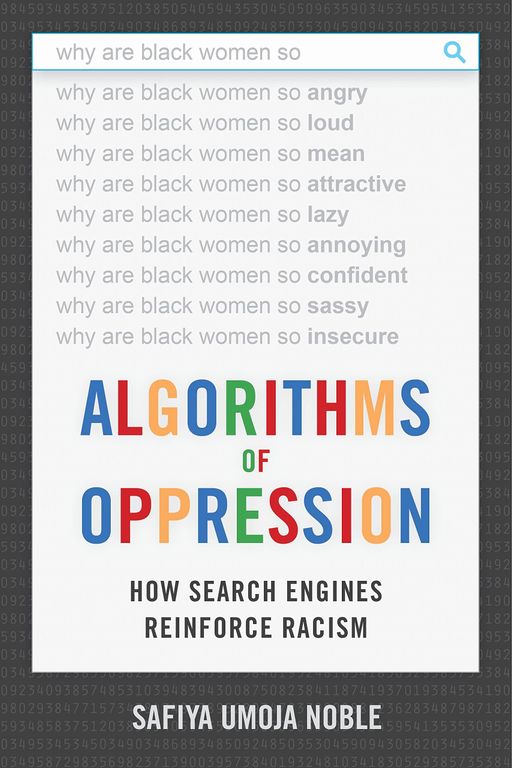
Nova: You'd think so, wouldn't you? But the truth is, intention isn't enough. Today, we're diving into two incredibly insightful books that force us to confront the ethical blueprint of AI: "Algorithms of Oppression" by Safiya Umoja Noble and "Ruined By Design" by Mike Monteiro.
Atlas: Oh, I've heard Noble's name come up in conversations about tech ethics. What’s her core argument?
Nova: Noble's work is fascinating because it truly began from a personal place. She started noticing how search engines, these tools we use daily, consistently returned biased, often derogatory, results when she searched for things related to women, particularly women of color. Her research laid bare how these seemingly objective algorithms perpetuate harmful stereotypes. It's not just about what pops up on your screen; it's about how these systems are fundamentally structured.
Atlas: That makes me wonder, how does that translate into something as critical as women's health? It feels like one thing to see a biased image search, but another entirely for a health algorithm to be flawed.
Nova: Exactly, and that's where the stakes get incredibly high. And then, we have Mike Monteiro, author of "Ruined By Design." He's this incredibly outspoken advocate for designers to take moral responsibility for their creations. He argues that design choices aren't neutral; they have real-world consequences and can shape societal norms, often without us even realizing it. He’s pretty fiery about the ethical complacency he sees in the industry.
Atlas: So, we're looking at both the inherent biases that can sneak into systems, and the active responsibility of the people building them. It's like unpacking the problem, then figuring out how to fix it with purpose.
Unpacking AI's Ethical Blueprint: The Hidden Biases
SECTION
Nova: Precisely. Let's start by really digging into Noble's insights on the "Algorithms of Oppression." Imagine a woman experiencing a complex set of symptoms – let's say, chronic fatigue, pain, and neurological issues. She turns to a popular AI-powered diagnostic tool, feeding it her symptoms. Now, if the vast majority of historical medical data used to train that AI overwhelmingly features male patients, or if certain female-specific conditions are under-researched and thus underrepresented in the data, what do you think happens?
Atlas: I can see how that would be a huge problem. You're saying the AI might not even her pattern of symptoms because it hasn't "seen" enough similar cases in its training data, or it might misattribute them to something less serious, or even psychological.
Nova: Exactly! The AI, in its attempt to predict and diagnose, will default to the most common patterns it learned. If those patterns are skewed, it could lead to delayed diagnoses, misdiagnoses, or even dismissive medical advice for women. It’s not a malicious act by the AI; it’s a reflection of the biased data it was fed. Noble highlights that these systems are built on existing power structures and societal inequalities.
Atlas: That’s actually really inspiring, but also kind of terrifying. It’s like the "unseen architect" you mentioned – the biases are baked into the very foundations, and we don't even realize it until the outcomes are already skewed. So, it's not just about finding certain terms; it's about the entire framework of understanding.
Nova: It's precisely that framework. Think about how many women historically had their symptoms dismissed as "hysteria" or "nerves." Now, imagine that historical medical bias subtly coded into machine learning models. The AI isn't inventing new oppression; it's efficiently amplifying and automating existing societal biases, making them harder to detect and challenge. It’s a systemic issue, not just an individual one.
Atlas: So you're saying that even if developers have the best intentions, if their data sources are inherently flawed or incomplete, especially concerning women's health, the AI will just reflect and magnify those flaws? It won't magically correct for them.
Nova: It absolutely won't. In fact, it often for them. If historical data shows a certain demographic is less likely to receive a specific treatment – perhaps due to socioeconomic factors or implicit bias in human doctors – the AI might learn that pattern and perpetuate it, even if the treatment is medically indicated. It's a feedback loop of inequity.
Atlas: That makes me wonder, what about something like searching for information on specific women's health conditions online? Could Noble's theory apply there too? Like, if I'm looking up symptoms for endometriosis, could algorithms somehow steer me away from accurate information or present it in a less comprehensive way?
Nova: Oh, absolutely. Noble’s original research focused on search engines, and the implications for health information are profound. If search algorithms are optimized for certain keywords or content types that are more male-centric, or if they prioritize sensationalized content over medically sound information for women's issues, that's a direct harm. Imagine a woman searching for information on menopause symptoms, and the top results are all about anti-aging creams rather than evidence-based medical advice or support groups. It's subtle, but it shapes understanding and access to care.
Atlas: That's such a hopeful way to look at it. It's not just about explicit bias, but about implicit biases in data, in language, in the very structure of information retrieval. It's a quiet form of marginalization.
Building with Intent: Designing for Dignity and Responsibility
SECTION
Nova: And that naturally leads us to the second key idea we need to talk about, which often acts as a counterpoint to what we just discussed: Building with Intent. Because once we acknowledge these biases, the question becomes, what's our responsibility? This is where Mike Monteiro and his book, "Ruined By Design," really hit home.
Atlas: Okay, so if the algorithms can be biased, then the designers, the people creating these algorithms, have a moral obligation to prevent that. But how? It sounds like a massive task.
Nova: Monteiro would argue it's not just a task, it's the. He emphasizes that designers – and by extension, anyone building AI – are not just problem-solvers; they are decision-makers with immense power. He critiques the idea of "move fast and break things" when "things" include people's lives and health. A tiny step he advocates for is conducting a 'bias audit' developing any new AI feature.
Atlas: A bias audit? So, before you even write a line of code, you're explicitly looking for potential discriminatory outcomes? How does that work in practice? Is it like a checklist, or something more profound?
Nova: It's far more profound than a checklist. A bias audit means rigorously examining your data sources for representativeness and historical biases. It means stress-testing your algorithms with diverse demographic data to see if they perform equally well across different groups. And crucially, it means asking, 'Who might this design harm, even unintentionally?' It's about designing for fairness from the outset, rather than trying to patch up problems later.
Atlas: I can see how that would make a difference. It's taking ownership of the potential impact. But for someone driven by a desire for equity, like many of our listeners, the real challenge might be the "deep question" you mentioned: How do we actively involve diverse groups of women in the AI development process? It feels like a huge undertaking to genuinely capture those voices and needs.
Nova: It absolutely is a huge undertaking, but it's non-negotiable for designing with dignity. It means moving beyond tokenism. It requires co-creation. Imagine developing an AI tool for postpartum depression screening. An ethical approach would involve not just clinicians, but new mothers from diverse socioeconomic backgrounds, different racial groups, and varying cultural contexts. Their input isn't just for feedback; it shapes the very questions the AI asks, the language it uses, and how it interprets responses.
Atlas: So, it's not just about collecting more data; it's about collecting the data from the people, and having those people at the table throughout the entire development lifecycle. It’s about building trust and co-creating solutions with underserved populations, which is a massive challenge in health tech.
Nova: Precisely. It’s about recognizing that AI is not a universal solution until it’s designed universally. If you're creating a health AI meant to serve all women, but your development team is homogenous, and your user testing only involves a narrow demographic, you're building a system that will inevitably fail or even harm others. Monteiro would say that's a failure of responsibility. It's about ensuring your "ethical compass" is truly guiding every decision, from data collection to deployment.
Atlas: That gives me chills. This isn't just about technical skill; it's about profound empathy and a willingness to challenge your own blind spots. It speaks to that idea of inclusive design principles, making sure the solution fits users, not just the majority.
Synthesis & Takeaways
SECTION
Nova: Exactly. So, when we bring Noble and Monteiro together, the message is clear: AI for women's health holds immense promise, but that promise can only be realized if we consciously dismantle the "algorithms of oppression" and actively engage in "designing for dignity." It's about understanding that our technological creations are reflections of our values, and if we want equitable outcomes, we need to embed equity into the design process itself.
Atlas: It really highlights that trust your unique blend of technical skill and deep empathy is the superpower here. It's not enough to be a brilliant engineer; you need to be a compassionate architect. And that focus on community engagement strategies seems paramount for building trust and truly co-creating solutions, especially with underserved populations.
Nova: Absolutely. My biggest takeaway is that designing for dignity isn't just a nice-to-have; it's a moral imperative. It's about actively asking: "Whose voices are missing from this design process? Who might be unintentionally excluded or harmed?" That question alone can transform an entire project.
Atlas: That’s actually really inspiring. It means the power to shape a more equitable future for women's health AI is literally in the hands of the innovators, the designers, the thinkers who are willing to ask those hard questions and build with intent. It's a call to action for every compassionate innovator out there.
Nova: It truly is. This is Aibrary. Congratulations on your growth!