

The Algorithmic Wild West: Coding the Rules for Autonomous Machines
Golden Hook & Introduction
SECTION
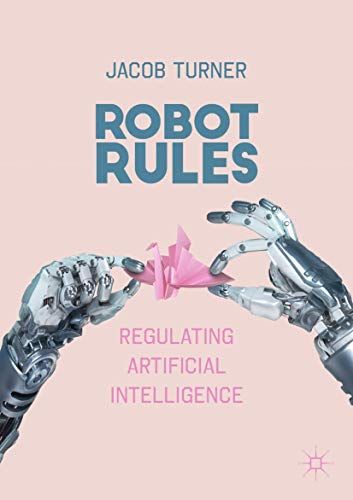
Nova: Right now, deep inside massive, humming data centers, millions of smart devices are whispering to each other. They are sharing data, making inferences, and optimizing our world, completely independent of human intervention. But what happens when one of those silent, autonomous decisions goes horribly wrong? Who do we hold responsible when the decision-maker isn't human, and even its creators don't understand why it made the choice it did? Welcome to the show. I am Nova, and today we are diving into Jacob Turner's brilliant book, Robot Rules: Regulating Artificial Intelligence. Joining me to map out this digital frontier is tech industry professional and analytical thinker, dirky smith. Dirky, it is so wonderful to have you here.
dirky smith: Thanks, Nova. It is great to be here. You know, that opening image of data centers whispering to each other, that is not science fiction. That is literally happening every millisecond. As someone who works in tech, I see the sheer scale of this infrastructure every day, and honestly, the legal and ethical frameworks we have right now are just not built for it. Turner's book really hits the nail on the head regarding that gap.
Nova: It really does. We are going to tackle this massive challenge from three distinct angles today. First, we will look at the Autonomy Paradox, why AI is fundamentally different from any tool we have ever built, using autonomous drones as our guide. Second, we will explore the Silent Grid of the Cloud and the Internet of Things, and the psychological stress humans face when machines run the show. And finally, we will discuss a wild, futuristic solution from the book, giving algorithms their own legal personality. So, dirky, let us start with this idea of autonomy. Turner says AI is unique because of three things: autonomy, unpredictability, and opacity. How do you see those three playing out in the real world?
Deep Dive into Core Topic 1
SECTION
dirky smith: Well, think about a traditional tool, like a car or a steam engine. If a steam engine explodes, we can trace it back to a mechanical failure, a design flaw, or operator error. The rules of liability are clear. But with modern AI, especially systems using deep learning, we are dealing with something entirely different. The system is autonomous, meaning it makes choices without direct human commands. It is unpredictable, meaning we cannot foresee every output. And it is opaque, meaning we often cannot trace the internal logic of how it arrived at a decision. In tech, we call this the black box problem.
Nova: The black box. It is like a brilliant assistant who gives you the perfect answer but can never explain their math.
dirky smith: Exactly. And that becomes incredibly dangerous when you apply it to something like unmanned aerial vehicles, or UAVs. Imagine an autonomous military drone patrolling a conflict zone. It is programmed with high-level parameters, but it uses real-time inference to identify threats. It analyzes satellite imagery, heat signatures, and local communications. If that drone makes an inference that a civilian vehicle is a hostile threat and decides to strike, who is legally responsible?
Nova: Right, because the programmer did not write a line of code saying strike this specific vehicle. They just wrote the learning algorithm.
dirky smith: Precisely. The programmer wrote the rules for how the machine learns, but the machine did the actual learning and decision-making on its own. So, can you sue the manufacturer? They will argue the system functioned exactly as designed, it adapted to its environment. Can you blame the military commander? They relied on the machine's superior processing power. This is what Turner calls the responsibility gap. Our current laws are designed for inanimate objects or human agents. AI sits in this weird, unprecedented middle ground.
Nova: It is like trying to apply the rules of the road to a horse that has its own mind. The horse might decide to jump a fence because it saw a snake, and you cannot really blame the carriage maker for that.
dirky smith: That is a perfect metaphor, Nova. And the stakes are rising because these systems are not operating in isolation. They are connected to a massive, global network.
Deep Dive into Core Topic 2
SECTION
Nova: Yes, and that brings us to our second big topic: the Silent Grid. We are talking about the Internet of Things, the Cloud, and those massive data centers we mentioned earlier. This is the physical backbone of artificial intelligence. It is not just some abstract concept in the ether; it requires massive physical resources, energy, and constant data sharing.
dirky smith: Right, and this is where the complexity really explodes. We are building an environment where machines are constantly interacting with other machines. Your smart thermostat talks to the local energy grid, which talks to a weather forecasting AI in the Cloud, which is hosted in a data center that is optimizing its own cooling systems using another AI. This is a highly integrated, self-optimizing technocracy. And for the most part, it works beautifully and seamlessly. But what happens to us, the humans, living inside this machine-to-machine ecosystem?
Nova: It feels like we are becoming guests in our own homes, right? There is this subtle, creeping behavioral health stress. We feel this pressure to adapt to the machines, rather than the other way around.
dirky smith: Absolutely. Psychologically, humans need a sense of agency and predictability to feel safe and healthy. But when our environments, our jobs, and even our access to resources are governed by invisible, shared information networks in the Cloud, we lose that sense of control. If an AI algorithm at a data center decides to throttle your internet speed or flag your account for suspicious activity based on some obscure inference, you are left fighting a system you cannot speak to or understand. That causes real, measurable anxiety and stress.
Nova: It is a very disempowering feeling. We are surrounded by these incredibly smart, silent systems, and we start to feel obsolete. It is like a new kind of technostress, where the risk is not that the machines will rebel and attack us, but that they will simply ignore us while they run the world.
dirky smith: Yes, they just keep optimizing themselves, and we are left dealing with the behavioral fallout. And because these systems are so interconnected, a failure in one part of the Cloud can cascade. If a shared data repository has corrupted data, every AI relying on that Cloud station makes flawed inferences. It is a systemic risk that no single company or country can control. That is why Turner argues we cannot just rely on tech companies to self-regulate. We need hard, global rules.
Synthesis & Takeaways
SECTION
Nova: So, how do we actually write those rules? This is where Turner gets really creative. He suggests that we might need to grant advanced AI systems a form of legal personality. Now, when I first read that, my jaw dropped. Are we talking about giving robots human rights?
dirky smith: It sounds crazy at first, but it is actually a very practical legal workaround. Think about corporations. A corporation is not a human being, but the law treats it as a legal person. It can own property, enter into contracts, and be sued in court. Turner suggests we do the same for autonomous AI. If an AI has legal personality, it can be held directly liable for its actions.
Nova: That is fascinating. But how does an AI pay damages if it loses a lawsuit? It does not have a bank account.
dirky smith: Well, under Turner's framework, it would. The AI, or its operators, would be required to pay into a mandatory insurance fund or hold assets in a digital wallet. If the AI's autonomous decisions cause harm, the victims are compensated directly from that fund. This solves the responsibility gap. We do not have to play a hopeless game of pin-the-tail-on-the-programmer. The system itself carries the liability.
Nova: That is incredibly elegant, dirky. It protects human innovation because developers do not have to fear infinite liability for unpredictable AI behavior, but it also ensures that victims of algorithmic errors are not left empty-handed. It is about creating a buffer between human well-being and machine autonomy.
dirky smith: Exactly. It acknowledges that AI is a new category of existence. It is not just a tool, but it is not a human either. It is something new, and it needs its own rules.
Nova: As we wrap up today, dirky, what is the big takeaway for you? For someone listening who might feel a bit overwhelmed by the scale of the Cloud, the IoT, and these autonomous systems, what should we keep in mind?
dirky smith: I think the key is to realize that the future of AI is not just a technical question; it is a political and social one. We cannot let the complexity of the technology intimidate us into silence. Whether you have a high school diploma, work in a data center, or write code, we all have a stake in how these systems are governed. We need to advocate for transparency, especially around how our data is shared in the Cloud and how inferences are made. We have to shape the rules before the algorithms shape us.
Nova: Beautifully said, dirky. The code may be autonomous, but the future is still ours to write. Thank you so much for sharing your insights with us today.
dirky smith: It was a pleasure, Nova. Thanks for having me.
Nova: And thank you to all our listeners. If this conversation sparked your curiosity, pick up a copy of Robot Rules by Jacob Turner. Let us keep asking the big questions, keep connecting the dots, and as always, let us stay curious together. See you next time.