The Wealth Algorithm: An Engineer's Guide to Rich Dad, Poor Dad
Golden Hook & Introduction
SECTION
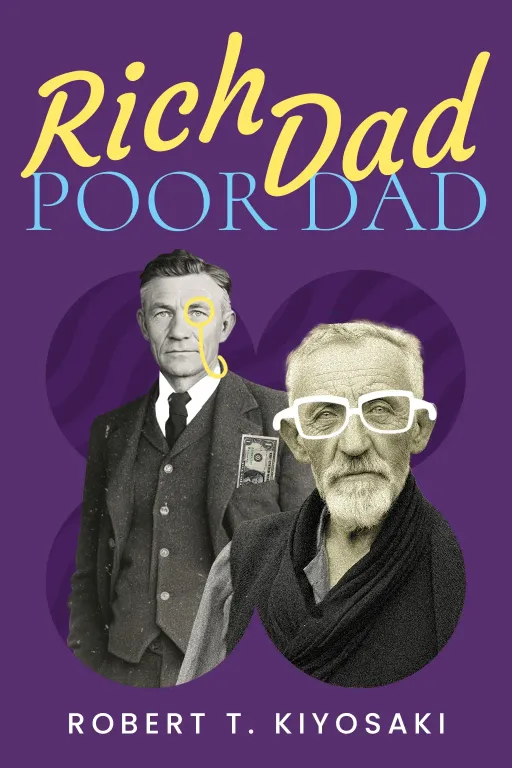
Nova: If your financial life was a program, who wrote the source code? For many of us, it’s the 'go to school, get good grades, find a safe, secure job' algorithm. It’s stable, it’s reliable… but what if it’s full of security holes we can’t see? What if it’s legacy code? That's the provocative question at the heart of Robert Kiyosaki's "Rich Dad, Poor Dad." And today, we have software engineer Thomas here to help us deconstruct it. Welcome, Thomas!
Thomas: Thanks for having me, Nova. That's a great way to put it. In tech, we're always looking for more efficient, robust code. The idea that our whole career philosophy might be 'legacy code' is both fascinating and a little unnerving.
Nova: It is, isn't it? And Kiyosaki's book is designed to be exactly that: unnerving. It challenges everything we're taught about success. So today, we'll deconstruct this from two angles. First, we'll explore the two competing 'mindset algorithms' of the Rich Dad and the Poor Dad. Then, we'll dive into the core logic of Kiyosaki's financial system: the critical difference between assets and liabilities, and how it defines who gets trapped in what he calls the 'Rat Race.'
Thomas: Sounds like a plan. I'm ready to look under the hood.
Deep Dive into Core Topic 1: The Two Dads: Competing Mindset Algorithms
SECTION
Nova: Perfect. So, Kiyosaki frames this entire book around the story of his two dads. His real father, who he calls his 'Poor Dad,' was a brilliant, highly educated man, the head of education for the state of Hawaii. He believed in job security, pensions, and climbing the corporate ladder.
Thomas: The traditional path. The one we're all encouraged to follow.
Nova: Exactly. Then there was his 'Rich Dad,' his best friend's father. He was an eighth-grade dropout who eventually became one of the wealthiest men in Hawaii. His philosophy was the complete opposite. Poor Dad said, "The love of money is the root of all evil." Rich Dad said, "The of money is the root of all evil."
Thomas: So right from the start, they're running on completely different operating systems.
Nova: Completely. And Rich Dad's teaching methods were... unconventional. There’s a fantastic story early in the book. When Robert is just nine years old, he asks Rich Dad to teach him how to get rich. So, Rich Dad offers him and his friend a job in one of his convenience stores... for a measly 10 cents an hour. This is back in the 1950s, but even then, it was basically nothing.
Thomas: Okay, that sounds like exploitation, not education.
Nova: Right? And that's the point! For three weeks, the boys work every Saturday, dusting endless rows of canned goods. Robert gets more and more frustrated. He's giving up his playtime, his baseball games, for almost no money. He's finally had enough and storms in to quit, telling Rich Dad he's unfair and a cheapskate.
Thomas: I can imagine. I’d be pretty upset too.
Nova: But Rich Dad just smiles and says, "Good. You're finally getting angry. Most people never question the system. They just take the tiny paycheck. Now you're ready to learn." He explains that he's been teaching them the most important lesson: the poor and middle class work for money. The rich have money work for them. He says most people's lives are controlled by two emotions: fear and greed. The fear of not paying your bills makes you take a job. Once you get the paycheck, greed or desire makes you think of all the things you can buy. The pattern is set: get up, go to work, pay bills.
Thomas: It's an infinite loop. You're trapped. He’s not teaching them a skill, he’s pushing their emotional operating system to its breaking point to see how it responds. He's forcing a 'system crash' in their conventional thinking.
Nova: A system crash! I love that metaphor. It's so accurate. He was intentionally making them miserable with the 'work for pay' model. So, what was the new model he wanted them to install?
Thomas: To stop being a cog in his machine and to build their own. He wanted them to see opportunities, not paychecks. I remember later in the chapter, they do exactly that. They notice the store manager throwing out old comic books. They get permission to take them and start their own comic book library in a spare room, charging other kids admission.
Nova: Yes! They hired the friend's sister as the librarian and paid her. They were making money without even being there.
Thomas: Exactly. That comic book library was their first, simple 'money-making engine.' It was a system that worked for them. That's the real lesson. It wasn't about the 10 cents an hour; it was about breaking them out of that loop and getting them to think like system designers, not just workers.
Deep Dive into Core Topic 2: The Financial 'System': Assets, Liabilities, and the Rat Race
SECTION
Nova: Building a system that works for you... That's the perfect segue into Kiyosaki's second big idea, which is the actual architecture of that system. He argues it all comes down to one simple, almost brutally logical rule.
Thomas: This is where my engineering brain gets interested. I like rules.
Nova: I thought you might. The rule is this: You must know the difference between an asset and a liability, and you must buy assets. He defines them in the simplest way possible. An asset is something that puts money your pocket. A liability is something that takes money of your pocket. Period.
Thomas: That’s it? It’s just about the direction of cash flow?
Nova: That's it. It's not about what you call it, or what the bank calls it. It’s a pure cash-flow calculation. And this is where he gets really controversial. He says for most people, their biggest "asset"—their house—is actually their biggest liability.
Thomas: Oof. I can feel people bristling at that one.
Nova: Oh, for sure. But he illustrates it with a story about a typical young, educated couple. They get married, their careers take off, their income grows. So they do what they're "supposed" to do: they buy their dream house. But with the house comes a huge mortgage payment, property taxes, insurance, maintenance costs... money is just pouring out of their pockets every month.
Thomas: And they probably buy new furniture on a credit card to fill the new house, a new car to park in the new garage...
Nova: Exactly! Their expenses rise to meet, or even exceed, their new, higher income. They're working harder than ever, but they feel more financially stressed than before. They are, in Kiyosaki’s terms, trapped in the 'Rat Race.' They spend their lives working to pay for liabilities they think are assets.
Thomas: It’s another infinite loop, just a more luxurious one. The 'golden cage,' as some people call it.
Nova: So Thomas, this idea that your house is a liability must hit close to home for many successful professionals. From a purely logical, engineering standpoint, how does this binary definition strike you?
Thomas: I actually appreciate the clarity. In software development, ambiguous definitions lead to bugs and system failures. This rule cuts through all the emotional baggage we attach to our possessions. It forces you to ignore the label and just look at the data: is cash flowing in or out? It reframes the house not as an 'investment' in the same category as a stock that pays dividends, but as a 'personal use utility' with a very high running cost.
Nova: A 'personal use utility.' That's a great, unemotional way to describe it.
Thomas: It doesn't mean you shouldn't buy a house. But it means you shouldn't fool yourself into thinking it's actively building your wealth month-to-month. It's a lifestyle choice that consumes resources. Kiyosaki's point, I think, is that the wealthy understand this distinction. They use their primary income to buy true assets first—things like rental properties, businesses, dividend-paying stocks—things that generate income.
Nova: And then they use the cash flow from assets to buy the luxuries, like the big house.
Thomas: Precisely. They build the engine before they upgrade the car's interior. The middle class often does it backwards. They get a raise and immediately upgrade their liabilities, which just locks them more tightly into their job. It's a system that's perfectly designed to keep you dependent.
Synthesis & Takeaways
SECTION
Nova: So, when we put it all together, it’s really a two-part solution he's proposing. First, you have to reboot your entire mental algorithm, shifting from 'work for money' to 'build systems that make money.'
Thomas: Right, that's the mindset change. The 'why.'
Nova: And second, you build that system using the simple, logical rule of acquiring assets that generate positive cash flow, not liabilities that drain it.
Thomas: That's the mechanical part. The 'how.' It's about changing your philosophy and then applying a very clear, logical rule set to your financial decisions. It’s a powerful combination.
Nova: It really is. So, for our listeners, especially those who are analytical thinkers like you, Thomas, what's one small 'side project' they could start this week to begin applying these ideas without, you know, selling their house and quitting their job tomorrow?
Thomas: Right, let's not get ahead of ourselves. I'd say don't try to build a whole new operating system overnight. Start with a diagnostic. For one month, track your cash flow, but use Kiyosaki's strict definitions. Get a piece of paper or a spreadsheet. List your income. Then list all your expenses. Then, draw two columns: Assets and Liabilities.
Nova: And be brutally honest.
Thomas: Be brutally honest. If your car payment takes money out, it's a liability. If your house payment takes money out, it's a liability. If you have a stock that pays a dividend, that's an asset. Just see where the money is actually flowing. The data might surprise you. That's the first step to debugging your own financial code.
Nova: Debugging your financial code. There's no better way to end it. Thomas, thank you so much for helping us deconstruct this.
Thomas: My pleasure, Nova. It was a lot of fun.