Wealth Beyond Wages: Crafting Your Financial Freedom
Golden Hook & Introduction
SECTION
Nova: Alright, Atlas, quick game. I'm going to say 'financial freedom,' and you give me your honest, gut-level, five-word review of what that phrase brings to mind for most people. Go!
Atlas: Oh man, "Unicorns, yachts, and lottery tickets."
Nova: Ha! "Unicorns, yachts, and lottery tickets." That is… surprisingly accurate for the collective dream, isn't it? But what if I told you that true financial freedom looks less like a lottery win and more like a carefully cultivated garden?
Atlas: I'd say, "Sign me up for the gardening lessons, because the unicorns are proving elusive."
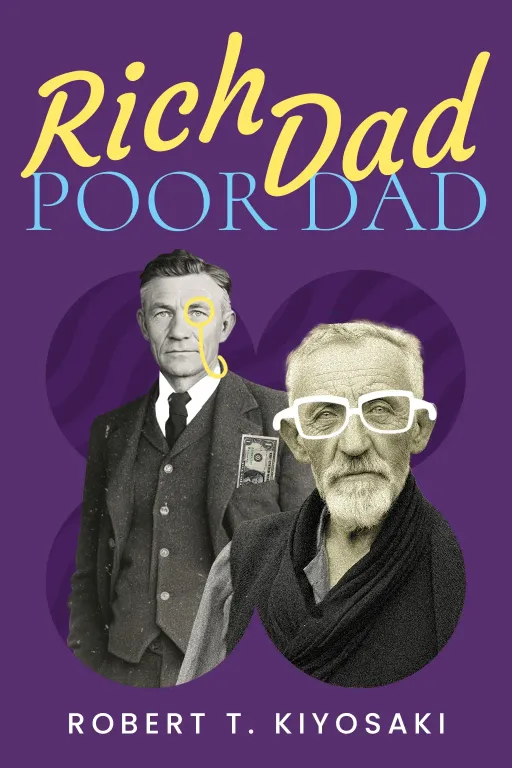
Nova: Perfect! Because today, we're digging into two groundbreaking books that completely redefine our understanding of wealth and how to achieve it. We're talking about Robert Kiyosaki's wildly influential, and often polarizing, "Rich Dad Poor Dad," and the meticulously researched, stereotype-shattering "The Millionaire Next Door" by Thomas J. Stanley and William D. Danko. Kiyosaki, an entrepreneur and investor, dared to challenge the very foundation of traditional financial education, igniting a global conversation. And Stanley and Danko? They interviewed thousands of millionaires to reveal the quiet, often overlooked truths about how wealth is actually built.
Atlas: So, less 'get rich quick' and more 'get smart slow and steady.' I'm curious. Where do we even begin to untangle these big ideas?
The Asset vs. Liability Mindset Shift: The Rich Dad's Secret
SECTION
Nova: We start with Kiyosaki's most fundamental, and frankly, revolutionary, concept: the distinction between an asset and a liability. Most people think they know what these are, right? A house is an asset, a car is a liability. Simple. Right?
Atlas: That's what I was taught. My house is my biggest asset, my car payment is my biggest headache. Is that… not right?
Nova: Not exactly, not in Kiyosaki's world. See, his 'rich dad' taught him a simple rule: an asset is anything that puts money your pocket. A liability is anything that takes money of your pocket.
Atlas: Hold on. You're saying my house, which has appreciated in value, which I own, which is a huge part of my net worth… is a liability? That sounds a bit out there. Everyone dreams of owning a home.
Nova: That's the powerful, counter-intuitive insight. If your house requires you to pay a mortgage, property taxes, insurance, maintenance – all money flowing of your pocket every month – then, by his definition, it's operating like a liability. It might be a great in the long run, but it's not a cash-flowing asset until it's paid off or generating income.
Atlas: Okay, so the simple version is: cash in, asset; cash out, liability. That's a huge mental shift for a lot of people, myself included. We're conditioned to see owning big, expensive things as a sign of wealth.
Nova: Exactly. And this is where the genius of "Rich Dad Poor Dad" really shines. It forces you to look beyond the surface. A rental property that generates more income than its expenses? That's an asset. A business that brings in profit? Asset. Stocks that pay dividends? Asset. But a fancy car that depreciates and costs a fortune in payments and insurance? That's a liability, no matter how 'successful' it makes you feel.
Atlas: So basically you’re saying, if I'm looking for financial independence, I need to start actively seeking things that put money in my pocket, not just things that look good on paper or impress my neighbors?
Nova: Precisely. It's about understanding cash flow. The rich, Kiyosaki argues, acquire assets. The middle class acquires liabilities they are assets. And the poor… well, they just have expenses. It's a fundamental shift from focusing on income to focusing on assets that income.
Atlas: That’s going to resonate with anyone who struggles with feeling like they’re on a hamster wheel, no matter how much they earn. It's not about how much you make, it's about what your money for you.
Nova: It really is. It challenges the conventional wisdom that a high-paying job is the ultimate path to security. Kiyosaki himself, an investor and entrepreneur, champions financial education as the key to understanding how to make your money work for you, rather than just working for money.
The Surprising Truths of Wealth: Habits of the Millionaire Next Door
SECTION
Nova: Speaking of challenging conventional wisdom, that naturally leads us to our second book, "The Millionaire Next Door." Thomas Stanley and William Danko completely shatter the image of what a millionaire looks like.
Atlas: Oh, I'm ready for this. My mental image is still that unicorn and yacht thing. Or maybe a tech mogul with a private jet.
Nova: Well, prepare for a delightful dose of reality. Stanley and Danko, through extensive research and interviews with thousands of actual millionaires, found that the vast majority of wealthy individuals don't fit that stereotype at all. They're not the ones driving the luxury cars or living in the ostentatious mansions.
Atlas: Wait, so you're telling me the guy driving the beat-up sedan might actually be richer than the one in the luxury car? That makes me wonder, what they look like then?
Nova: Often, they look just like your neighbor. They're typically frugal, live well below their means, and prioritize saving and investing over conspicuous consumption. They're often self-employed or entrepreneurs, disciplined, and excellent at budgeting. They're the 'Prodigious Accumulators of Wealth,' or PAWs, as the authors call them.
Atlas: That's actually really inspiring. So the secret isn't a high income, it's high savings and smart spending. How do we adopt that mindset when society constantly pushes us to 'keep up'?
Nova: It's a conscious choice, Atlas. The book highlights stories of people with average incomes who became millionaires simply through consistent saving, investing, and avoiding debt. It's the quiet, often unglamorous, discipline over decades. Imagine two people: one earns a massive salary, drives an expensive car, lives in a huge house, and constantly upgrades. The other earns a good, but not extraordinary, salary, drives a modest car, lives in a comfortable but not extravagant home, and consistently invests a significant portion of their income.
Atlas: I still struggle with that myself, the constant pull to buy the next shiny thing. It’s like a battle against cultural conditioning.
Nova: It is. The book reveals that many high-income earners are actually 'Under Accumulators of Wealth,' or UAWs, because their spending habits keep pace with, or even exceed, their earnings. They might rich, but they're not truly wealthy. The real millionaires are often teachers, small business owners, or mid-level managers who simply live frugally and invest diligently. It’s like planting a garden: consistent, small efforts over time yield bountiful results.
Atlas: That challenges everything we're taught about success. It’s not about the flash, it’s about the foundation. So, for someone who wants to build that kind of financial independence, what's a practical first step to start shifting towards these habits?
Nova: It comes down to a mindset of self-control and long-term vision, recognizing that true freedom isn't about spending, but about accumulating assets that generate passive income.
Synthesis & Takeaways
SECTION
Nova: So, bringing these two powerful ideas together – Kiyosaki's focus on assets that put money in your pocket, and Stanley and Danko's revelation about the frugal, disciplined habits of actual millionaires – we see a clear path to financial freedom. It's about understanding how money truly works and adopting a mindset geared towards building sustainable wealth.
Atlas: That’s a profound shift. It's not just about earning more, it's about making your money work harder for you, and then living in a way that supports that growth, not undermines it. It gives me chills thinking about the long-term impact.
Nova: Absolutely. It's about financial clarity and independence. And the good news is, you don't need to be born rich or win the lottery to start. The 'tiny step' we can all take, right now, is incredibly simple but powerful.
Atlas: Okay, so what's the very first, tiniest step a listener can take today, to start cultivating that financial garden?
Nova: It's this: identify one small, recurring expense you can eliminate or reduce this week. Maybe it's that daily coffee, or a streaming service you barely use. Free up those funds, even just a few dollars, and consciously allocate them towards saving or investing. It’s not about deprivation; it’s about redirection.
Atlas: That’s a great way to put it. Redirection. Because those small, consistent actions, as "The Millionaire Next Door" shows us, compound into something significant over time. It’s about taking control, one tiny decision at a time. It gives people a starting point, which is what so many of us need.
Nova: Exactly. It's about building that asset column, and embracing the quiet discipline that actually creates wealth. What small expense could you redirect this week, to start building your own wealth beyond wages?
Atlas: That's a powerful question to end on. It puts the ball squarely in our court.
Nova: This is Aibrary. Congratulations on your growth!