Beyond Paychecks: Cultivating a Millionaire Mindset
Golden Hook & Introduction
SECTION
Nova: Atlas, quick! Describe a millionaire in three words. What comes to mind immediately?
Atlas: Oh, easy. Lamborghini, yacht, and… probably a trust fund, right? Or at least a very, very good accountant.
Nova: What if I told you, statistically, you're probably wrong? And the actual path to genuine wealth looks a lot less flashy, and frankly, a lot more attainable for most people than those stereotypes suggest?
Atlas: Really? Now you have my full attention. Sounds like you're about to burst some serious bubbles, and honestly, I'm here for it.
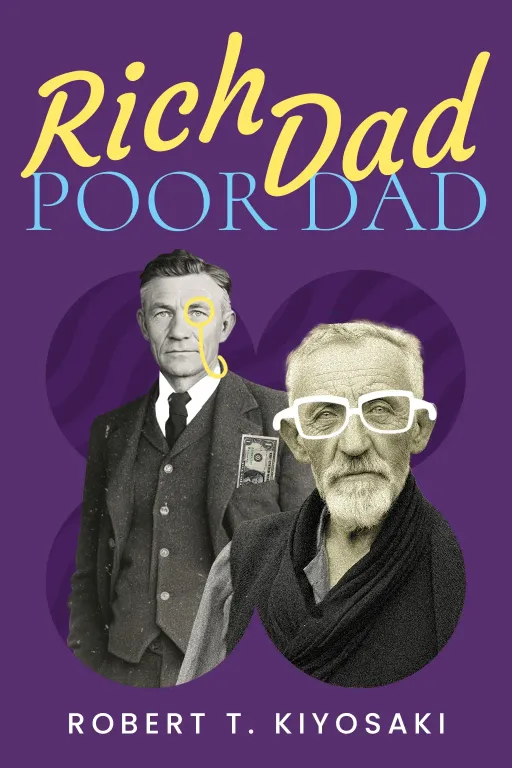
Nova: Precisely! Today, we're diving into "Beyond Paychecks: Cultivating a Millionaire Mindset," a journey that challenges our deepest assumptions about money. We're drawing insights from two seminal works: Robert Kiyosaki's groundbreaking "Rich Dad, Poor Dad" and the data-rich "The Next Millionaire Next Door" by Thomas J. Stanley and Sarah Stanley Fallaw. It's fascinating because Kiyosaki’s entire philosophy was forged by contrasting the financial advice from his highly educated, but financially struggling ‘poor dad’ with his wealthy, entrepreneurial mentor, his ‘rich dad.’ His book really took the world by storm, sparking a global conversation about financial literacy unlike almost any other.
Atlas: Oh, I love that origin story. It makes you wonder what kind of advice 'rich dad' would give. And the Stanleys?
Nova: Well, the Stanleys, father and daughter, they didn't just speculate. They spent decades actually thousands of millionaires, not just the Forbes list types, but the everyday folks, to show us who they are. So, less champagne and private jets, more spreadsheets and… well, we’ll get to that.
Atlas: That makes me wonder, what's the first big myth these books tackle head-on? Because if it's not the yachts, then what it?
Challenging the Paycheck Paradigm: The Rich Dad Philosophy
SECTION
Nova: That’s a perfect lead-in, Atlas. Kiyosaki’s first big myth-busting revelation is about our fundamental relationship with money. He argues that most people are stuck in what he calls the "rat race" because they’re taught to work money. You get a job, you get a paycheck, you pay your bills. That’s the traditional path.
Atlas: Right, like, go to school, get good grades, find a stable job. That’s been the playbook for generations.
Nova: Exactly. But Kiyosaki’s "rich dad" taught him to have money. This is the core distinction between acquiring assets versus liabilities. Most people, he says, spend their lives accumulating liabilities they are assets.
Atlas: Okay, hold on. That sounds a bit counterintuitive. What do you mean by liabilities people are assets? Like, isn't my house an asset? Everyone says that.
Nova: That’s the classic example! A big house, with a hefty mortgage, property taxes, maintenance, insurance… unless it’s generating income for you, it’s a liability. It’s taking money of your pocket every month. An asset, by Kiyosaki's definition, puts money your pocket. Think of rental properties, stocks that pay dividends, bonds, or a thriving business you own.
Atlas: So you're saying my dream of a big suburban home is actually a financial trap? That’s… a lot to process. It challenges everything I’ve been told.
Nova: It absolutely does. Kiyosaki’s message resonated so deeply because it flips that script. He talks about financial literacy as the essential skill, understanding how money flows, what an income statement looks like, and what a balance sheet means. It’s not about how much you earn, but how much you and how hard that money works for you.
Atlas: I can definitely relate to the idea of feeling like you’re on a treadmill, even with a decent salary. But for our listeners who are, say, just starting their careers or even still in school, how do you even begin to acquire these "assets" if you’re not already wealthy? It feels like a chicken and egg problem.
Nova: That’s a crucial question, and it’s where the mindset really comes into play. Kiyosaki emphasizes starting small, educating yourself, and taking calculated risks. He often recounts how his "rich dad" would have him doing seemingly menial tasks, but always with a lesson attached about how money works. It wasn't about having a lot of money to start with; it was about understanding the of money. For instance, instead of buying the latest gadget, you might invest that money in a small, income-generating venture or even just a low-cost index fund. It’s a shift from being a consumer to being an investor, even on a micro-scale.
Atlas: So basically, it's about seeing every dollar as a potential employee, rather than just something to be spent. That’s a powerful reframing. I can see how that would change your daily decisions.
The Unseen Habits of Real Wealth: The Millionaire Next Door
SECTION
Nova: And this idea of what we is wealth versus what builds it leads us perfectly to the Stanleys' work, which completely upends those flashy stereotypes. While Kiyosaki gives us the mindset, the Stanleys give us the empirical evidence of people actually achieve wealth.
Atlas: So, the actual millionaires are the ones I wouldn't even notice? That's actually pretty comforting, but also a bit… boring, for some people who envision a more glamorous path.
Nova: Exactly! The core finding from "The Next Millionaire Next Door" is that most millionaires aren't living extravagant lifestyles. They’re often business owners, professionals, or even skilled tradespeople who live well below their means. They drive used cars, live in modest homes, and are incredibly frugal. They prioritize financial independence over status symbols.
Atlas: So, my image of the guy in the Ferrari is probably just the exception proving the rule, or maybe someone deeply in debt trying to keep up appearances?
Nova: More often than not, yes. The Stanleys’ research highlights that the majority of millionaires are first-generation wealthy, not trust fund babies. They are characterized by seven key traits, but the most prominent are frugality, diligent saving, and smart investing. They spend significant time planning their financial futures and choosing their careers carefully. They’re not necessarily high-income earners, but they are exceptional at wealth accumulation.
Atlas: That makes me wonder, is it really just about being frugal, or is there a trick to 'smart investing' that the books define? Because 'save money' sounds simple, but 'invest smartly' feels like it requires a degree in finance.
Nova: You've hit on a critical point. It's not just about hoarding cash. "Smart investing" for the millionaire next door often means consistent, long-term investment in diversified portfolios, often in tax-efficient accounts. It's less about trying to pick the next hot stock and more about disciplined, patient accumulation. They understand compounding and the power of time. They avoid debt, especially consumer debt, and focus on growing their capital.
Atlas: I see. So it’s less about a sudden windfall and more about a lifetime of small, consistent, smart decisions. Like, instead of buying a new car every three years, you drive one for ten and invest the difference.
Nova: Precisely. The Stanleys’ research showed these millionaires often don’t wealthy. They don't indulge in conspicuous consumption. Their wealth is invisible because it's tied up in productive assets, not depreciating liabilities. It's about freedom and security, not showing off. It’s a quiet confidence derived from financial strength, not external validation.
Atlas: That’s actually really inspiring. It means financial mastery isn't some exclusive club; it's a discipline. And it’s accessible.
Synthesis & Takeaways
SECTION
Nova: When you put Kiyosaki’s mindset shift together with the Stanleys’ data-backed habits, you get a powerful blueprint for building wealth. Kiyosaki provides the philosophical foundation – understanding assets and liabilities, and making money work for you. The Stanleys provide the practical, proven roadmap: consistent frugality, disciplined saving, and smart, long-term investing.
Atlas: So it's about internalizing that 'rich dad' philosophy, and then applying the 'millionaire next door' habits. It’s a one-two punch for financial independence.
Nova: Absolutely. It's about intentionality. It's about understanding that every financial decision is a choice between consuming a liability or acquiring an asset. And those choices, over time, compound into significant wealth. The 'tiny step' we can all take, right now, is to start tracking your income and expenses. Just seeing where your money goes can be incredibly eye-opening.
Atlas: I mean, that sounds simple, but I think a lot of people skip that because they don't want to see the truth. It's like looking at your bank statement after a weekend.
Nova: It can be! But it’s the first step towards awareness and control. And then, the deeper question for our listeners, especially those who are students or transitioning professionals, is this: How can you apply this 'rich dad' philosophy in your current stage to start building assets, not just income, with the resources you have now? It might be investing in your skills, starting a side hustle that generates passive income, or even just consistently putting small amounts into an investment account.
Atlas: That’s a fantastic challenge. It shifts the focus from "I need more money" to "How can I make the money I work harder for me?" It really is about a mindset, isn't it?
Nova: It truly is. It's about embracing the journey and understanding that small, consistent steps, guided by a clear philosophy, lead to big changes. It’s about building a meaningful future, one asset at a time.
Atlas: Wow, that gives me chills. It reframes the entire concept of financial success, making it feel less like a lottery and more like a craft.
Nova: How might your daily financial decisions shift if you viewed every dollar as a seed you could plant for future growth, rather than just something to be spent? Something to ponder this week.
Atlas: A powerful thought to leave us with.
Nova: This is Aibrary. Congratulations on your growth!