Modern Wealth: Classics vs. Cutting Edge
Golden Hook & Introduction
SECTION
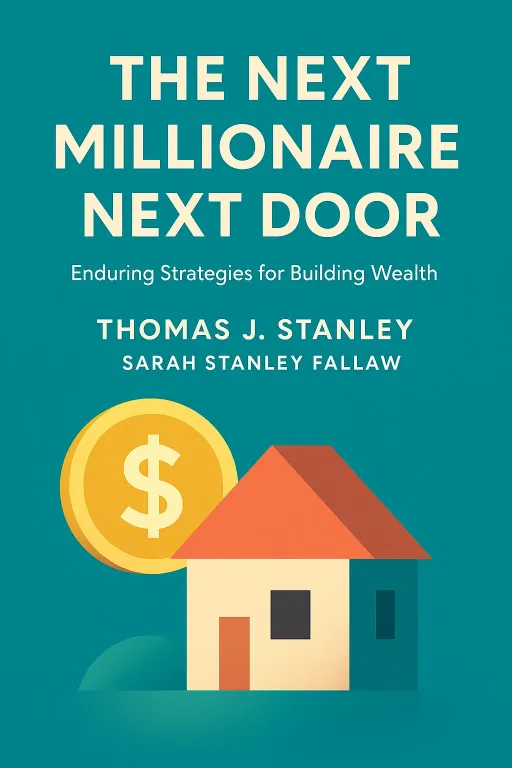
Nova: Atlas, five words. "The Next Millionaire Next Door." Go.
Atlas: Quietly building wealth, surprisingly simple habits.
Nova: Oh, I love that. "Surprisingly simple habits." That nails so much of what that book stands for. And today, we’re taking that classic, enduring wisdom and putting it in conversation with the bold, often taboo-breaking insights of Vivian Tu’s "Rich AF."
Atlas: That’s quite the pairing! So we’re talking old-school discipline versus new-school strategy. I’m already intrigued.
Nova: Absolutely. On one side, we have Stanley and Fallaw, who, building on literally decades of rigorous research initiated by Thomas Stanley, have shown us the timeless, often invisible path to financial independence. They surveyed thousands of self-made millionaires, not the flashy ones, but the ones you’d never suspect.
Atlas: Right, the ones who drive an old car and live in a modest house, not the Lamborghinis and mansions.
Nova: Exactly! And then, on the other side, we have Vivian Tu. She’s a former Wall Street equity trader who’s cultivated a massive online following as "Your Rich BFF," known for her direct, no-nonsense, and incredibly empowering approach to financial literacy. Her book is praised for its accessible yet profound tone, aiming to demystify money for a new generation. It’s all about wealth acceleration and breaking down the mental barriers around finance.
Atlas: So, a deep dive into proven principles versus a sharp, modern guide for tangible financial impact. How do these seemingly different worlds connect? Or do they clash?
Nova: That’s the core of our conversation today. We’re going to explore how these two powerful perspectives, rather than being at odds, actually offer a comprehensive toolkit for anyone serious about building lasting wealth in any economic landscape. First, we'll explore those foundational habits of enduring wealth, then we'll discuss the bold, modern strategies for financial literacy and acceleration, and finally, we'll focus on how to integrate these powerful approaches for real-world impact.
The Classic Millionaire: Foundations of Enduring Wealth
SECTION
Nova: Let’s start with "The Next Millionaire Next Door." The central premise, which is almost revolutionary in its simplicity, is that the vast majority of millionaires don't fit the flashy, high-consumption stereotype. They're not the ones you see on reality TV.
Atlas: Oh, I know that feeling. For our listeners who are driven by progress and tangible results, the image of a millionaire is often someone with visible markers of success. But this book flips that.
Nova: It absolutely does. Stanley and Fallaw’s research consistently points to a group they call "Prodigious Accumulators of Wealth" or PAWs. These are individuals who, relative to their income, have accumulated significant net worth. And their habits are strikingly consistent: frugality, budgeting, disciplined saving, and long-term planning. It’s about living below your means, consistently.
Atlas: So it's not about how much you earn, but how much you keep and how you manage what you keep. But wait, in a world that constantly bombards us with messages of "treat yourself" and instant gratification, how does that work? Is it just about deprivation? Because for someone focused on innovation and impact, simply "saving" can feel passive.
Nova: That’s a crucial distinction. It’s not about deprivation; it’s about and. The book shows that these PAWs aren't necessarily denying themselves pleasure, but they derive joy from financial security and the freedom it buys. They budget their time and energy as diligently as their money, often spending hours planning their financial future. This isn't passive; it's profoundly strategic.
Atlas: I guess that makes sense. It's about aligning your spending with your values, and if your value is long-term security or the freedom to pursue big projects, then short-term consumerism takes a back seat. It’s a purposeful choice.
Nova: Exactly. Consider the case study of a retired professor featured in the original research. He lived in a modest home, drove an older car, and was often mistaken for someone of average means. Yet, through decades of consistent saving, investing, and avoiding debt, he accumulated a multi-million dollar net worth. His "frugality" wasn't a punishment; it was a deliberate strategy to achieve true financial autonomy. He didn't chase status symbols; he chased freedom.
Atlas: That’s a great way to put it. It shifts the mindset from "I can't buy that" to "I choose not to buy that because something else is more important." For a pragmatic strategist, that's powerful control. It sounds like the classic wisdom is about building an incredibly strong, resilient foundation.
Nova: It truly is. It's the bedrock. And it highlights that wealth isn't just about the numbers in your account, but the habits that lead to those numbers, and the mindset that sustains them. It's about being content with enough, and channeling resources towards what truly matters for your future.
Modern Wealth Acceleration: Rich AF Strategies
SECTION
Nova: Now, while that classic wisdom is absolutely crucial, the financial landscape today is also vastly different from what it was decades ago. This is where Vivian Tu’s "Rich AF" comes in, offering a bold, modern, and incredibly actionable guide for wealth acceleration.
Atlas: Okay, so if "The Next Millionaire Next Door" is about the slow, steady burn, what’s Tu’s take? Does she advocate for a faster, perhaps more aggressive approach? Because for innovators, speed and efficiency are key.
Nova: She absolutely does. Her philosophy is less about quiet accumulation and more about active, informed, and sometimes aggressive wealth building for the current generation. She tackles what she calls "money taboos" head-on. Things like openly discussing salary, negotiating for higher pay, understanding complex financial products, and leveraging side hustles. She really empowers people to take control, often with a direct, no-nonsense tone.
Atlas: Oh, I like that. For many, money is this opaque, intimidating subject. Breaking down those taboos and making it accessible for a new generation, that’s impact. So, what are some of the specific, actionable strategies she champions?
Nova: Well, she emphasizes that financial literacy is power. She breaks down concepts like understanding your credit score, not as a scary number, but as a tool. She encourages aggressive salary negotiation, not just once, but throughout your career. She demystifies investing, showing that you don't need a massive amount of capital to start, and that even small, consistent investments can yield significant returns over time, especially with modern, low-cost options.
Atlas: So, it’s not just about saving more, it’s about making your money work harder for you, faster. She’s giving people the playbook for how to navigate the current financial environment, which, let's be honest, is a lot more complex than it used to be. Things like crypto, NFTs, online businesses – these weren't part of the classic millionaire's toolkit.
Nova: Exactly. She provides practical steps for things like optimizing your 401k, understanding different types of investment accounts, and even managing debt strategically. It’s about being proactive and informed in a world where information is readily available but often overwhelming. For example, she might illustrate how a strategic salary negotiation, even for a few thousand dollars, compounded over a career, can be far more impactful than extreme frugality alone. She pushes people to ask for what they're worth and to understand the mechanisms of wealth creation beyond just a paycheck.
Atlas: That sounds like the "tangible results" and "strategic approach" our listeners crave. But wait, how does this aggressive wealth acceleration, this focus on leveraging and negotiating, reconcile with the deep frugality and long-term planning from "The Next Millionaire Next Door"? Is it about spending more to make more? How does a focused innovator balance speed with security?
Nova: That’s the million-dollar question, isn't it? And the beautiful thing is, they're not mutually exclusive.
Bridging the Gap: Integrating Classic Wisdom with Modern Action
SECTION
Nova: The real power comes from seeing these two approaches not as opposing forces, but as complementary strategies. The classic wisdom from Stanley and Fallaw provides the bedrock, the discipline, the financial integrity. Vivian Tu’s "Rich AF" provides the acceleration, the informed action, the understanding of how to thrive in today's specific financial ecosystem.
Atlas: So, it’s about building a solid base, but then not being afraid to press the gas and navigate the modern financial landscape with confidence. This resonates with the "focused innovator" mindset. It’s about strategic action, not just passive saving.
Nova: Precisely. Think of it this way: "The Next Millionaire Next Door" teaches you how to build an incredibly fuel-efficient, durable engine that can run for decades. It's about mastering the mechanics of saving, living below your means, and avoiding debt. "Rich AF" teaches you how to drive that engine – how to navigate the modern roads, use the latest GPS, and accelerate strategically when the opportunities arise.
Atlas: That’s a perfect analogy. You need both. A super-efficient engine won't get you anywhere fast if you don't know how to drive, and a powerful driver is limited by a clunky, inefficient engine.
Nova: Absolutely. Frugality, as taught by Stanley and Fallaw, isn't about being cheap; it's about freeing up capital. That freed-up capital is the fuel for the aggressive investment strategies and career negotiations that Tu advocates. You can't aggressively invest if you're drowning in consumer debt or living paycheck to paycheck. The classic wisdom gives you the margin.
Atlas: And the modern approach gives you the knowledge to deploy that margin effectively. It’s about making those savings work harder, rather than just sitting in a low-interest account. So, for our pragmatic strategists, the takeaway is to be both strategically frugal and aggressively smart with your money.
Nova: Exactly. It’s about understanding your net worth, actively managing it, and continuously educating yourself. It’s about having the discipline to save, but also the courage and knowledge to invest, negotiate, and leverage opportunities. That combination creates true financial resilience and accelerated growth.
Atlas: I can definitely see how that would be impactful. It’s about building a secure future, but also understanding how to actively shape that future with the tools available right now.
Synthesis & Takeaways
SECTION
Nova: So, the deep insight here is that true wealth isn't just about accumulation, but about purposeful accumulation strategic deployment. It’s about understanding the timeless principles that create security, and then applying cutting-edge knowledge to accelerate that security into genuine prosperity and freedom.
Atlas: It’s about understanding your money, not just hoarding it. And that empowers you to create the future you want, rather than being a slave to arbitrary savings goals or feeling overwhelmed by complex financial systems.
Nova: For our pragmatic strategists and focused innovators, it’s all about tangible results. The classic wisdom gives you the discipline to save; the modern approach gives you the tools to make that saving work harder and faster. It’s about recognizing that the journey isn't always perfect, but consistent, informed action leads to progress.
Atlas: So, don't just save to save. Save to, save to, save to. That's the real impact. And understanding both sides equips you for any economic landscape, giving you both the stability of a strong foundation and the agility to seize modern opportunities.
Nova: That’s a powerful combination for anyone looking to truly master their financial future.
Atlas: It certainly is.
Nova: This is Aibrary. Congratulations on your growth!