Cultivating Inner Strength: Resilience in Complex Times
Golden Hook & Introduction
SECTION
Nova: What if the very idea of "bouncing back" from adversity is actually selling ourselves short? What if we could do more than just recover, but actually grow stronger, more compassionate, and more capable of the challenges we face?
Atlas: Selling ourselves short? How so? That sounds almost… counter-intuitive. Aren't we just trying to survive sometimes, let alone grow stronger from the tough stuff?
Nova: It's a powerful reframe, isn't it? And it's at the heart of what we're exploring today. We're diving into two remarkable books that, together, offer a compelling roadmap for not just enduring, but truly thriving in our increasingly complex world.
Atlas: Okay, I’m listening. What are these guiding lights in the complexity?
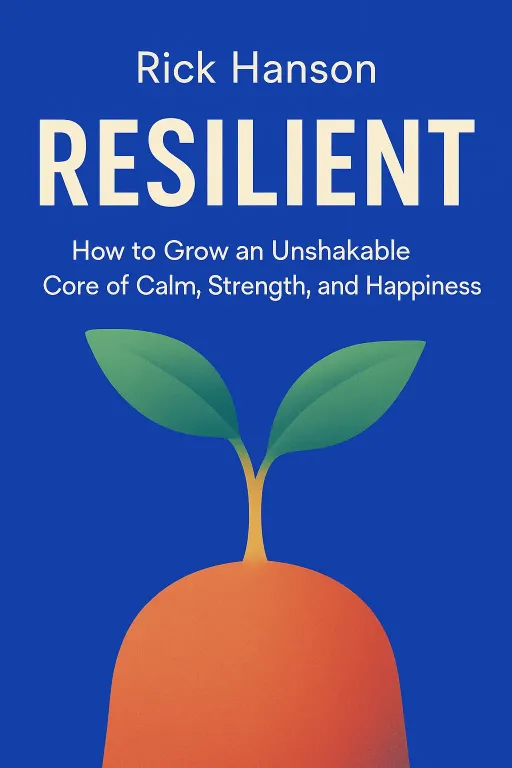
Nova: First up, we have "Resilient: How to Grow an Unshakable Core of Calm, Strength, and Happiness" by Rick Hanson, a renowned neuropsychologist and meditation teacher, and his son, Forrest Hanson. Their work brings a fantastic blend of rigorous science and deeply practical mindfulness.
Atlas: Oh, I like that. Science-backed calm. And the other book?
Nova: That would be "Simple Habits for Complex Times: Powerful Practices for Leaders" by Jennifer Garvey Berger and Keith Johnston. They're both highly respected in the field of leadership development, known for their pragmatic, real-world strategies for leaders navigating ambiguity.
Atlas: So, we're talking about inner strength and outer agility, personal and professional, all in one go. That’s a big canvas.
Nova: Absolutely. And the magic happens when you see how interconnected they are. We'll start with that foundational inner strength, because it really is the bedrock for everything else.
Deep Dive into Core Topic 1: Individual Resilience
SECTION
Nova: Rick and Forrest Hanson, in "Resilient," argue that our inner strengths – qualities like grit, compassion, courage, even contentment – aren't fixed traits we're born with. They are like muscles that can be intentionally developed.
Atlas: Wait, are you saying I can actually more grit? That it’s not just something you either have or you don't?
Nova: Exactly. And here's the crucial part: it’s not just about positive thinking. It’s about. They explain how our brains have a negativity bias, an ancient survival mechanism that makes us hyper-aware of threats. But we can consciously work to balance that.
Atlas: Actual brain changes? That’s fascinating. What does that look like in practice? Give me a concrete example of a "tiny step" to grow this inner strength.
Nova: One of their most powerful, yet simple, practices is "taking in the good." It’s about consciously savoring a small positive experience for 10 to 20 seconds.
Atlas: Savoring? Like, really paying attention to a good cup of coffee?
Nova: Precisely. Or a kind word from a colleague, a moment of sunshine, a small success. They call it the "HEAL" process: Have a positive experience, Enrich it by staying with it, Absorb it by feeling it sink into you, and Link it to something negative if you want to balance an old wound. By doing this, you're literally strengthening the neural pathways for positive experiences.
Atlas: That sounds… almost too simple for "complex times." What about the really tough stuff? Does savoring a cup of coffee help when the world's on fire?
Nova: That’s a great question, and it speaks to the cumulative nature of this work. It's not about ignoring challenges. It's about building a robust internal reservoir of these strengths the crisis hits. When you've consistently taken in the good, you've built neural circuitry for calm, for courage, for connection. So when adversity strikes, you have more resources to draw upon. You don't just bounce back; you have a deeper well of resilience to tap into.
Atlas: So, it's preventative and cumulative. For our listeners who are constantly dealing with high-pressure situations, this idea of building a "resilience reserve" sounds genuinely appealing. It’s like emotional banking.
Nova: That’s a perfect analogy, Atlas. And the beauty is, it doesn't require hours of meditation. It's about integrating these tiny moments into your daily life. What you practice grows stronger.
Deep Dive into Core Topic 2: Organizational / Adaptive Leadership
SECTION
Nova: Speaking of high-pressure situations, what happens when that complexity isn't just personal, but organizational? That's where "Simple Habits for Complex Times" comes in. Berger and Johnston shift the focus to leadership within organizations, offering practices to navigate ambiguity and foster adaptive capacity.
Atlas: So, how do "simple habits" tackle "complex times"? That sounds like an oxymoron. Is it just about being more efficient?
Nova: It’s far more profound than just efficiency. It’s about fundamentally changing leaders operate in environments where there are no easy answers. One of their key habits is "asking more questions."
Atlas: Asking more questions? Instead of having all the answers? That sounds like it could slow things down, or even make a leader seem indecisive. Isn't a leader supposed to?
Nova: From a traditional, command-and-control perspective, perhaps. But in complex times, where problems are often novel and interconnected, no single leader can possess all the solutions. So, instead of declaring, a leader might ask their team, "What are all the ways we could be wrong about this?" or "What perspectives are we missing here?"
Atlas: That’s a fundamentally different stance. It requires a certain humility, doesn't it? To admit you don't have all the answers.
Nova: Absolutely. And that humility is a superpower. By asking more questions, by actively seeking multiple perspectives, and by experimenting with small, safe-to-fail solutions, leaders aren't just solving problems; they're building the organization's capacity to adapt and learn. They're fostering a culture where collective intelligence triumphs over individual brilliance. It’s about holding multiple truths simultaneously, which is incredibly difficult but vital in ambiguity.
Atlas: So it's less about having "the answer" and more about creating a system that can answers, even when the questions keep changing. That’s a powerful distinction, especially for anyone managing teams in a fast-moving industry.
Nova: Exactly. It moves beyond just coping with change to actively cultivating an organization that can evolve with it. The simple habits, consistently applied, transform complex systems.
Synthesis & Takeaways
SECTION
Nova: Ultimately, both books are about developing a different kind of strength. One internal, one collective. Both are about being more responsive and less reactive, moving from a fixed mindset to an adaptive one.
Atlas: It feels like they're saying: master yourself, then master your environment, but not in a conquering way, more in an adaptive, flowing way. It’s about building capacity.
Nova: That’s it. Both the Hansons and Berger and Johnston emphasize that these aren't grand, overwhelming overhauls. It's about intentional, small shifts that yield massive results over time. Rick Hanson would say, "What you practice grows stronger." Berger and Johnston would echo that, saying "Simple habits, consistently applied, transform complex systems."
Atlas: So, for our listeners, what's one personal resilience practice they could try this week, and one 'simple habit' they could introduce professionally to better navigate complexity? Something tangible.
Nova: For personal resilience, commit to taking 30 seconds, just 30 seconds, to "take in the good" from one positive moment each day. Really savor it. And professionally, before your next big decision, actively seek out two colleagues for a perspective you will differ from yours. Ask them, "What am I missing here?"
Atlas: That's actionable. It’s about building those neural pathways and organizational pathways, isn't it? Starting small, but thinking big.
Nova: Absolutely. It's about evolving, not just enduring.
Atlas: That’s actually really inspiring. It frames challenges as opportunities for growth, both personally and professionally.
Nova: Indeed. And that's a powerful shift worth cultivating. Thank you, Atlas, for illuminating these concepts today.
Atlas: Always a pleasure, Nova.