

The Founder's Paradox: Surrendering Control to Prevent Burnout
Golden Hook & Introduction
SECTION
Dr. Celeste Vega: Saksham, as a founder, you're told to be relentless, obsessive, to pour everything you have into your venture. But what happens when that very drive, the engine of your success, becomes a machine of self-destruction?
Saksham Kumar: That's the central question, isn't it? It's the paradox at the heart of entrepreneurship. We celebrate the hustle, the 100-hour weeks, but we don't talk about the psychological cost until someone crashes.
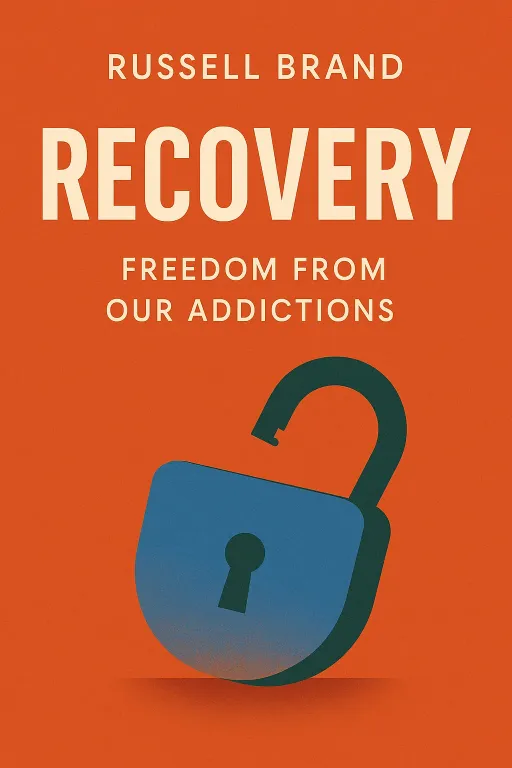
Dr. Celeste Vega: Exactly. And that's why today, we're looking for answers in a very unexpected place: Russell Brand's book,. Now, I know what people might be thinking, but Brand's argument is that we're all on the addiction scale somewhere, especially in a culture that rewards obsessive behavior.
Saksham Kumar: Which is the literal definition of startup culture.
Dr. Celeste Vega: Precisely. So today, we're going to explore this from three perspectives, using Brand's framework as a kind of operating manual for the founder's mind. First, we'll explore how that celebrated entrepreneurial drive can mirror the patterns of addiction.
Saksham Kumar: How to spot the problem.
Dr. Celeste Vega: Then, we'll discuss the great paradox for any leader: why surrendering control might be a founder's secret weapon.
Saksham Kumar: That's the one that's going to be tough for people to swallow, but I'm intrigued.
Dr. Celeste Vega: And finally, we'll focus on how a radical shift towards purpose-driven service can be the ultimate, sustainable cure for burnout. It's a journey from diagnosis to a surprising, powerful solution.
Deep Dive into Core Topic 1: The Entrepreneurial Addiction
SECTION
Dr. Celeste Vega: So let's start with that provocative first idea. Brand defines addiction not just as substance abuse, but as when "natural biological imperatives, like the need for... status, become prioritized to the point of destructiveness." Does that sound familiar in the tech world?
Saksham Kumar: It's the air we breathe. The need for status isn't just a nice-to-have; it's fundraising, it's hiring top talent, it's getting press. It's a core business function. But the "point of destructiveness" is the key. It's when you sacrifice your health, your relationships, your own mental stability, for the next milestone.
Dr. Celeste Vega: Brand has this incredible story that I think perfectly captures the feeling. He calls it his "Hotel Room Epiphany." He was on tour, living in absolute luxury—private jets, five-star hotels. He gets to this beautiful, chintzy hotel room in Brisbane, and the first thing he notices is that he can't open the window. He's in this hermetically sealed box of privilege, and all he feels is a desperate, primal yearning to breathe fresh air, to connect with something real. He feels trapped.
Saksham Kumar: Wow. That is a powerful metaphor. That's the founder's fishbowl. You're in the fancy office, you have the kombucha on tap, you've raised the money, but you're completely disconnected from a normal life. The "window that won't open" is being trapped inside your own metrics, your own Key Performance Indicators. You can see the world, but you can't actually touch it or be in it.
Dr. Celeste Vega: And this feeling of disconnection is the start of what Brand calls the cycle of addiction. He breaks it down into a 5-point guide. It starts with a feeling of pain or discomfort—like that disconnection.
Saksham Kumar: Okay.
Dr. Celeste Vega: Then you use an addictive agent for a temporary fix. Then you get a moment of anesthesia or distraction. But that's followed by consequences. And finally, shame and guilt, which just leads you right back to the initial pain.
Saksham Kumar: That's... disturbingly accurate. I can map that directly onto a product development cycle. The 'pain' is a quiet market or a competitor's success. The 'using' is the insane, 100-hour work week before a launch. The 'anesthesia' is the euphoria of launch day, the press, the initial sign-ups.
Dr. Celeste Vega: The fix.
Saksham Kumar: Exactly, the fix. But then come the 'consequences'—the bug reports, the server crashes, the user churn, the bad reviews. And that's followed by the 'shame' of feeling like you've failed your team, your investors, yourself. And what does that do? It just drives you right back to the pain of needing to build the thing to get that high again. It's a perfect loop.
Dr. Celeste Vega: It is. And once you see the pattern, you can't unsee it. Which brings us to the next, and perhaps most difficult, question. If you're stuck in that loop, how do you get out?
Deep Dive into Core Topic 2: The Surrender Paradox
SECTION
Dr. Celeste Vega: The typical founder's response to this cycle is to double down, right? To work harder, to exert more control, to optimize the system.
Saksham Kumar: Of course. The assumption is 'I'm the visionary, I just need to push harder and I can force the outcome I want.'
Dr. Celeste Vega: But Brand proposes a radical, counter-intuitive alternative in his version of Step 3. The original step is about turning your will over to a higher power. Brand's blunt, secular translation is: "Are you, on your own, going to ‘unfuck’ yourself?" The answer, he says, is no. The first step to getting out of the loop is to accept that your current plan isn't working.
Saksham Kumar: Okay, as a founder, that's a tough pill to swallow. The word 'surrender' sounds like giving up. My investors, my team—they don't want to hear that I'm 'surrendering'. It sounds like weakness.
Dr. Celeste Vega: I completely get that, and Brand does too. He had the same resistance. But he reframes it brilliantly. It's not about surrendering the. It's about surrendering the. It's admitting your personal operating system has a bug, and you can't fix it using the same flawed logic that created it.
Saksham Kumar: So it's not giving up, it's asking for help.
Dr. Celeste Vega: It's deciding to accept a new plan. He tells a small but profound story. He gets a hurtful email. His old programming, his old 'plan,' was to immediately fire back a defensive, aggressive response. That was his self-will in action. But in recovery, his new plan was different. He felt the anger, the hurt, but he paused. And he called someone from his program for help. He surrendered his impulse.
Saksham Kumar: And that disrupted the pattern.
Dr. Celeste Vega: It broke the cycle. He didn't act on the immediate, destructive impulse.
Saksham Kumar: You know, that reframes everything. It's not surrendering the business; it's surrendering the ego. It's admitting that maybe you don't have all the answers. It’s the humility to bring in a mentor, to actually listen to your board, to trust your team, or even to adopt a framework like this one. That's not weakness. That's a strategic decision to get an external debugger for your own flawed code.
Dr. Celeste Vega: That's a perfect way to put it. It's a strategic choice to adopt a new, more effective plan. And once you're open to that new plan, the next step is figuring out what, exactly, needs to be fixed.
Deep Dive into Core Topic 3: From Inventory to Impact
SECTION
Dr. Celeste Vega: This leads us to the final piece of the puzzle. Once you've accepted you need a new plan, you need to know what to work on. Brand's version of Step 4 is a "searching and fearless moral inventory." For a founder, let's call it a "root cause analysis of your own burnout patterns."
Saksham Kumar: A personal post-mortem, before you're the one who's dead.
Dr. Celeste Vega: Exactly. He suggests making a list of all your resentments—people, institutions, anything. Then, for each one, analyze what part of you was affected: your pride, your security, your ambitions. And then the hardest part: a fourth column where you identify your own part in it. Your mistakes, your selfishness, your fear.
Saksham Kumar: That's brutal. It's so much easier to blame a bad market, a difficult co-founder, or a competitor. To actually ask, "How did my ego, my 'self-seeking behavior' as Brand puts it, contribute to that partnership failing?" That's a level of accountability most of us avoid.
Dr. Celeste Vega: It is. But Brand argues that this inventory isn't for self-flagellation. It's a diagnosis. It's about finding the hidden beliefs that are running your life. But the inventory itself isn't the solution. The cure, he argues in Step 12, is service. It's a total pivot from introspection to action.
Saksham Kumar: From 'me' to 'we'.
Dr. Celeste Vega: Or even just to 'you'. He tells this incredible, raw story about going to a homeless shelter to help. He meets a veteran named Gruffy, a man addicted to heroin, with horrific leg ulcers. Brand and his friends try to help, they buy supplies, they even try to clean his wounds, but it's too much. They end up coaxing this man, who mistrusts all institutions, into a car and driving him to the emergency room.
Saksham Kumar: How did it turn out?
Dr. Celeste Vega: It was messy. They waited for hours, dealt with bureaucracy, and in the end, Gruffy didn't even get the help he needed that day. By any conventional metric, the mission was a failure. But Brand says the experience lifted him completely out of his own self-obsession. For those few hours, he wasn't thinking about his career, his problems, his ego. He just felt useful and connected.
Saksham Kumar: That's so powerful. Because in the startup world, we talk about 'mission' and 'impact,' but it's almost always tied to the company's success. It's still about our own goals. This is about finding a purpose that is completely disconnected from your own KPIs. It's not about 'scaling' your kindness. It's just... being useful. That feels like a real, genuine antidote to the ego-driven pressure cooker we live in.
Synthesis & Takeaways
SECTION
Dr. Celeste Vega: And that's the whole arc of this philosophy, isn't it? It's a three-step dance for the modern leader. First, see the destructive patterns in your own drive.
Saksham Kumar: Recognize that the hustle can be an addiction.
Dr. Celeste Vega: Second, surrender the ego. Accept that you can't solve the problem with the same thinking that created it.
Saksham Kumar: Make the strategic decision to ask for help and adopt a new plan.
Dr. Celeste Vega: And finally, pivot from self-analysis to selfless service. Find a purpose completely outside of your own success.
Saksham Kumar: It's a complete reframing of what it means to be strong. You go from being a lone hero trying to conquer the world to a connected person trying to be useful. That feels more sustainable, and honestly, more likely to lead to real, long-term success.
Dr. Celeste Vega: It's the ultimate paradox. The path to saving your venture might just be to focus on something, or someone, else entirely. So for every founder listening, here's a small, actionable challenge from Brand's Step 10, the maintenance step. Tonight, take five minutes. No phone, no laptop. Just ask yourself two questions: "When was I driven by fear or ego today?" and "When did I act from a place of service or connection?"
Saksham Kumar: That simple inventory, that moment of awareness... I have a feeling that might be the most valuable work you do all day.
Dr. Celeste Vega: It just might be. Saksham, thank you for exploring this unconventional but vital territory with me.
Saksham Kumar: This was fascinating. Thank you, Celeste.









