The Architecture of Personal Healing and Recovery
Golden Hook & Introduction
SECTION
Nova: We spend years upgrading our smartphones, optimizing our calendars, and refining our professional workflows, yet we rarely pause to update the operating system of our own internal lives. We run on legacy code, outdated beliefs, and habits that were installed in childhood, often wondering why the system crashes when life gets stressful.
Atlas: That is such a sharp way to put it. I think most of us are walking around with a version of ourselves that was finalized in our early twenties, and we are just trying to patch the bugs as they appear. It is exhausting. And the reality is, we are often trying to fix these bugs with the same tools that created them in the first place.
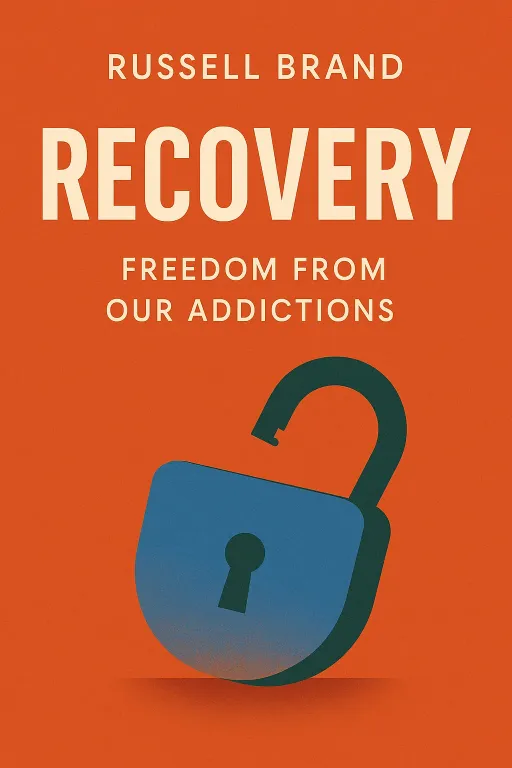
Nova: Exactly. Today, we are looking at two distinct but deeply connected frameworks for rewriting that code. We are diving into Recovery by Russell Brand, which offers a surprisingly grounded, modernized, and highly accessible take on the twelve-step program, and we are balancing that with You Can Thrive After Narcissistic Abuse by Melanie Tonia Evans.
Atlas: I am already curious about the friction between those two. On one hand, you have Brand, who is known for his chaotic energy and his very public journey through addiction, taking on a program that is usually seen as rigid. On the other, you have Evans, who deals with the very specific, very precise trauma of narcissistic abuse. Combining these feels like we are looking at the architecture of healing from two different angles: the external habit and the internal foundation.
Nova: That is the perfect way to frame it. Brand’s book, Recovery, is fascinating because he strips away the institutional layers of the twelve-step tradition. He treats addiction not as a moral failing but as a survival mechanism—a way to cope with the pain of being human. He wrote this from the perspective of someone who has been through the wringer, and his voice is raw, irreverent, and deeply empathetic. It resonates because he admits that he is still just a guy trying to figure out how to be okay in a world that is designed to distract us.
Atlas: And Evans brings that necessary internal layer. When you look at her work, specifically how she approaches narcissistic abuse, it is less about the addiction to a substance and more about the addiction to a person or a dynamic that erodes your sense of self. Both authors are essentially talking about the same thing: reclaiming agency.
Nova: That is the core of our conversation today. We are exploring the architecture of personal healing. Whether you are dealing with a substance, a habit, or a toxic relationship, the path to resilience requires the same fundamental shift: moving from a place of reaction to a place of conscious creation.
The Anatomy of Attachment
SECTION
Atlas: Let’s start with the idea of attachment. I want to dig into what Brand calls the "modernized" twelve-step approach. People often hear "twelve-step" and they immediately think of dusty church basements and rigid dogma. But you are saying Brand makes this accessible. How does he actually do that?
Nova: He does it by changing the definition of what we are recovering from. He suggests that we are all recovering from something. We are all attached to things that keep us from being present. It might be a substance, sure, but it could also be the need for approval, the need to be right, or the need for constant distraction. The breakthrough in his approach is the idea that our attachments are just placeholders for connection. We are trying to fill a void.
Atlas: That resonates deeply. It reminds me of how we distract ourselves with work or social media. We are not just addicted to the phone; we are addicted to the feeling of being needed or the feeling of being entertained. So, if the attachment is just a placeholder, what is the process of removing it? Because just saying "stop" never works.
Nova: That is the crucial part. Brand emphasizes that you cannot just remove an attachment; you have to replace it with something more authentic. He talks about the concept of surrender, which sounds passive, but he frames it as an active, strategic choice. It is the decision to stop fighting reality. When you are in the thick of an attachment, you are constantly trying to bend the world to fit your needs. Surrender is the moment you realize the world is not going to bend, so you adjust your internal state instead.
Atlas: I can see how that would be a massive relief for anyone who is exhausted by the grind of control. But wait, I have to play the skeptic here. Is there a danger in this? If someone is in a really high-pressure environment, or they are dealing with genuine, systemic issues, doesn't this focus on "internal adjustment" sound a bit like bypassing the real problems?
Nova: That is a fair concern, and it is a common critique of this kind of work. The nuance here is that Brand isn't saying you should ignore external reality. He is saying that your ability to navigate external reality is fundamentally compromised if your internal state is constantly in flux. If you are reacting to every trigger, you have no bandwidth for strategy, for leadership, or for genuine connection. By stabilizing the internal environment—by dismantling the patterns that keep you triggered—you actually become more effective at dealing with the external world. You are not checking out; you are leveling up your capacity to engage.
Atlas: Okay, that makes sense. It is the difference between reacting to the fire and being the person who can actually put it out. So, if we apply this to the idea of a daily habit, what does that look like?
Nova: It looks like a practice of observation. Brand encourages a daily inventory. It is not about beating yourself up; it is about data collection. You ask yourself: What was I feeling before I reached for that habit? What was the void I was trying to fill? When you start to see the pattern, you gain the power to choose differently. It is about moving from an automated, unconscious life to a deliberate, conscious one.
The Foundation of Self-Worth
SECTION
Atlas: That leads us perfectly into what Melanie Tonia Evans talks about. If Brand is helping us dismantle the habits that keep us stuck, Evans is helping us rebuild the foundation that was eroded. She focuses on narcissistic abuse, which is such a loaded term, but her approach is surprisingly practical. She isn't just analyzing the narcissist; she is focusing entirely on the survivor.
Nova: Exactly. And that is the radical shift in her perspective. Most people who are dealing with this kind of trauma spend their energy trying to understand the narcissist, trying to figure out why they did what they did, or trying to explain their own reality to someone who is incapable of hearing it. Evans flips that. She argues that the healing doesn't happen when you understand the abuser. The healing happens when you understand why you stayed, why you allowed your boundaries to be crossed, and how you can reclaim your self-worth.
Atlas: That is a tough pill to swallow. I imagine for a lot of people, that feels like being told it’s their fault. How does she navigate that without falling into victim-blaming?
Nova: She navigates it by separating "fault" from "responsibility." It is never your fault that someone else chose to be abusive. That is on them. But it is your responsibility to heal the parts of you that were vulnerable to that abuse. She talks about the "Quantum Healing" process, which is essentially about going deep into the subconscious and clearing the old wounds—the childhood beliefs or the earlier traumas—that acted as a magnet for that kind of relationship.
Atlas: So, she is saying that the relationship was a symptom of an underlying wound, not the cause of the identity crisis?
Nova: Precisely. The relationship might have been the catalyst that broke the dam, but the water was already there. When you are in an environment where your reality is constantly denied—which is the hallmark of narcissistic abuse—you start to lose your grip on your own truth. You stop trusting your intuition. Evans's work is about re-establishing that internal authority. She provides a roadmap for how to go back to those moments of trauma, acknowledge the pain, and reparent yourself.
Atlas: That sounds like a heavy process. It’s not just about setting boundaries; it’s about reconstructing the self.
Nova: It is. And it requires a level of honesty that is uncomfortable. She talks about the need to stop looking for external validation. When you are in a cycle of abuse, you are constantly waiting for the other person to say, "I see you, I value you, I understand you." Evans says that the only person who can provide that is you. You have to become the person who validates your own experience. Once you do that, you become untouchable. The narcissist loses their power because they no longer have the keys to your self-worth.
Atlas: That is such a powerful distinction. It changes the dynamic from a battle to be won into a project to be completed. You are not fighting them; you are building yourself.
Nova: And that is the link to Brand’s work. Whether you are dealing with an addiction or a toxic relationship, the common denominator is the transfer of power. We give our power away to the substance, to the habit, or to the person. Recovery is just the process of repatriating that power.
The Architecture of Integration
SECTION
Atlas: I am thinking about our listeners now. We have people who are high-achieving, people who are building things, leading teams, and trying to make an impact. How do they take these two frameworks—Brand’s focus on daily attachment and Evans’s focus on deep-seated trauma—and integrate them into a life that is already full?
Nova: It starts with the understanding that this is not a separate project. It is the foundation of everything else. If you are leading a team, but you are addicted to the need for approval, you are going to make bad decisions. If you are building a business, but you have deep, unhealed wounds that make you afraid of conflict, you are going to sabotage your own growth. This work is the ultimate strategic advantage.
Atlas: So, it is about auditing your internal state as rigorously as you audit your business plan.
Nova: Exactly. Think about it like an architect. You can’t build a skyscraper on a swamp. If you try, the building will lean, cracks will form, and eventually, it will collapse. Brand and Evans are essentially giving us the blueprint for draining the swamp and pouring a solid concrete foundation.
Atlas: I love that analogy. Okay, so if I’m a listener and I want to start today, what is the first step? We talked about Brand’s daily inventory. How do we blend that with Evans’s focus on the deeper, subconscious work?
Nova: You start with what I call "The Morning and The Mirror." In the morning, you use the Brand approach. You set an intention for the day. You identify the one attachment or the one pattern that you are most likely to fall into. Maybe it’s checking your phone for validation, maybe it’s losing your temper when things don’t go to plan. You name it, and you commit to observing it.
Atlas: And then the mirror part?
Nova: The mirror is the Evans approach. At the end of the day, you look at yourself—literally or metaphorically—and you ask, "Did I betray myself today?" When you felt triggered, did you turn inward to soothe yourself, or did you reach for an external distraction? Did you honor your own reality, or did you shrink to fit someone else’s expectations? It is about checking in with your own integrity.
Atlas: That is a really practical way to bridge the two. It makes the abstract concepts of "healing" and "recovery" feel like tangible, daily tasks. It’s not about spending years in a retreat; it’s about the micro-decisions you make every single hour.
Nova: And that is where the resilience comes from. It is not a one-time event. It is a cumulative process. You are building a version of yourself that is so solid, so authentic, that external circumstances—whether it’s a difficult boss, a stressful project, or a toxic relationship—can’t move you off your center.
Atlas: It sounds like we are talking about moving from a state of fragmentation to a state of wholeness.
Nova: That is exactly it. We spend so much of our lives fragmented, giving pieces of ourselves away to things that don't deserve them. The ultimate act of leadership, the ultimate act of innovation, is to bring all those pieces back home.
Synthesis & Takeaways
SECTION
Atlas: This has been such a fascinating dive. I think the biggest takeaway for me is that we often view "recovery" as something for people at rock bottom. But looking at these two perspectives, it’s clear that recovery is actually a high-performance discipline. It is about maintenance, optimization, and constant refinement of the self.
Nova: That is a brilliant insight. We have been conditioned to think that fixing your internal life is a sign of weakness, but it is actually the ultimate sign of strength. It takes immense courage to look at your patterns and say, "I am responsible for this." Most people spend their entire lives pointing the finger at the world, at their parents, at their partners, at the economy. The person who takes ownership—the person who does the work of dismantling the patterns—that person is unstoppable.
Atlas: And the beauty of what both Brand and Evans are saying is that you don’t have to wait for a crisis to start. You can start today, with the next decision you make. You can choose to be the architect of your own experience instead of a victim of your own habits.
Nova: That is the key. The architecture of healing is not a destination; it is a way of living. It is the commitment to being present, to being honest, and to being the primary source of your own worth.
Atlas: I’m definitely going to be thinking about that "Morning and Mirror" practice. It feels like a very manageable way to start integrating these big concepts into a busy week.
Nova: It is the small steps that build the foundation. If you want to dive deeper, I highly recommend reading both of these works. They are not just self-help books; they are manuals for reclaiming your life.
Atlas: This has been such a rich conversation. Thank you for walking us through this.
Nova: It was a pleasure. To all our listeners, remember: the work you do on yourself is the most important work you will ever do. It ripples out into everything else you touch. This is Aibrary. Congratulations on your growth!