

Integrating Radical Self Acceptance and Healing
Golden Hook & Introduction
SECTION
Nova: Research suggests that the average human has sixty thousand thoughts a day, and for most of us, a staggering eighty percent of those thoughts are negative. That is a massive physiological tax we are paying every single morning before we even get out of bed.
Atlas: That is an exhausting way to live. I mean, if you frame it like that, it sounds less like a personality trait and more like a chronic, low-grade illness. We are essentially running a marathon with heavy weights on our ankles and wondering why we are tired.
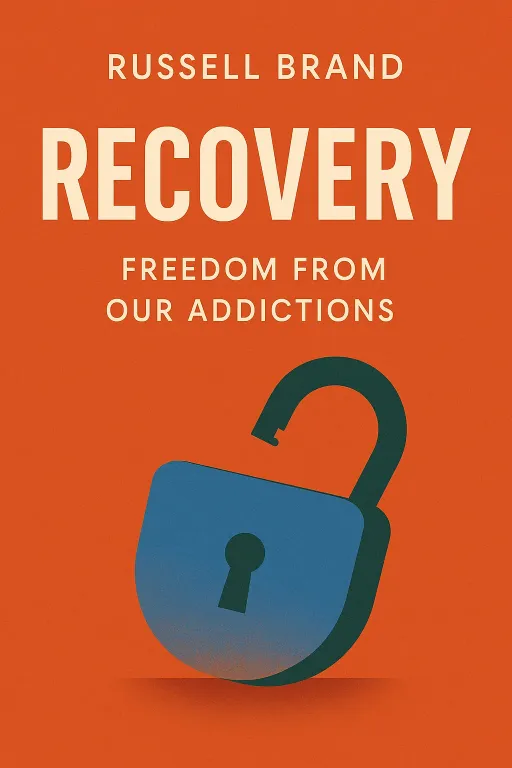
Nova: Exactly. And that exhaustion is often the starting point for two very different, yet surprisingly complementary, approaches to healing. Today, we are looking at the foundational work of Louise L. Hay in her classic, You Can Heal Your Life, and contrasting it with the raw, modern approach of Russell Brand in his book, Recovery.
Atlas: Right. Louise Hay is the grandmother of the mind-body connection movement, and Russell Brand is, well, Russell Brand. He is an unconventional guide to the 12-step program. It is a fascinating juxtaposition because one feels like the gentle, consistent whisper of self-love, and the other feels like a loud, necessary wake-up call about our modern addictions.
Nova: It is the perfect pairing for anyone who feels stuck. We are going to break down why your internal monologue might be the most powerful tool—or weapon—you own.
The Biology of Belief
SECTION
Atlas: Okay, let us start with Louise Hay. I have heard her name dropped in self-help circles for decades. But for someone who leans more toward the analytical side, the idea that thoughts can heal physical illness sounds a bit like magic. How does she actually frame this?
Nova: It is less about magic and more about the psychosomatic loop. Hay wrote You Can Heal Your Life back in the eighties, and she wasn't just talking about positive thinking as a fluffy concept. She was arguing that holding onto resentment, self-criticism, and guilt creates a physical environment of stress in the body.
Atlas: That makes sense from a biological perspective. We know about cortisol and adrenaline. If you are constantly thinking, I am not good enough, or I am going to fail, your body is essentially living in a state of fight-or-flight, even if you are just sitting at a desk.
Nova: Precisely. You are keeping your body in a state of high alert. Hay’s core argument is that radical self-love is the ultimate healing mechanism because it acts as a circuit breaker. When you consciously replace a self-limiting belief with an empowering affirmation, you are not just changing your mood; you are actively lowering the chemical stress load on your organs.
Atlas: I can see how that would work for anxiety or burnout, but does she take it as far as claiming it can cure actual physical disease? Because that is where a lot of people—myself included—start to feel skeptical.
Nova: That is where the conversation gets nuanced. Critics have pointed out that her approach can feel like it places the burden of illness entirely on the individual, which is a dangerous narrative if someone is dealing with serious medical issues. But if we look past the extreme interpretations, the core insight is that emotional repression is a massive drain on our immune systems.
Atlas: So, it is not necessarily that your thoughts are the only variable in your physical health, but that your emotional state is a critical factor in your body’s ability to repair itself.
Nova: That is the most helpful way to look at it. Think of it like this: if your body is a house, negative self-talk is like leaving the windows open during a blizzard. It is not the only reason the house might be cold, but it is certainly making it harder for the furnace to keep up.
Atlas: I like that analogy. It frames self-love not as some indulgent, spa-day luxury, but as essential home maintenance. It is about closing the windows so the system can actually function.
Nova: Exactly. And it is about recognizing the patterns. Hay often talks about how we carry these patterns from childhood. We learn how to talk to ourselves based on how our caregivers talked to us. If you grew up with a critic in the house, you eventually internalize that voice.
Atlas: And that voice becomes your default setting. It is the background noise of your life. So, when Hay suggests these affirmations, she is essentially saying you have to manually overwrite the software.
Nova: That is a perfect way to put it. You have to debug the code. The problem is that most people try to do this once, feel silly, and then stop. Hay’s approach requires a level of persistence that most people underestimate. It is not about saying one happy sentence in the mirror; it is about catching yourself in the act of self-sabotage ten, twenty, or fifty times a day and choosing a different thought.
Atlas: That sounds exhausting, but when you put it up against the cost of the alternative—which is living in a state of constant, low-level physiological distress—it starts to look like a bargain.
The Architecture of Addiction
SECTION
Nova: It is a bargain, but it is also difficult, which leads us to why we need to talk about Russell Brand. Because even when we know we should be kinder to ourselves, we often reach for distractions to numb the pain of that internal critic.
Atlas: That is a sharp pivot. You are talking about addiction. But when I hear the word addiction, I immediately think of substance abuse. Is that where Brand is going with this, or is he casting a wider net?
Nova: He is casting a massive net. In his book, Recovery, Brand takes the classic 12-step program, which is traditionally used for alcohol and drugs, and he strips it down to its psychological bones. He argues that we are all addicted to something. For some, it is substances, but for most people in the modern world, it is the digital loop, the validation loop, the work loop, or the distraction loop.
Atlas: I have definitely felt that. It is the need to check your phone the second you feel a micro-moment of boredom or anxiety. It is a behavioral addiction. We are all chasing that hit of dopamine to avoid sitting with our own thoughts.
Nova: And that is the link to Louise Hay. If you cannot sit with your thoughts because your internal monologue is so critical and harsh, you will naturally seek an escape. Brand’s argument is that the first step to healing is not just willpower, but acknowledgment. He says you have to admit that you are powerless over your addiction and that your life has become unmanageable.
Atlas: That feels like a very intense pill to swallow. Admitting you are powerless sounds like giving up. How is that supposed to be empowering?
Nova: It is not about being a victim; it is about surrender. It is the realization that your current strategy—the one where you try to control everything and numb yourself with distractions—is failing. You are essentially admitting that the old operating system is broken and you need a new one.
Atlas: That makes sense. It is the difference between struggling against the current and realizing you are in a river that is too strong for you. Once you stop fighting the river, you can look for a boat.
Nova: Exactly. And Brand’s version of the steps is deeply focused on community. He emphasizes that you cannot do this alone. We live in a culture that fetishizes independence, but Brand points out that isolation is the breeding ground for addiction. You need a group of people who are also willing to be vulnerable.
Atlas: That is a tough sell for a lot of people. Vulnerability is often viewed as a weakness, especially in professional environments. If I tell my colleagues, hey, I am struggling with a behavioral addiction to overworking or checking my emails at three in the morning, that is not exactly a standard watercooler conversation.
Nova: It is not, but look at the cost of the alternative. If you keep hiding it, you keep the cycle going. Brand’s insight is that the secret is the fuel for the addiction. The moment you bring it into the light, it loses its power.
Atlas: So, it is about shifting from a performance-based identity to an authenticity-based identity. You stop trying to convince the world you have it all together, and you start actually putting yourself together.
Nova: That is the core of it. He talks about how we use our addictions to fill a spiritual void. We think we are hungry for success, or followers, or a drink, or a scroll, but what we are actually hungry for is connection. We want to be seen, but we are terrified of being seen for who we really are, so we settle for the cheap dopamine hit of distraction.
Atlas: I am curious, though. How does this fit with Hay’s idea of self-love? They seem like different paths. One is about the internal dialogue, the other is about external acknowledgment and community.
Nova: They are two sides of the same coin. Hay is about the internal conversation—the thoughts you have when you are alone. Brand is about the external accountability—the people you talk to when the thoughts get too loud. You need the internal work to build self-worth, and you need the external community to keep you honest.
Atlas: That is a great way to synthesize it. You need the internal compass, but you also need a map and a group of fellow hikers. Otherwise, you are just wandering around in the woods, even if you are feeling very positive about your hiking skills.
Synthesis & Takeaways
SECTION
Nova: Precisely. And that brings us back to the reality of the situation. Integrating these concepts doesn't require a radical, overnight transformation. It starts with the smallest, most conscious choices.
Atlas: I like that. It moves the conversation from abstract philosophy to something I can actually do today. So, for the listener who is feeling the weight of that sixty-thousand-thought-day, what is the first move?
Nova: It comes down to identifying the limiting belief. Most of us go through the day with these scripts running in the background. We think, I’m not smart enough for this project, or I’m not the kind of person who gets lucky. Today, I want you to dedicate five minutes—just five—to sit down and identify one of those self-limiting beliefs about your own competence or potential.
Atlas: And then what? Just acknowledge it?
Nova: You acknowledge it, and then you consciously replace it. You write down the negative thought, and right next to it, you write the empowering affirmation. Not as a wish, but as a statement of fact. Instead of I’m not smart enough, you write, I am capable of learning what I need to succeed.
Atlas: It sounds simple, but I know from experience that the brain will fight you on this. It will say, that is not true, you are lying to yourself.
Nova: And that is the moment of choice. That is where you have to be the observer. You notice the brain trying to protect the old, negative pattern, and you gently steer it back to the new one. It is not about lying; it is about choosing which narrative you want to feed.
Atlas: I can see how that connects to the community aspect, too. If you are struggling to make that shift, you bring it to someone else. You say, hey, I am trying to change this belief, and my brain is fighting me. And having that witness makes the process real.
Nova: Exactly. You are not just changing your mind; you are changing your life. Healing is not a destination you reach; it is the practice of being honest with yourself and gentle with your process.
Atlas: This has been a great conversation. We started with the physiological cost of our own thoughts and ended with a practical way to reclaim our mental bandwidth. It really underscores that we have more agency than we think.
Nova: We absolutely do. It is about taking the wheel back from the autopilot. And that is the most important step you can take today.
Atlas: I am going to try that five-minute exercise. It is a small investment for what sounds like a massive return on focus and mental energy.
Nova: I have no doubt you will see the difference. And for our listeners, try it. Five minutes. One belief. One replacement. You might be surprised at how much lighter you feel.
Atlas: Thanks for the deep dive, Nova. This was a great one.
Nova: It was a pleasure, Atlas. And to everyone listening, thank you for joining us in this exploration. This is Aibrary. Congratulations on your growth!









