

Deconstructing Anxiety and Reclaiming Personal Sovereignty
Golden Hook & Introduction
SECTION
Nova: We spend about ninety percent of our waking hours simply managing the fallout from our own knee-jerk reactions, yet we rarely stop to audit the system that produces those reactions in the first place.
Atlas: That is a brutal way to start a conversation, but it is accurate. We act like we are the architects of our day, but really, we are just responding to a series of triggers we haven't bothered to label. It is like running a complex piece of software on a legacy operating system that hasn't been updated in a decade.
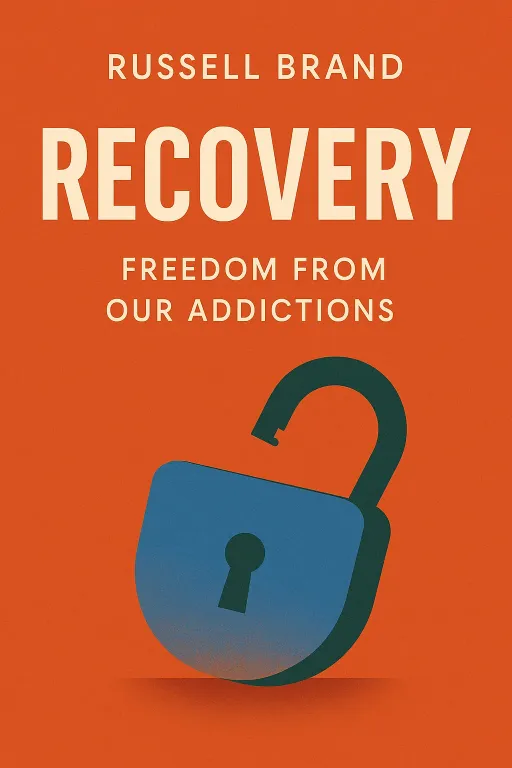
Nova: Exactly. And that is why today we are looking at two specific frameworks that, when combined, offer a complete upgrade. We are diving into the gritty, behavioral reality of Russell Brand’s Recovery, which adapts the traditional 12-step model into a modern psychological toolkit, and pairing it with Gabrielle Bernstein’s The Universe Has Your Back, which provides the mindfulness shift necessary to stop living in a state of constant, fear-based reactivity.
Atlas: I am familiar with the reputation of both. Brand is known for taking a process that is usually buried under clinical jargon or religious undertones and stripping it down to something that feels raw, funny, and surprisingly applicable to anyone who struggles with, well, being human. And Bernstein is often cited for shifting the conversation toward trust and intentionality. But I have to ask, how do these fit together? One feels like an intervention, and the other feels like a meditation.
Nova: That is the perfect tension to explore. Brand gives you the surgical tools to dissect your behavior, and Bernstein gives you the psychological flexibility to handle what you find under the hood without spiraling. It is the difference between diagnosing the glitch and learning how to rewrite the code.
The Mechanics of Behavioral Deconstruction
SECTION
Atlas: Let’s start with the diagnosis. When I look at Russell Brand’s work, specifically his approach to recovery, it is easy to assume it is only for people dealing with substance issues. But you are suggesting this applies to everyone. How does a framework designed for addiction translate to someone who is just trying to manage, say, a high-pressure career or a chaotic personal life?
Nova: It translates because the mechanics of addiction are just the extreme end of the spectrum of human behavior. Brand’s central thesis is that we all have micro-behaviors that act as coping mechanisms for anxiety. Think about the way you reach for your phone when you are bored, or the way you snap at a colleague when you feel insecure. Those are not just habits. Those are attempts to manage an internal state of unease.
Atlas: That makes sense. It is a feedback loop. I feel anxious, I perform a specific action, the anxiety temporarily subsides, and the loop reinforces itself. But most people do not see it as addiction. They see it as just... life.
Nova: Precisely. And that is the trap. Brand argues that the first step to reclaiming sovereignty is identifying these patterns. He moves away from the clinical, sterile language of traditional recovery and uses his background as a comedian and a public figure to make these concepts feel accessible. He talks about the ego as this frantic, needy entity that is constantly demanding validation or relief. When you strip away the substance-specific language, you are left with a system for auditing your own mind.
Atlas: I see where you are going. It is about moving from unconscious reaction to conscious observation. But that is easier said than done. When I am in the middle of a stressful meeting, I am not thinking about auditing my ego. I am thinking about surviving the meeting. What is the actual mechanism for catching these behaviors in the moment?
Nova: That is where the nuance comes in. Brand emphasizes that you cannot fix what you cannot acknowledge. He suggests that we are all suffering from a kind of spiritual and psychological fragmentation. We are constantly looking outside of ourselves—at social media, at work, at other people—to fix an internal lack. He challenges the reader to stop looking for external solutions to internal problems.
Atlas: That actually sounds like a heavy lift. If I am looking for external validation or distraction, it is because it works, at least in the short term. It is a reward system. If I am going to dismantle that, I need to know what replaces the reward. If I stop the doom-scrolling or the defensive email-writing, what fills the void?
Nova: That is the million-dollar question, and it is exactly why we need to bridge this with the second part of our discussion today. You cannot just remove a behavior; you have to replace the underlying state. If you pull out the coping mechanism but leave the anxiety, you are just going to white-knuckle your way through the day, which is unsustainable.
The Shift to Sovereignty and Mindfulness
SECTION
Atlas: Okay, so we have established that Brand’s framework is about identifying the friction and the habitual reactions. Now, how does Gabrielle Bernstein fit into this? Her work, The Universe Has Your Back, is often framed in terms of spirituality and trust. How does that help with the practical, behavioral audit we just talked about?
Nova: Think of it this way. Brand helps you identify the "what" and the "how" of your destructive patterns. Bernstein focuses on the "why" and the "state of being." She argues that most of our anxiety comes from a fundamental lack of trust—not necessarily in the universe, but in our own ability to handle whatever happens. When you shift your cognitive state from fear to trust, the need to engage in those micro-behaviors to soothe yourself starts to evaporate.
Atlas: I am going to play devil's advocate here. Trusting the universe sounds great when things are going well. But in a high-stakes environment—let's say, navigating a corporate restructure or a financial crisis—"trust" can feel like a euphemism for passivity. How does this shift actually work without making someone complacent?
Nova: It is the opposite of complacency. Bernstein’s approach is actually about radical intentionality. She talks about shifting your focus from "trying to control the outcome" to "setting the intention for the process." It is the difference between saying, "I need this project to go perfectly so I don't feel like a failure," and saying, "I am going to bring my best focus and integrity to this project, regardless of the outcome."
Atlas: That is a subtle distinction, but a powerful one. It moves the goalpost from external results, which you can't control, to internal standards, which you can.
Nova: Exactly. And that is where the two authors meet. Brand gives you the tools to notice when your ego is trying to control the outcome—that is your anxiety trigger. Bernstein gives you the mechanism to pivot your energy back to trust and intentionality. You are not just stopping the bad habit; you are replacing the fear-based narrative with a trust-based one.
Atlas: I can see how that creates a feedback loop of resilience. If I catch myself doing the thing—the micro-behavior, the distraction—instead of beating myself up, I use that as a cue to practice the shift. It becomes a diagnostic tool rather than a failure.
Nova: You nailed it. And that is the key to long-term sustainability. Most people try to change through willpower, which is a finite resource. They try to "stop" doing things. But when you use these frameworks, you are not exercising willpower; you are exercising awareness. You are changing your relationship with the stressor.
Integration and Practical Application
SECTION
Atlas: So, we have the theory. We have the behavioral audit and the cognitive shift. But let’s get down to the operational level. How does a listener actually apply this tomorrow morning? I don't want another self-help philosophy; I want a blueprint.
Nova: Here is the blueprint. It is a simple, five-minute daily habit. It is based on the idea that you cannot change what you do not track.
Atlas: Okay, I am listening. Walk me through it.
Nova: For the first five minutes of your day, or perhaps during a dedicated focus block, you don't journal about your feelings in a vague way. You list three micro-behaviors that triggered anxiety or defensive reactions the day before. Be specific. Not "I was stressed," but "I checked my email five times while waiting for the coffee machine because I was anxious about a client response."
Atlas: That is concrete. It forces you to identify the specific trigger and the specific behavior. What is the next step?
Nova: Once you have those three, you choose one, just one, mindfulness shift to counter them when they arise today. Maybe it is a breathing exercise, maybe it is a deliberate pause to reframe your intention, or maybe it is just the act of labeling the behavior as it happens. You are essentially creating an "if-then" plan. If I feel the urge to check the email, then I will take three deep breaths and remind myself that my value is not tied to the speed of this response.
Atlas: That is essentially systems thinking applied to the self. You are creating a protocol for your own psychology. If the trigger occurs, the protocol executes.
Nova: Precisely. And by doing this, you are not just managing anxiety; you are reclaiming your sovereignty. You are moving from being a passenger in your own life, reacting to every stimulus, to being the driver who chooses how to respond.
Atlas: It is interesting, because when you look at the reception of these books, both authors have faced their share of criticism—Brand for his unconventional path, and Bernstein for the perceived "woo-woo" nature of her work. But when you strip away the labels and look at the functional utility, they are both talking about the same thing: taking responsibility for your internal state.
Nova: That is a great point. The controversy often distracts from the utility. Whether you call it "surrendering to the universe" or "admitting you are powerless over your addiction," the core psychological mechanism is the same: you are letting go of the illusion that you can control everything, and instead, you are focusing on the only thing you actually control, which is your immediate reaction.
Synthesis & Takeaways
SECTION
Atlas: We have covered a lot of ground here, from the gritty behavioral audit to the higher-level cognitive shift. If I were to synthesize this for our listeners, it feels like we are talking about moving from a reactive state to a responsive state.
Nova: That is the essence of it. It is about moving from the "reflex" to the "reflection." The goal isn't to reach a state where you never feel anxious again—that is impossible. The goal is to reach a state where you notice your anxiety, understand what it is trying to do, and consciously choose a different path.
Atlas: And that is a form of power. It is not about suppressing the emotion; it is about mastering the response. It is about understanding that your anxiety is often just a signal, not a command.
Nova: Exactly. And that is why this integration is so powerful. You need the grit to look at the ugly parts of your behavior, which is what Brand teaches, and you need the grace to forgive yourself and shift your focus, which is what Bernstein teaches. You cannot have one without the other.
Atlas: I think that is a perfect way to wrap this up. It is not about being perfect; it is about being intentional. It is about taking those five minutes to audit your day, identifying the triggers, and choosing a better response. It is a small, manageable system, but the compounding effect over a year would be massive.
Nova: It really would be. And for anyone listening, don't try to overhaul your entire life by tomorrow. Just start with those three micro-behaviors. The system is designed to scale, but you have to start with the data.
Atlas: Data-driven self-improvement. My favorite kind. Thanks for breaking this down, Nova. It definitely makes the "universe" feel a lot more manageable.
Nova: It is my pleasure. Remember, you have more agency than you think. You just need the right tools to access it. This is Aibrary. Congratulations on your growth!









