

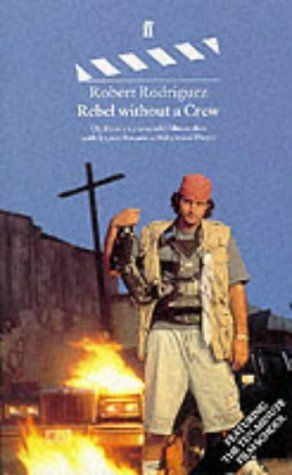
Rebel Without a Crew
Or How a 23-Year-Old Filmmaker with $7,000 Became a Hollywood Player
Introduction
Nova: Imagine you are twenty-three years old. You have no money, no connections in Hollywood, and no professional film crew. But you have a dream to make a feature-length action movie. What do you do? Most people would spend years writing grants or begging investors. Robert Rodriguez decided to sell his body to science.
Atlas: Wait, literally? Like, he sold his organs?
Nova: Not quite that extreme, but close. He checked himself into a medical research facility as a human lab rat for a month to fund his first movie, El Mariachi. That experience, and the chaotic production that followed, became the basis for one of the most influential books in the history of independent cinema: Rebel Without a Crew.
Atlas: I have heard of this book. It is basically the bible for every kid with a camera and a YouTube channel now, right? But back in the early nineties, this was revolutionary.
Nova: It really was. It is written as a series of diary entries, so you are right there with him in the hospital bed, and then on the dusty streets of Mexico, watching him pull off a miracle for exactly seven thousand, two hundred and twenty-five dollars.
Atlas: Seven thousand dollars for a whole movie? Today, that barely covers the catering budget for a commercial. I want to know how he did it without the movie looking like a home video of a birthday party.
Nova: That is exactly what we are diving into today. We are looking at the grit, the technical hacks, and the philosophy of a man who proved that you do not need a crew to be a filmmaker. You just need a lot of nerve.
Key Insight 1
The Human Lab Rat
Nova: So, the story starts at Pharmaco. It was a clinical research center in Austin, Texas. Robert needed money to make a movie that he intended to sell to the Spanish home video market. He figured if he could make it for a few thousand dollars, he could turn a small profit and keep practicing his craft.
Atlas: So the medical testing was not even for a Hollywood blockbuster? It was for a straight-to-video project?
Nova: Exactly. He was just trying to get paid to learn. He spent thirty days in this facility being poked and prodded. They were testing a cholesterol-lowering drug. He earned three thousand dollars for that stay, which was nearly half of his total budget.
Atlas: That is wild. Most people would use that time to catch up on sleep or read. What was he doing while the doctors were drawing his blood?
Nova: He was writing the script! He wrote the entire screenplay for El Mariachi while he was locked in that clinic. He even met one of his future actors there, Peter Marquardt, who played the villain, Moco. Peter was also a lab rat.
Atlas: No way. So the hero and the villain were basically roommates in a drug study? That is the most indie-film origin story I have ever heard.
Nova: It gets better. Because Peter did not speak a word of Spanish, Robert wrote his lines phonetically. If you watch the movie, the villain is always behind a desk or on a phone, partly because they had to hide the fact that he was reading his lines off of cue cards.
Atlas: It is a great lesson in resourcefulness right out of the gate. He did not wait for a producer to hand him a check. He used his own physical health as collateral for his art. But three thousand dollars is still a long way from a finished movie. Where did the rest come from?
Nova: He had saved up some money from a previous short film called Bedhead, which had won some festival prizes. But the lab rat money was the catalyst. It gave him the freedom to fail. He told himself, if this movie is terrible, I only lost a month of my life and some blood. No big deal.
Atlas: I love that mindset. It lowers the stakes of failure while raising the stakes of the hustle. But once he got out of the clinic, he actually had to go shoot this thing. And he did it in Mexico, right?
Nova: Yes, in a small border town called Ciudad Acuña. He went there because he knew he could make his money go further. But he did not bring a crew. When he says Rebel Without a Crew, he means it. He was the director, the cameraman, the lighting tech, the editor, and the guy who went to go buy the tacos for lunch.
Case Study
The One-Man Production
Atlas: Okay, help me understand the logistics here. If he is holding the camera, who is holding the microphone? Who is moving the lights? How do you shoot an action movie by yourself?
Nova: You cheat. That is the short answer. Robert realized that the biggest expense in filmmaking is usually the people. If you have a crew, you have to feed them, transport them, and wait for them to set things up. Without a crew, he was incredibly fast.
Atlas: But what about the equipment? Cameras are expensive.
Nova: He used a 16mm Arriflex camera that he borrowed. But here is the kicker: it was a noisy camera. It sounded like a sewing machine. This meant he could not record usable sound while he was filming.
Atlas: Wait, so El Mariachi is a silent movie?
Nova: Essentially, yes, during production. He shot the whole thing like a silent film. He would record the actors' dialogue later using a cheap tape recorder and then sync it up in the edit. This saved him thousands because he did not need a sound recordist on set.
Atlas: That sounds like a nightmare for the actors. They are just shouting lines over a buzzing camera?
Nova: Pretty much. And since he could not afford a tripod with a fluid head for smooth pans, or a dolly for moving shots, he got creative. He found an old, broken wheelchair in the hospital where he was filming and used that as his dolly. He would sit in the wheelchair with the camera, and someone would push him.
Atlas: The wheelchair dolly! I have heard that is a classic indie hack. It is actually smoother than you would think because the rubber tires absorb the bumps.
Nova: Exactly. And for lighting? He did not have big movie lights. He used two clip-on construction lamps he bought at a hardware store. He would just clip them to a chair or have someone hold them. Most of the movie is shot with natural light or those two cheap bulbs.
Atlas: It sounds like he was turning every limitation into a style. If you do not have a crew, you have to move fast, which gives the movie this kinetic, handheld energy. It does not look like a polished Hollywood film, but it looks alive.
Nova: That is the secret. He also saved money on film stock by only doing one take. If the actor did not trip over their feet, that was the shot. He would edit the movie in his head as he was shooting so he did not waste a single foot of film. He actually shot the movie at a one-to-one ratio in some scenes, which is unheard of.
Atlas: For those who do not know, a one-to-one ratio means if you see ten minutes of footage in the movie, he only filmed ten minutes of footage. Usually, directors shoot ten or twenty times more than what ends up on screen.
Nova: He could not afford to be wasteful. He even used his own dog in the movie. He used a local school bus. He used a turtle he found on the side of the road. He says in the book that if you have a turtle, put it in the movie. It makes the production look bigger because people think, oh, they must have had a turtle wrangler!
Deep Dive
The Ten Minute Film School
Nova: This leads us to the most famous part of the book, which is the appendix called The Ten Minute Film School. Robert argues that you do not need to go to film school for four years and spend a hundred thousand dollars. You can learn everything you need to know in ten minutes.
Atlas: That is a bold claim. I am sure film school professors love him for that. What is the core philosophy?
Nova: His main point is that creativity is born from limitations, not from abundance. He says that when you have a lot of money, you solve problems by spending. When you have no money, you solve problems by thinking.
Atlas: I can see that. If you have a million dollars and you need a shot of a car exploding, you buy a car and blow it up. If you have ten dollars, you have to figure out a way to make it look like a car exploded using a mirror and some smoke.
Nova: Exactly. He calls it the Creative Obstacle. He believes that the more obstacles you have, the more creative the solution will be, and therefore, the more original the movie will look. He tells aspiring filmmakers: stop waiting for the perfect camera or the perfect script. Just go out and shoot something with what you have.
Atlas: It is very empowering, but is it still true today? I mean, everyone has a 4K camera in their pocket now. Does that make it easier or harder to be a rebel?
Nova: Robert would say it makes it easier, but the trap is the same. People get obsessed with the gear. They think they need a gimbal, or a drone, or a specific lens. Robert's point is that the gear does not matter. The story and the energy matter. He famously said, if you want to be a filmmaker, don't call yourself an aspiring filmmaker. Just say you're a filmmaker. Then go make a film.
Atlas: It is about the identity shift. If you are waiting for permission, you are not a rebel. A rebel just takes the shot. But I have to ask, once he finished El Mariachi, how did it go from a seven-thousand-dollar Spanish video to a Sundance sensation?
Nova: That is the second half of the book, and it is almost as crazy as the production. He took his finished tape to Los Angeles, literally walking into talent agencies without an appointment. He ended up at ICM, and a young agent there saw the movie and realized this kid was a genius. Not just because the movie was good, but because of how he made it.
Atlas: The story of the seven thousand dollars became the marketing hook. It was the ultimate calling card.
Nova: It was. Columbia Pictures eventually bought the rights. But here is the part people often forget: they spent another two hundred thousand dollars on the movie after they bought it. They had to transfer it to 35mm film and redo all the sound professionally so it could play in theaters.
Atlas: Ah, so the version we see in the theater was not actually seven thousand dollars. It had a Hollywood facelift.
Nova: True, but the movie itself, the images, the performances, the editing—that was all Robert. The two hundred thousand was just the polish. The soul of the movie was born in that Mexican border town with a broken wheelchair and a noisy camera.
Future Trends
The Legacy of the Rebel
Atlas: So, Robert Rodriguez goes from a lab rat to a Hollywood director. He does Desperado, From Dusk Till Dawn, Spy Kids, Sin City. He becomes a titan. But does he stay a rebel? Or does he just become part of the machine?
Nova: That is what is so interesting about his career. Even when he had big budgets, he kept that DIY spirit. He built his own studio in Austin, Troublemaker Studios, so he wouldn't have to deal with Hollywood bureaucracy. He often still does his own cinematography and editing.
Atlas: He is like the ultimate multi-hyphenate. He is the chef, the waiter, and the guy who owns the restaurant.
Nova: And he continues to pay it forward. He actually did a series recently where he gave five filmmakers seven thousand dollars and two weeks to make a feature film, just like he did. He wanted to see if the Rebel Without a Crew method still worked in the digital age.
Atlas: And did it?
Nova: It did! It proved that the technology has changed, but the human element hasn't. You still need that drive. You still need to be willing to do the work that no one else wants to do. The book is still assigned in film schools today, which is ironic considering he wrote it as an alternative to film school.
Atlas: It is the ultimate underdog story. But I think the biggest takeaway for me is that he didn't wait for a green light. In Hollywood, everyone is waiting for someone else to say yes. Robert said yes to himself.
Nova: That is the core of the Rebel philosophy. Don't ask for permission to create. If you have a story to tell, the only thing stopping you is your own hesitation. He showed that you can turn a lack of resources into your greatest strength.
Atlas: It makes me want to go pick up a camera right now. Or at least go check if there are any medical studies paying three thousand dollars nearby.
Nova: Maybe stick to the filmmaking part first! But the lesson remains: your budget is not your boundary. It is your playground.
Conclusion
Nova: We have covered a lot today. From the clinical trials at Pharmaco to the dusty streets of Mexico and the halls of Columbia Pictures. Robert Rodriguez's Rebel Without a Crew isn't just a book about making a movie; it is a manifesto for anyone who feels like an outsider.
Atlas: It is a reminder that the most valuable tool you have isn't a camera or a computer. It is your own resourcefulness. Whether you are making a movie, starting a business, or writing a book, the principles are the same: use what you have, move fast, and don't be afraid to be a one-person army.
Nova: If you haven't read the book, I highly recommend it. Even if you never plan to pick up a camera, the energy in those diary entries is infectious. It will make you look at your own obstacles in a completely different way.
Atlas: Just remember, if you find a turtle on the side of the road, put it in your project. It makes everything look more professional.
Nova: Exactly. Thank you for joining us on this deep dive into the mind of a true cinematic rebel. Go out there and make something amazing.
Atlas: This is Aibrary. Congratulations on your growth!