The Quantum Observer Effect: Rethinking Your Role in Reality
Golden Hook & Introduction
SECTION
Nova: For centuries, we've been told we're just observers of reality, looking in from the outside. We watch the world unfold, separate from its grand drama. But what if that 'outside' doesn't actually exist? What if your very act of looking, your very presence, everything you see?
Atlas: Whoa, that's a bold claim. Are you saying I can change the coffee in my mug just by staring at it? Because if so, I'm going to need a lot more coffee.
Nova: Not quite magic, Atlas, but something far more profound. Today, we're diving into an idea that fundamentally rethinks our place in the cosmos, an idea at the heart of. This isn't just a theory; it’s a radical re-evaluation of what it means to be human in a universe that's far more interconnected than we ever imagined. It challenges the very notion of an objective reality existing independently of us.
Atlas: That's a massive concept. For someone who loves to connect neuroscience with ancient philosophy, the idea of an 'observer effect' sounds like it could bridge some serious gaps. But how does this seemingly abstract concept actually apply to understanding the 'fabric of existence'? What's the core insight here?
Nova: The core insight is that our perceived separateness from the universe is, in many ways, an illusion. We have this deep-seated "blind spot," as the book calls it, where we see ourselves as mere spectators. But the universe doesn't have spectators. It has participants.
The Illusion of Separateness & Relational Reality
SECTION
Nova: Think about it this way: for most of our history, we’ve imagined ourselves sitting in a cosmic movie theater, watching the universe play out on screen. We’re outside, safe, separate. The movie happens us. But what if we’re not just in the audience? What if we're actually characters the movie, and our very presence, our lines, our choices, are actively shaping the plot as it unfolds?
Atlas: But isn't it obvious we're separate? I'm me, the chair is the chair, the stars are light-years away. What's the big deal about challenging that? That's just common sense, right?
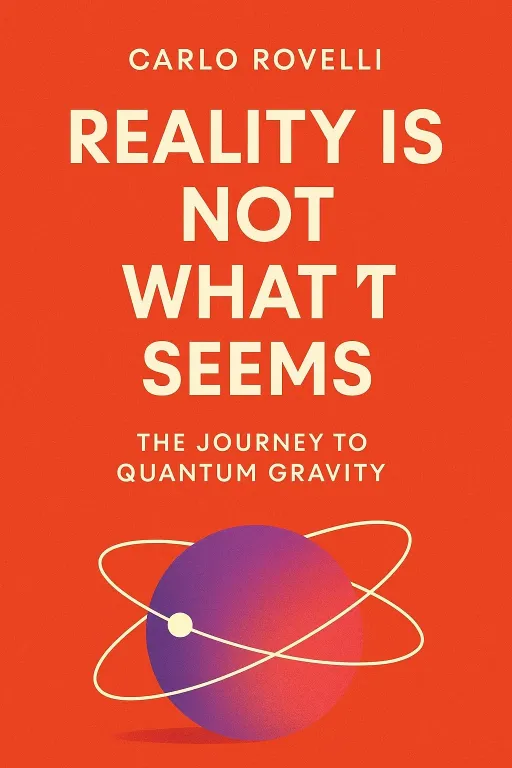
Nova: That common sense view is precisely what quantum mechanics—and thinkers like Carlo Rovelli—challenge so beautifully. In his book,, Rovelli argues that the quantum world shows us reality as a network of relations. Objects don't have intrinsic properties; they only exist in relation to others.
Atlas: Okay, but what does 'relational' mean in this context? Give me an example. Are you saying the chair isn't a chair until I sit on it?
Nova: It's more subtle and profound. Take the color of an object. Is that apple intrinsically red? Not really. It appears red because of how its surface interacts with specific wavelengths of light, and how our eyes and brain then interpret that interaction. Without light, without an observer, there's no "redness." The apple's redness is a relational property – it only exists the light and an observer. Your observation isn't just receiving information; it's completing the circuit.
Atlas: So, you're saying everything is a network? Like a cosmic family tree where nothing is truly alone, and everything's defined by its connections? That's a truly unifying thought.
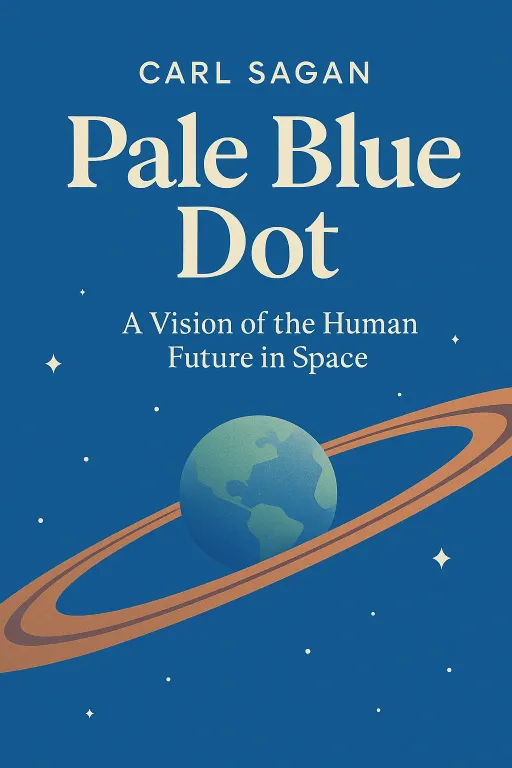
Nova: Exactly! And Carl Sagan built on this beautifully in. He showed us how humanity isn't apart from the cosmos; we the cosmos. Our consciousness, our very atoms, are products of stellar evolution. We’re literally star stuff, intimately linked to the universe's unfolding story. Imagine a wave in the ocean. It's a distinct form, it has identity, but it’s utterly inseparable from the water it's made of. Our consciousness is like that wave – distinct, but part of the ocean of existence.
Atlas: That's beautiful, and incredibly humbling. But for someone trying to understand the 'fabric of existence,' how does this relational view actually outside of quantum particles or poetic analogies? If everything is relational, what about objective truth?
Nova: Ah, that's where the shift becomes truly fascinating. If our observation is a fundamental interaction, then the very act of inquiry, the very act of trying to understand, isn't a neutral process. It's a creative one. Our questions, our tools, our frameworks—they all shape what we discover. The universe responds to our interrogation. It's like asking a question to a person; their answer is shaped by question, not just their inherent knowledge.
Atlas: So, the way we "observe" the universe isn't just about what we see, but what we bring to the seeing? What we choose to ask, what we choose to focus on?
Nova: Precisely. The insights from fundamentally challenge our perceived separateness by urging us to recognize our active role in the universe's story. It's not just happening; it's happening us.
Personal Agency: From Spectator to Co-Creator
SECTION
Nova: This naturally leads us to the next profound question: if our observation is an active, fundamental interaction, and reality is relational, then what does that mean for our personal agency? How does acknowledging role as an observer change how you approach your daily life and understanding?
Atlas: Okay, so if my observation is an 'active role,' how does acknowledging change how I approach my daily life? Am I suddenly a wizard, conjuring reality with my thoughts? Because I could use a clean office right now.
Nova: Not quite conjuring, but it’s a profound shift from passive reception to active participation. Think about the placebo effect. A patient believes a sugar pill will cure them, and often, it does. Their, their belief, their internal state, fundamentally changes their body's reality. Or consider a self-fulfilling prophecy: if you observe a situation as doomed to fail, your actions, consciously or unconsciously, will often lead to that failure. Your attention, your beliefs, your intentions—your 'observation'—can literally shape your experiences and impact.
Atlas: That makes sense in a psychological context, but how does this apply to, say, a deep diver trying to connect neuroscience with ancient philosophy? How does my 'observation' affect the of those connections?
Nova: That's a brilliant question, and it's where the relational nature of reality truly shines. If you approach neuroscience and ancient philosophy with an internal 'observation' that they are disparate, unrelated fields, you will likely find only differences, only separation. You'll observe the gaps. But if you approach them with an 'observation' driven by a desire to unify, to find the bridges, to see them as different languages describing similar phenomena, then you will actively those connections. Your observational framework literally shapes the reality of their relationship.
Atlas: So, it's about intentional observation? If I observe my challenges as opportunities, they become opportunities? That sounds a bit like positive thinking, but with some serious quantum backing.
Nova: It's more than just positive thinking; it's about recognizing that your internal landscape of thought, emotion, and intention is not separate from the external world. It's a crucial part of the relational network. How you frame a problem, the questions you ask, the resources you seek out—these are all acts of observation that sculpt the subsequent reality. If you observe your challenges with curiosity and a growth mindset, you're not just changing your attitude; you're actively engaging with the relational fabric of existence in a way that opens up new possibilities.
Atlas: That's a profound shift. It means our worldview isn't just a lens through which we see reality; it's part of the fabric itself, actively shaping what can emerge. It means we have far more agency than we often give ourselves credit for.
Nova: Exactly. We move from being victims of circumstance to active participants, co-creating the reality we experience. It’s about understanding that the questions we ask, the beliefs we hold, and the attention we give aren't just internal states; they are fundamental interactions with the universe.
Synthesis & Takeaways
SECTION
Nova: So, what ultimately tells us is that we are not outside the universe, peering in. We are deeply, inherently interwoven with it. Our consciousness, our very act of observation, is a powerful force that shapes the relational reality we inhabit. It’s a call to move beyond the illusion of separateness and embrace our profound agency.
Atlas: That's incredibly powerful. The takeaway isn't that we control everything, but that we're fundamentally in everything, and our involvement matters in ways we rarely consider. It transforms the idea of personal responsibility into cosmic co-creation.
Nova: Absolutely. The next time you face a challenge, or even just look at your morning coffee, ask yourself: how am I observing this? Because that observation is your first, most powerful act of creation. It's how you begin to consciously co-create your reality.
Atlas: That's a challenge I'm definitely taking on. We'd love to hear how acknowledging your role as an observer changes your perspective. Share your thoughts with us online!
Nova: This is Aibrary. Congratulations on your growth!