

Strategic Goal-Setting for Long-Term Health
Golden Hook & Introduction
SECTION
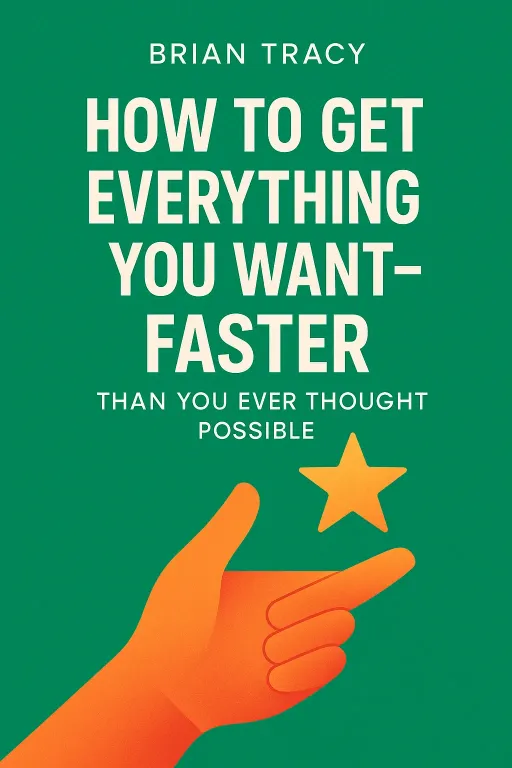
Nova: Atlas, five words: Brian Tracy's "Goals!"
Atlas: Blueprint for relentless health mastery. Yours?
Nova: Define, commit, achieve, repeat, health.
Atlas: Oh, I like that. Short and punchy, just like the kind of goals we should be setting, right?
Nova: Exactly! And today, we're diving deep into that philosophy, specifically how it applies to our long-term health, drawing inspiration from not one, but two powerhouses of productivity and achievement. We're talking about Brian Tracy's foundational work, "Goals!," which has shaped countless individuals' approaches to ambition, and then we're bringing in the modern, highly tactical insights from Erik Fisher and Jim Woods' "Ready Aim Fire!"
Atlas: That's a powerful combination. Tracy is such a long-standing voice in personal development, almost a foundational text for anyone looking to structure their ambitions. And Fisher and Woods sound like they're coming in with the practical, "get it done now" energy.
Nova: Precisely. Tracy lays the strategic groundwork, urging us to define our most ambitious objectives with crystal clarity. He’s the architect of the vision. Then, Fisher and Woods come in as the master builders, providing the actionable blueprints to overcome procrastination, build genuine momentum, and keep that vision moving forward.
Atlas: I get the sense that a lot of us long-term health – we dream of feeling vibrant, having more energy, mastering a new fitness regimen, or finally sticking to that nutritional plan. But where do we even begin to make those aspirations real, instead of just vague hopes? It feels like the first hurdle is always that blurry starting line.
Nova: That's where Tracy would argue most people falter. It's not about a lack of desire, it's a lack of. Think of it like this: if you tell a taxi driver, "Take me somewhere nice," what happens?
Atlas: You'll probably end up driving around in circles, or at best, somewhere generic. You won't get to "somewhere nice."
The Vision & Strategy: Defining Precise Objectives
SECTION
Nova: Exactly! Tracy emphasizes that without a precise destination, you can't plot a precise course. For our health, this means moving beyond "I want to be healthier" to something like, "I will run a 5k in under 30 minutes by October 15th, training three times a week with a structured program." Or, "I will consistently adhere to a whole-foods, plant-based diet, preparing 80% of my meals at home for the next 90 days, to improve my energy levels and digestion."
Atlas: That clarity makes sense for a big project, like launching a new initiative, but for health, where consistency is key, isn't just "eating better" or "moving more" a goal? Why the obsession with? For someone who just wants to feel less sluggish, that sounds like a lot of upfront work just to get started.
Nova: That's a great point, and it touches on why Tracy’s insights are so powerful. The precision isn't about making it harder; it's about making it. When a goal is vague, it gives your subconscious mind nothing specific to work on. It's like trying to hit a target you can't see. When you define it, you activate your reticular activating system, your brain starts noticing opportunities and resources you would otherwise miss.
Atlas: So, it's not just about the external action, but also about programming your internal GPS?
Nova: Absolutely. And Tracy doesn't stop there. He talks about a multi-step process, which, when simplified, involves writing down your goal, setting a deadline, listing everything you think you'll need to do to achieve it, organizing that list into a plan, and then taking action immediately. The act of writing it down, for instance, is incredibly powerful. It transforms a fleeting thought into a tangible commitment.
Atlas: I've heard that before, about writing things down. It feels almost magical, but I guess it’s more about solidifying intent. Okay, so we're crafting a health mission statement, essentially. Like, "My mission is to optimize my mitochondrial function for peak cognitive performance by year-end." That feels… intense. How does this connect to something as simple as, say, adopting a new nutritional plan?
Nova: It connects directly. Instead of "eat healthy," which is subjective and easily derailed, you define it: "I will follow a Mediterranean diet, tracking my protein intake to 1 gram per pound of body weight, for 90 days, to support muscle growth and sustained energy." That's specific, measurable, achievable, relevant, and time-bound. It gives you a roadmap. It gives you something concrete to commit to, not just a vague wish.
Atlas: That clarity makes sense, especially for those of us who are driven by growth and want to make informed choices. But here's the kicker: we can have the clearest, most precise goal, the most detailed plan, and still… life happens. We start strong, then motivation wanes, and we lose momentum. What happens when life inevitably throws a wrench in that "disciplined path"?
The Execution & Momentum: Turning Intentions into Sustained Action
SECTION
Nova: You've hit on the exact point where Fisher and Woods' "Ready Aim Fire!" steps in to bridge the gap. Tracy gives us the and the, but Fisher and Woods provide the for relentless execution. They understand that the biggest challenge isn't always knowing what to do, it's, especially when faced with procrastination or setbacks.
Atlas: Ah, the "losing momentum" struggle. I imagine a lot of our listeners, especially those driven by growth and seeking actionable knowledge, have felt that initial burst of enthusiasm for a new fitness regimen or dietary change, only to see it fizzle out after a few weeks. What's their secret sauce for staying on track when the initial motivation fades?
Nova: Their core message is about making progress and creating systems that build momentum. Think of it like a flywheel – it takes a lot of effort to get it spinning initially, but once it's moving, it takes far less energy to keep it going, and it becomes incredibly powerful. They focus on overcoming the resistance to starting and then creating feedback loops that make that progress undeniable.
Atlas: So, if my goal is to "master a new fitness regimen," how do I make without just staring at a scale? What are some practical, almost immediate, ways to feel that momentum building, especially for someone who values efficiency and doesn't want to waste time?
Nova: Excellent question. It's not just about the big outcome; it's about celebrating the daily steps. Fisher and Woods would encourage tracking your workouts – logging reps, sets, weights, or duration. Noticing those small increases, those incremental improvements. It could be as simple as checking off a box on a habit tracker for drinking your target water intake, or hitting your daily step count. The key is that the progress is. You can see it.
Atlas: That's a great way to put it. It sounds like gamifying health, almost. Instead of waiting for the finish line, you're getting little dopamine hits for every micro-win along the way. That's a smart application of behavioral psychology, making the process itself rewarding. It really brings Tracy's "commitment" down to earth, making it less about pure willpower and more about designing a system that works with our natural tendencies.
Nova: Exactly. They also emphasize the power of accountability, whether it's through a workout buddy, a coach, or even just publicly declaring your goal. When you know someone else is watching, or you've made a public commitment, it adds another layer of motivation, making it harder to simply let things slide. And for those who are focused innovators, always looking to optimize, this isn't about brute force; it's about smart design.
Atlas: I can see how that would be a game-changer. It's the difference between saying "I'll go to the gym" and "I'm meeting Sarah at the gym at 6 AM, and we're tracking our lifts in this app." One is a wish, the other is an almost inevitable action.
Synthesis & Takeaways
SECTION
Nova: That's the synergy right there. Tracy gives us the absolute clarity on we want to achieve and it matters, the strategic vision. Fisher and Woods then give us the – the tactical execution, the momentum builders, the strategies to overcome the inevitable resistance and keep moving forward. It's about combining that strategic vision with relentless, visible execution.
Atlas: So, the takeaway isn't just "set goals," it's "set precise, compelling goals and then build an undeniable system to achieve them, celebrating every tiny step along the way." It’s about making the itself visible, tangible, and rewarding, not just fixating on the distant outcome.
Nova: And understanding that long-term health isn't a destination you arrive at and then stop. It's a continuously evolving system, a set of practices that you embody. It's about becoming the person who these things, not just the person who they did them.
Atlas: For anyone who's ever felt stuck between intention and action, between that grand vision of a healthier self and the daily grind, this fusion offers a powerful path forward. It's about embracing the process, protecting that 20 minutes daily for growth, and building momentum through visible progress.
Nova: It really is. It shifts the focus from simply hoping for change to actively engineering it. Now, we'd love to hear from you! What's one precise health goal you're committing to, or what's your favorite momentum-building hack that keeps you on track? Share your insights with us and the Aibrary community.
Atlas: Let's turn those intentions into actions, together.
Nova: This is Aibrary. Congratulations on your growth!









