The Blind Spot: Why Understanding Stories is Key to Cultural Nuance.
Golden Hook & Introduction
SECTION
Nova: Reading isn't just about the words!
Atlas: Hidden meaning, cultural codes, your voice.
Nova: Exactly! Today, we're diving into what we call 'The Blind Spot' in how most of us approach reading. It's about moving beyond simply consuming content to truly deconstructing it, to understand its power.
Atlas: That sounds intriguing. I imagine a lot of our listeners, especially those in academic fields or who just want to express themselves better, often feel like they're missing something crucial when they read.
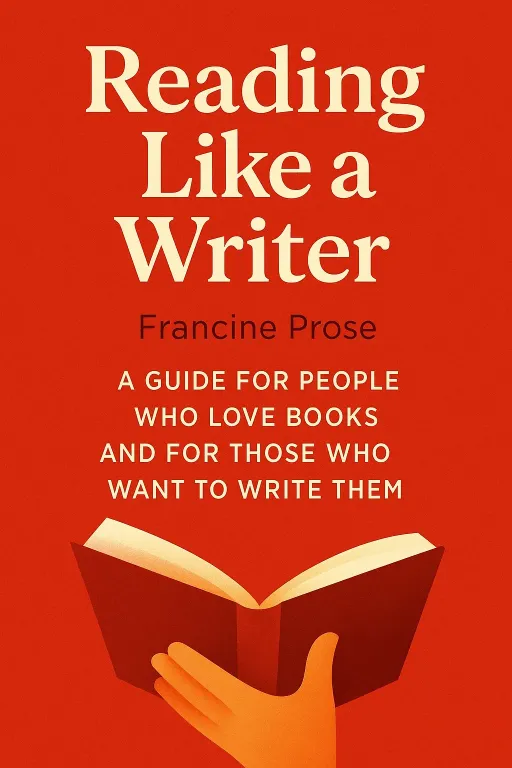
Nova: They are! And this idea really crystallizes when you look at the work of authors like Francine Prose and Milan Kundera. Prose, a brilliant novelist and essayist, spent years teaching literature. She noticed her brightest students often overlooked the sheer craft—the deliberate choices—behind great writing. They focused on was said, not it was said.
Atlas: Oh, I see. So, it's like admiring a beautiful painting for its subject, but not appreciating the brushstrokes, the use of color, the composition.
Nova: Precisely! And then you have Milan Kundera, the acclaimed Czech-French novelist. He pushed us to see how novels aren't just stories; they're unique philosophical tools. He argued that fiction, through its very structure and narrative choices, allows us to explore the profound questions of the human condition in ways no other medium can. His experiences, often as an exile, deepened his understanding of how stories shape our understanding of existence and society.
Atlas: That makes me wonder, why do most of us fall into this 'blind spot'? Is it just ingrained from how we're taught to read?
The Blind Spot - From Passive Consumption to Active Analysis
SECTION
Nova: Absolutely, it's often how we're conditioned. We're taught to extract information, to follow the plot, to identify the main idea. And while that's important, it’s only scratching the surface. It's a bit like listening to your favorite song and only focusing on the lyrics, completely ignoring the melody, the harmony, the rhythm, the instrumentation. You're getting the message, but you're missing the entire architecture that makes it resonate.
Atlas: Yeah, I can definitely relate to that. Especially when you're trying to get through a dense academic paper or a complex report. The goal is often just to grasp the content.
Nova: Right? But what we're missing is the hidden mechanics of how language meaning, how it shapes our understanding, how it builds cultural context. Think about a master chef. When they eat a meal, they don't just enjoy the taste. They're deconstructing it: "How did they achieve that sear? What spices are in that sauce? What technique did they use for the texture?" They're reading the food like a chef.
Atlas: That’s a great analogy! I imagine a lot of our listeners, especially those in academic fields who are constantly consuming information, feel pressure to just get to the data, not dissect the prose. What are we actually missing out on if we're not reading this way?
Nova: You're missing out on a profound level of cultural nuance, the subtle subtext, and the very blueprint of eloquent communication. If you only focus on 'what' someone says, you might miss the 'why' and 'how' they say it, which often carries half the meaning, especially across different cultures. It impacts not just understanding others, but also how well you can articulate your own thoughts.
Atlas: So, it's not just about English class anymore. This impacts how we understand cultures, how we articulate our own thoughts, everything? It sounds like it’s a fundamental skill for anyone who wants to communicate effectively or understand the world in a deeper way.
Deconstructing Meaning - The Writer's Lens
SECTION
Nova: Exactly! It's a fundamental shift. And that's where the insights from people like Francine Prose really come into play. She essentially teaches us to 'read like a writer.' She shows us how to dissect texts, examining every word choice, every sentence rhythm, every narrative structure.
Atlas: Can you give an example of how a writer's specific techniques can change how we understand something? Because for a lot of people, language just feels like a transparent vehicle for ideas.
Nova: That’s a perfect example of the blind spot! Language is anything but transparent. Consider two ways to convey the same basic fact: you could say, "The old man died." Or you could say, "His breath caught, a final, ragged gasp, and the light left his eyes, dimming like a forgotten candle." Both convey death. But the second, through its specific word choice, rhythm, and imagery, evokes a profound sense of loss, a quiet dignity, a moment of transition. It's the 'how' that creates the emotional impact and deeper meaning.
Atlas: That’s a brilliant example. The second one, you don't just hear it, you it. But how does that connect to Kundera's idea of novels exploring the human condition? Prose sounds very technical, almost like engineering, while Kundera sounds philosophical, like he's pushing us to consider deeper questions. Can these two approaches truly be linked?
Nova: They are inextricably linked, Atlas. Kundera pushes us to see how the —Prose's focus on technique—isn't just a technical exercise; it's the very mechanism through which deeper philosophical questions about existence, freedom, and society are explored. The 'how' of storytelling becomes the 'why' of profound insight.
Atlas: Ah, I get it now. So, the technique isn't just for showing off; it's the vehicle for profound insight. It's how stories their work, not just they say.
Nova: Precisely. Think about a historical novel. It's not just the facts—what happened—but the author chooses to tell the story. Whose perspective are we following? What details are highlighted, and what's deliberately omitted? What's the narrative structure? All these choices shape our understanding of that historical period, its cultural implications, and the human experience within it. That’s where the philosophical depth Kundera talks about emerges.
Atlas: That’s actually really inspiring for anyone trying to articulate complex ideas, or even just understand a different culture’s perspective. It sounds like you're saying that by understanding the craft, we don't just appreciate the art more, we actually understand the world more deeply.
Synthesis & Takeaways
SECTION
Nova: Absolutely. By actively analyzing the 'how' of communication, we move beyond passive consumption. We understand cultural nuances more deeply, because we see how they're embedded in the language itself. And we gain a powerful, practical toolkit for our own expression, whether we're writing academically, crafting a presentation, or just trying to have a more meaningful conversation. It's truly a profound act of deconstruction, revealing the secrets of eloquent communication.
Atlas: It sounds like this isn't just about becoming a better reader, but a better thinker, a more effective communicator, and someone who can truly grasp the subtle complexities of the world around them. For our listeners aiming for academic clarity or professional impact, this is gold. It’s like getting a masterclass in influence through understanding language.
Nova: Exactly. This shift transforms reading from a chore into a profound act of learning and self-improvement. It's about enriching your own voice by understanding the voices of others, not just their content, but their architecture.
Atlas: So, what's a practical step our listeners can take to start applying this today?
Nova: Here's a challenge for our listeners, especially those who want to improve their own writing or public speaking. The next time you read something impactful, don't just absorb it. Pause. Ask yourself: "What specific technique did the author use right there that made me feel that way, or understand that idea so clearly?" Then, think about how you might adapt that technique for your own voice.
Atlas: That’s a brilliant, actionable step. Going from observer to architect. I love that. It makes reading an active practice of growth, which is exactly what our listeners are looking for.
Nova: Indeed. It transforms reading into a masterclass for eloquent communication.
Nova: This is Aibrary.
Atlas: Congratulations on your growth!