Governing the Digital Frontier: Why Network Architecture is the Next Human Rights Battleground
Golden Hook & Introduction
SECTION
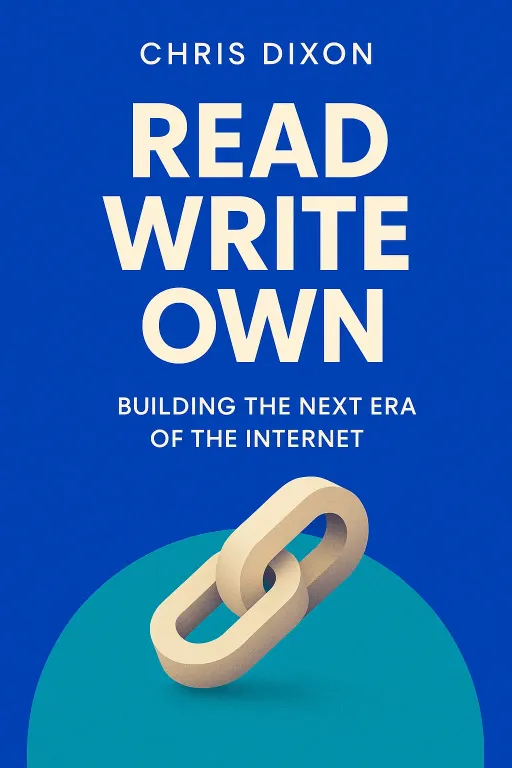
Nova: Imagine living in a city where your landlord can arbitrarily change the locks, seize your belongings, and rewrite your lease overnight without your consent. That is not a scene from a dystopian novel—it is the daily reality of our digital lives under Big Tech. Welcome to the show! I am Nova, and today we are joined by law student Caricia to explore Chris Dixon’s groundbreaking book,. We are so excited to have you here, Caricia!
Caricia: Thank you, Nova! It is wonderful to be here. As someone studying law with a deep interest in human rights and international cooperation, I found this book incredibly provocative. It forces us to ask: who really rules the digital spaces where we spend most of our lives?
Nova: Exactly! And today, we are going to tackle this book from three different, fascinating angles. First, we will explore how corporate networks trap us in a cycle of digital serfdom and why digital ownership is actually a fundamental human right. Second, we will discuss how blockchains can act as digital constitutions to build global public goods and foster international cooperation. And finally, we will look at how future leaders like Caricia can use these frameworks, alongside AI, to sharpen their critical thinking and prepare for careers in global policy. So, let’s dive right in!
The Attract-Extract Cycle and Digital Serfdom
SECTION
Nova: Let’s start with a phrase from the book that really stuck with me: "network design is destiny." In the early days of the internet—what Dixon calls the "read era"—we had open protocols like email and the web. Anyone could build on them without asking for permission. But then came the "read-write era," and we saw the rise of massive corporate networks. Caricia, as a legal mind, how do you view this shift from open protocols to corporate-owned platforms?
Caricia: Well, Nova, from a legal and human rights perspective, this shift represents a transition from a democratic, rule-of-law system to a series of digital autocracies. In the book, Dixon describes the "attract-extract" cycle, which is a brilliant framework for understanding this power dynamic. When a corporate network launches, it needs to grow. So, it enters the "attract" phase. It courts developers, creators, and users by offering free tools, open APIs, and a friendly environment. It says, "Come build on our land!"
Nova: Right! It’s like a landlord offering free rent to get the shops moving in. But once the network effects kick in and the platform becomes dominant, the locks get changed.
Caricia: Precisely. Once users and developers are locked in—meaning the switching costs are too high because all their friends, customers, or data are on that platform—the corporate network shifts to the "extract" phase. It starts squeezing its complements for revenue, manipulating algorithms, and restricting access.
Nova: And Dixon gives some really painful real-world examples of this, doesn't he? Like what happened to third-party developers on Facebook and Twitter in the early 2010s.
Caricia: Yes, the API crackdowns are a classic case study. Developers built entire businesses on top of Twitter and Facebook, enhancing the user experience. But once those platforms decided to consolidate control, they abruptly cut off API access with little warning. It ruined those developers overnight. Another striking example is Amazon undercutting its own top sellers. Amazon uses its marketplace data to see which third-party products are selling best, and then it creates its own cheaper, generic versions to crowd out the original creators.
Nova: It’s wild. It’s like the landlord seeing your shop is doing well, copying your recipe, opening a identical shop next door, and then blocking the path to your entrance! And let’s not forget Epic Games versus Apple over the App Store's thirty percent fee. Apple has such a tight grip on the iOS ecosystem that developers have to pay this massive "tax" just to reach their audience.
Caricia: As a law student, what concerns me most here is the lack of due process and the erosion of property rights. On these corporate networks, our digital identities, our content, and our audiences are not actually ours. We are just renting them. If a platform decides to shadowban you, deplatform you, or change the algorithm, you have no legal recourse. Dixon quotes the famous industry saying, "If it’s free, then you’re the product." But with blockchains, the book argues we can move into the "read-write-own" era.
Nova: Yes! Making users owners. Dixon argues that digital ownership is a basic freedom. If you own your digital assets—like your username, your data, your creative work—in the form of tokens on a blockchain, no centralized company can take them away from you.
Caricia: And that is a profound human rights argument. In international law, the right to own property is recognized as a protector of individual autonomy against arbitrary state power. In the twenty-first century, we must extend that protection to shield individuals from arbitrary corporate power. True digital ownership gives users sovereignty. It levels the playing field.
Blockchains as Network Constitutions and Global Public Goods
SECTION
Nova: That is a perfect transition to our second core topic: how we actually govern these networks. Dixon describes blockchains not just as databases or financial ledgers, but as a completely new class of virtual computers. And what makes them special is that they can establish "inviolable rules in software." They turn the corporate promise of "Don't be evil" into the cryptographic guarantee of "Can't be evil."
Caricia: I love that distinction, Nova. "Don't be evil" relies on the moral character of executives and the pressures of quarterly earnings—which, as we saw with Google's motto evolution, often fail. "Can't be evil" relies on the architecture of the system. In law, we talk about constitutional design. A constitution is a set of fundamental principles and rules that a society agrees to bind itself by, making it difficult for any single leader to seize absolute power. Blockchains are essentially network constitutions written in code.
Nova: That is such a cool way to look at it! A digital constitution. And just like real constitutions, they have to address the messy reality of human governance. Dixon talks about two main types of blockchain governance: off-chain and on-chain.
Caricia: Right. Off-chain governance is very similar to how traditional internet protocols like email or the web are run. It relies on a loose coalition of developers, users, and miners who reach a "rough consensus." But as Dixon points out, this can sometimes lead to what the feminist author Jo Freeman called the "Tyranny of Structurelessness."
Nova: Oh, tell us about that! That sounds like a great concept.
Caricia: In her 1972 essay, Freeman observed that when groups try to operate without any formal structure or rules, they don't actually eliminate power dynamics. Instead, informal, unaccountable hierarchies naturally form based on social connections and charisma. It becomes a high school popularity contest where decisions are made behind closed doors.
Nova: Wow, that is so true. We see that in online communities all the time.
Caricia: Exactly. Without formal, transparent rules, tyrants eventually take over. On-chain governance tries to solve this by encoding the voting rules directly into the blockchain. Token holders can vote on proposals, and the code automatically executes the outcome. But, of course, that introduces a different legal risk: plutocracy, where the wealthiest token holders buy up all the voting power and make decisions that only benefit themselves.
Nova: Right, the "one token, one vote" problem. It’s like a democracy where you can literally buy more votes at the supermarket.
Caricia: Yes! To prevent this, blockchain designers are experimenting with bicameral governance systems, which is a concept we use in constitutional law all the time. For example, you might have one "house" of parliament representing token holders, and another "house" representing respected community members or developers, where each person gets one vote regardless of wealth. Any proposal has to pass both houses to become law. This kind of institutional design is exactly what we study in international relations and constitutional law to prevent corruption and ensure balance.
Nova: It is amazing how these ancient legal principles are being reborn in the digital world. And this has huge implications for international cooperation, doesn't it? If we can build networks with stable, predictable, and fair rules that no single nation or corporation controls, we can create global public goods.
Caricia: Absolutely, Nova. Think about international organizations like the United Nations or the World Bank. They often struggle with cross-border transactions, high intermediary fees, and lack of trust between different jurisdictions. Dixon discusses how blockchain networks can make financial infrastructure a public good, like a public highway system. If we have a global, open-source payment protocol with near-zero fees, we can send humanitarian aid directly to individuals in crisis zones without relying on corrupt local banks or expensive payment processors. It democratizes access to the global economy.
The Computer vs. the Casino: AI and Critical Thinking for Future Leaders
SECTION
Nova: It really does. But to get there, we have to clear away a lot of the noise. Dixon makes a very sharp distinction between two cultures in the blockchain space: the "computer" culture and the "casino" culture. The casino culture is all about speculation, meme coins, and get-rich-quick schemes. It’s what dominates the headlines, especially with disasters like the collapse of FTX. But the computer culture is focused on the long term—on building decentralized software, improving transaction speeds, and creating real utility.
Caricia: This distinction is crucial for developing critical thinking, especially for students and future policy makers. It is so easy to cherry-pick the worst examples of a new technology—like scams or speculative bubbles—and dismiss the entire industry. But that is a disingenuous form of criticism. It’s like dismissing the entire internet in 2001 because Pets. com went bankrupt during the dot-com bust.
Nova: Oh, totally! Or like saying the telephone is useless because the early versions only had a range of a few miles.
Caricia: Exactly. We have to look at technology as a process, not just a static product. Dixon notes that the U. S. share of global software developers has dropped from forty percent to twenty-nine percent in the last five years. If we let the "casino" narrative scare away talent and policymakers, we risk losing our lead in the next major computing cycle. For my future career in international organizations, I need to be able to look past the hype and analyze the structural, systemic impact of these technologies.
Nova: So, let’s talk about how you do that practically. Our listeners, especially students like you, want to know: how can we use AI and these tech frameworks to improve our learning and prepare for the future?
Caricia: I treat AI as what Steve Jobs famously called a "bicycle for the mind." A bicycle doesn't ride itself; you still have to pedal. But it amplifies your human effort, allowing you to go much faster and farther. In my daily studies, I use AI to help me synthesize massive amounts of legal text. For example, if I am analyzing a complex international treaty on digital privacy, I will feed the text into an AI and ask it to identify potential loopholes, compare it with existing human rights frameworks, or generate counterarguments.
Nova: That is a brilliant way to develop critical thinking! You aren't just asking the AI for the "answer"; you are using it to stress-test your own analysis.
Caricia: Exactly. I also use it to practice leadership and negotiation scenarios. I will ask the AI to play the role of a skeptical diplomat from a country with different digital sovereignty laws, and we will engage in a simulated negotiation. It helps me anticipate different perspectives and refine my arguments. It’s like having a tireless, highly knowledgeable study partner available twenty-four seven.
Nova: That is incredibly practical. And what about that one key insight from the book that you apply to your daily life?
Caricia: The most important insight for me is the shift from "reading and writing" to "owning." In my daily life, I am becoming much more intentional about my digital footprint. I ask myself: who owns the data I am generating? Who owns the intellectual output of my research? Instead of just passively consuming content on centralized platforms that monetize my attention, I am looking for decentralized alternatives where I can control my identity and my data. It’s about taking responsibility for your digital sovereignty.
Synthesis & Takeaways
SECTION
Nova: That is a powerful message, Caricia. To wrap things up, let’s synthesize what we’ve discussed today. We’ve looked at how the current internet is dominated by corporate digital landlords who use the attract-extract cycle to turn us into products. We’ve explored how blockchains can act as digital constitutions, enforcing fair play and creating global public goods that can revolutionize international cooperation. And we’ve discussed how future leaders can use AI as a bicycle for the mind to build critical thinking and prepare for a changing world.
Caricia: Yes, and as Chris Dixon beautifully writes in his conclusion, quoting Saint-Exupéry: "If you want to build a ship, don’t drum up the men and women to gather wood, divide the work, and give orders. Instead, teach them to yearn for the vast and endless sea." This book taught me to yearn for a better, more democratic digital sea. We don’t have to accept the internet as we inherited it. We can build something better.
Nova: "These are the good old days," as Dixon says. The future is ours to create. Caricia, thank you so much for sharing your incredible insights and legal perspective with us today. You are going to make an amazing leader in the international community!
Caricia: Thank you, Nova! It was an absolute pleasure.
Nova: And to our listeners, we leave you with this question: what is one small step you can take today to reclaim your digital ownership and start building the internet you actually want? Let us know, and we will see you next time!