

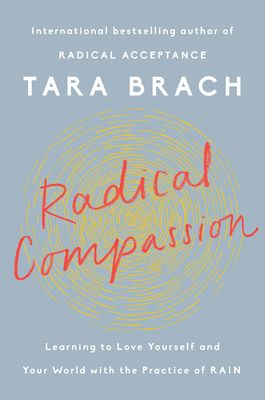
Radical Compassion
Learning to Love Yourself and Your World with the Practice of Rain
Introduction
Nova: Have you ever had one of those days where you feel like you are just failing at everything? Not just that you made a mistake, but that you, at your core, are somehow flawed or not enough?
Atlas: Oh, you mean every Tuesday? But seriously, yeah. It is that heavy feeling in your chest where you start listing all your shortcomings like a grocery list. It is exhausting.
Nova: It really is. And Tara Brach, who is this incredible psychologist and meditation teacher, actually has a name for that. She calls it the Trance of Unworthiness. It is this collective cultural spell we are under where we constantly feel like we are falling short of some invisible standard.
Atlas: The Trance of Unworthiness. That sounds like a fantasy novel curse, but it feels incredibly real. So, is that what we are diving into today? How to break that spell?
Nova: Exactly. We are looking at her book, Radical Compassion. It is essentially a manual for waking up from that trance using a tool she calls RAIN. It is not just about being nice to yourself; it is a systematic way to handle the hardest emotions we face.
Atlas: I like the sound of a system. Usually, when people say be more compassionate, I just end up feeling guilty that I am not being compassionate enough. It becomes another thing to fail at.
Nova: That is the beauty of this. It is a practice, not a personality trait. Today, we are going to break down how RAIN works, why we keep shooting ourselves with second arrows, and how to actually nurture yourself when you feel like you deserve it the least.
Key Insight 1
The RAIN Framework
Nova: So, let's get into the acronym. RAIN stands for Recognize, Allow, Investigate, and Nurture. It sounds simple, but each step is a very specific psychological move.
Atlas: Okay, let's start with R. Recognize. That sounds almost too simple. I know when I am stressed. I am the one feeling it!
Nova: You would be surprised. Most of the time, we are not recognizing the emotion; we are lost in the story about the emotion. Recognizing is just pausing and saying, oh, there is anxiety. Or, there is a feeling of being unappreciated. It is like stepping out of a movie and realizing you are sitting in a theater watching a screen.
Atlas: So, it is about naming it? Like, I am not a failure, I am just experiencing the thought of failure?
Nova: Exactly. And then comes the A, which is Allow. This is usually where people struggle. Allowing means letting the experience be just as it is, without trying to fix it, ignore it, or judge it.
Atlas: Wait, if I allow myself to feel like a failure, won't I just stay stuck there? My instinct is to fight it or distract myself with a pint of ice cream.
Nova: That is the paradox. When we fight a feeling, we actually give it more energy. Tara uses this great analogy of a whirlpool. If you fight the water, you get exhausted and sink. If you relax, the buoyancy of the water actually brings you to the surface. Allowing is just saying, it is okay that this is here right now. It is not saying it is okay to be treated poorly or that you should stay in a bad situation. It is just acknowledging the reality of your internal weather.
Atlas: So, Recognize is noticing the storm, and Allow is putting down the umbrella and just letting it rain for a second?
Nova: That is a perfect way to put it. You are stopping the internal war. And once that war stops, you actually have the mental space to move to the next step, which is where the real detective work begins.
Atlas: I am guessing that is the I? Investigate?
Nova: You got it. But this isn't an intellectual investigation. It is not asking why am I like this? or whose fault is this? It is a somatic investigation. You are looking for where that emotion is living in your body.
Atlas: Somatic. So, like, the knot in my stomach or the tightness in my jaw?
Nova: Precisely. You are asking the feeling, what do you want me to know? or what do you need most right now? It sounds a bit woo-woo until you try it. When you focus on the physical sensation, it stops being this giant, overwhelming monster and starts being a specific set of sensations that you can actually manage.
Atlas: It is like turning on the lights in a dark room. The monster in the corner turns out to be a pile of laundry. It is still a mess, but it is not going to eat me.
Nova: That is a great analogy. And then, once you have investigated with kindness, you move to the N, which is Nurture. This is the radical part of Radical Compassion. It is about actively offering yourself what you need in that moment.
Key Insight 2
The Second Arrow
Atlas: Before we get too deep into the Nurturing part, I want to go back to something you mentioned earlier. The second arrow. What exactly is that? Because it sounds like something I do to myself a lot.
Nova: It is a classic Buddhist teaching that Tara uses. Imagine you are walking through the woods and you get hit by an arrow. That is the first arrow. It is the initial pain—the breakup, the job loss, the mean comment from a stranger. It hurts, right?
Atlas: Right. It is unavoidable pain. Life happens.
Nova: Exactly. But then, we usually shoot ourselves with a second arrow. We say, why was I so stupid to be in the woods? I should have seen that coming. I am so weak for crying about this. That second arrow is the suffering we add on top of the pain through self-judgment.
Atlas: So the first arrow is the wound, and the second arrow is me poking the wound with a stick and yelling at myself for having it.
Nova: Spot on. Tara argues that most of our chronic unhappiness doesn't come from the first arrows. It comes from the thousands of second arrows we fire at ourselves every day. We think that by being hard on ourselves, we will somehow motivate ourselves to be better.
Atlas: Guilty as charged. I always thought if I stopped being my own harshest critic, I would just become a lazy slob who never gets anything done. Isn't self-criticism a survival mechanism?
Nova: It is a primitive one. It comes from the amygdala, the fight-or-flight part of the brain. When we criticize ourselves, we are literally attacking ourselves. Our brain perceives us as both the predator and the prey. That puts us in a state of high stress, which actually shuts down the creative, problem-solving parts of our brain.
Atlas: So I am literally making myself dumber and more stressed by trying to bully myself into being better?
Nova: In a way, yes. Radical Compassion is the alternative. It is the realization that we don't need to be perfect to be worthy of care. Tara tells this story about a dog that is cowering and growling in a corner. If you see it as a mean dog, you stay away or yell at it. But if you see that its paw is caught in a trap, your whole perspective shifts. You see the pain behind the aggression.
Atlas: And I suppose we are the dog in the trap most of the time.
Nova: We are. Our bad habits, our outbursts, our procrastination—those are often just reactions to being in a trap of pain or fear. RAIN helps us see the trap so we can stop shooting those second arrows and actually start the healing process.
Key Insight 3
The Art of Nurturing
Atlas: Okay, so let's talk about the N in RAIN. Nurture. If I am the dog in the trap, how do I actually nurture myself without it feeling fake? I can't just look in the mirror and say you are a superstar and expect it to work.
Nova: You are right, affirmations can feel hollow if they don't land. Tara suggests finding a way to communicate care that feels authentic to you. For some people, it is a physical gesture. She often talks about placing a hand on your heart or your cheek. It sounds simple, but it triggers the release of oxytocin, the bonding hormone.
Atlas: A hand on the heart. I can see how that might feel a bit awkward at first, but I guess it is a way of signaling to your nervous system that you are safe.
Nova: Exactly. It is a non-verbal way of saying, I am here. I am not leaving you. Another way is to use a phrase or a mantra. Not a fake one, but something like, it is okay, sweetheart, or I am sorry you are hurting. It is about finding the voice of your inner caretaker.
Atlas: What if I don't have an inner caretaker? My inner voice sounds more like a drill sergeant who hasn't had his coffee.
Nova: That is very common! If you can't find that voice within yourself, Tara suggests imagining someone who does love you unconditionally. It could be a grandmother, a mentor, a spiritual figure, or even a pet. What would they say to you right now? Use their voice until you can develop your own.
Atlas: I like the pet idea. My dog doesn't care if I missed a deadline; he just wants to sit by my feet. There is something very pure about that kind of acceptance.
Nova: That is exactly the energy of Nurturing. It is a radical act because we are so conditioned to believe that love must be earned. Radical compassion says that your suffering itself is the only qualification you need for care.
Atlas: It is a total flip of the script. Instead of I will love myself when I lose ten pounds or get that promotion, it is I am hurting right now, so I deserve care right now.
Nova: Precisely. And the goal isn't to make the bad feeling go away instantly. The goal is to change your relationship with the feeling. You are moving from being the feeling to being the space that holds the feeling. Tara calls this the After the RAIN state.
Atlas: After the RAIN. Is that like the calm after a storm?
Nova: It is. It is that moment when you finish the steps and you just sit in the stillness. You realize that you are not the anxiety, you are not the failure. You are the awareness that is witnessing it all. It is a shift from the small, separate self to a much larger sense of being. That is where the real freedom lies.
Case Study
Radical Compassion in the Real World
Atlas: This all sounds great for when I am sitting alone in a quiet room, but what about when I am in the middle of a heated argument? Or when I am scrolling through the news and everything feels like it is falling apart? Can RAIN work in the real world?
Nova: That is actually where it is most powerful. Tara talks about using RAIN for everything from social justice work to difficult relationships. In an argument, for example, you can do a mini-RAIN. Recognize: I am feeling defensive. Allow: Okay, I am triggered. Investigate: My chest is tight, I feel small. Nurture: It is okay, this is hard.
Atlas: Does that actually stop the argument?
Nova: It stops you from reacting blindly. When you are in that Trance of Unworthiness or anger, you are on autopilot. By doing RAIN, you create a gap between the stimulus and your response. In that gap, you can choose to speak from a place of clarity rather than a place of hurt.
Atlas: So it is like a circuit breaker for our emotional reactions.
Nova: Exactly. And she also applies this to how we see others. Remember the dog in the trap? When someone is being difficult or hurtful, Radical Compassion asks us to look for the trap they are in. What is their pain? What are they afraid of?
Atlas: That sounds incredibly hard. It is much easier to just label them as a jerk and move on.
Nova: It is harder, but it is also more liberating. When you label someone as a jerk, you stay angry and stuck. When you see their suffering, you are no longer their victim in the same way. You have more agency. It doesn't mean you tolerate bad behavior, but you respond to it with more wisdom.
Atlas: It is like that quote, be kind, for everyone you meet is fighting a hard battle. Tara is basically giving us the tools to actually do that, rather than just putting it on a bumper sticker.
Nova: That is a great way to put it. She is turning a nice sentiment into a practical technology for the heart. She even talks about how this can scale up to global issues. If we can't have compassion for our own messy, imperfect selves, how can we hope to have it for people who are different from us?
Atlas: So the radical part isn't just about being nice; it is about the depth and the reach of that compassion. It starts with the knot in my stomach and ends with how I view the world.
Nova: Exactly. It is about realizing that our belonging is not something we have to earn. It is our birthright. We just have to wake up from the trance to see it.
Conclusion
Nova: We have covered a lot today, from the four steps of RAIN to the trap of the second arrow. If there is one thing I want people to take away from Tara Brach's work, it is that compassion is not a luxury. It is a necessity for healing.
Atlas: I think for me, the biggest takeaway is that I can stop being my own drill sergeant. The idea that I don't have to fix myself before I am worthy of care is... well, it is a relief. It is going to take practice to stop shooting those second arrows, though.
Nova: It definitely takes practice. But remember, the R in RAIN is just Recognize. Even if all you do today is notice when you are being hard on yourself, that is a huge win. You are already starting to wake up from the trance.
Atlas: So, next time I am spiraling, I will try to just let it rain. Recognize, Allow, Investigate, and Nurture. It is a lot better than my current strategy of panic, judge, distract, and repeat.
Nova: Much better! And the more you do it, the more you realize that the storm always passes, but the presence you bring to it—that stays.
Atlas: This has been a really eye-opening look at Radical Compassion. I am definitely going to be putting my hand on my heart next time things get bumpy.
Nova: I highly recommend it. Thank you for joining us on this deep dive into the work of Tara Brach. If you are feeling stuck in that trance of unworthiness, just remember: you are not the storm, you are the sky.
Atlas: Beautifully said.
Nova: This is Aibrary. Congratulations on your growth!