Dismantling Societal Programming for True Autonomy
Golden Hook & Introduction
SECTION
Nova: Let’s play a quick round of word association. I say a concept, you give me the first thing that pops into your head.
Atlas: I am ready. Let’s do it.
Nova: Freedom.
Atlas: A remote beach, a laptop, and zero calendar invites.
Nova: Exactly. And that is precisely the problem. We have been conditioned to believe that freedom is an escape from something, or a purchase of something, rather than the ability to define the rules of our own existence.
Atlas: That is a sharp pivot. You are talking about the difference between consumer-grade freedom and actual, structural autonomy.
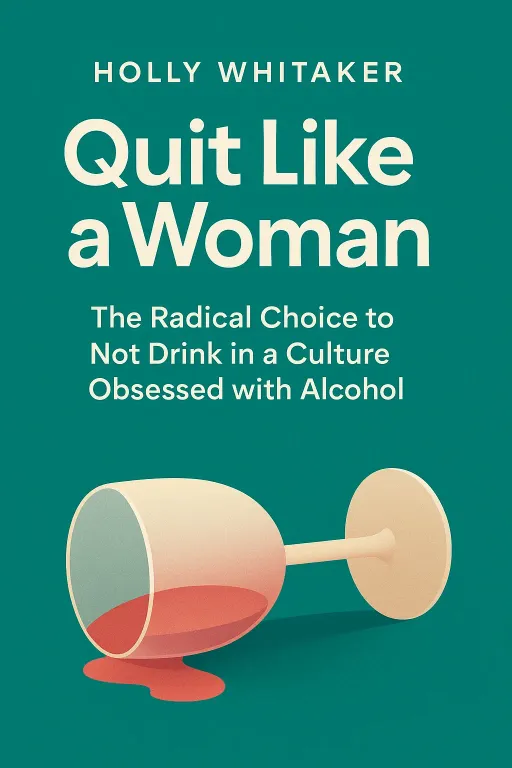
Nova: Precisely. Today we are dismantling that exact illusion. We are looking at two books that pull back the curtain on how we are programmed: Quit Like a Woman by Holly Whitaker, and Everything You Never Wanted to Know About Girls and Sex by Peggy Orenstein.
Atlas: These are two heavy hitters. Whitaker is famous for her work on the intersection of recovery and systemic critique, and Orenstein has spent decades documenting how cultural scripts shape identity, starting from when we are barely out of the cradle.
Nova: They both hit on a fundamental truth. We think we are making choices, but we are often just picking from a menu that was printed by a culture interested in keeping us compliant, anxious, and consuming. Today, we are going to talk about how to stop ordering from that menu.
The Architecture of the Consumer Trap
SECTION
Atlas: Let’s start with the Whitaker angle. When you talk about consumer culture selling coping mechanisms as liberation, that feels like a heavy accusation. Give me the breakdown on that. How does a book about, say, changing your relationship with alcohol or lifestyle habits end up being a manifesto on reclaiming power?
Nova: It is fascinating because the cultural narrative is that we drink or consume to relax, to bond, or to celebrate. It is framed as a reward. Whitaker argues that this is a classic bait-and-switch. The system creates a high-pressure, stressful, and often isolating environment, and then it sells us the very things that keep us stuck in that environment as the solution to the stress.
Atlas: So, the stress is the feature, not the bug.
Nova: Exactly. If you were truly free, truly autonomous, you would be much harder to market to. You would have different priorities. But when you are exhausted, when you are stressed, when you are constantly looking for a quick hit of relief, you are the perfect consumer. Whitaker’s work, which has been widely acclaimed for its raw, unfiltered look at the industry of wellness and consumption, essentially says that we have been sold a version of liberation that is actually just a different kind of cage.
Atlas: I can see how that lands for people. It is the idea that we are treating the symptoms of our life rather than the root cause. But here is where I get skeptical. Is it really a conspiracy? Or is it just the path of least resistance? Most people are just trying to get through the Tuesday.
Nova: That is the most dangerous part. It is not a conspiracy in a boardroom; it is a cultural script. It is ambient. We are swimming in it. When Whitaker talks about dismantling this, she is not suggesting we all go live in a cabin in the woods. She is suggesting that we start by identifying the "default" settings. Think of it like an operating system on a computer. You buy the computer, and it comes with software pre-installed. You don’t think about why the browser is set to a certain homepage or why the notifications are set to vibrate. You just assume that is how computers work.
Atlas: Right. And you are saying our lives have similar pre-installed software.
Nova: We do. We have pre-installed ideas about what success looks like, what a "fun" weekend looks like, what a "professional" life looks like. And those scripts are often designed to keep us running on a treadmill. Whitaker’s blueprint is about identifying those scripts and asking: Did I actually choose this, or did I just inherit it?
Atlas: That is a difficult question to ask because the answer is almost always, I inherited it. Which brings us to the Orenstein side of things. If Whitaker is talking about the adult consumer, Orenstein is talking about the foundation. Everything You Never Wanted to Know About Girls and Sex digs into how these scripts are written into us long before we are even capable of analyzing them.
The Scripted Self and Early Conditioning
SECTION
Nova: Orenstein’s work is vital here. She spent years interviewing girls and young women, looking at how the culture of sexualization and the pressure to perform—not just sexually, but socially and academically—shapes their sense of self. It is a masterclass in seeing how early we are programmed to prioritize external validation over internal agency.
Atlas: I remember reading about her research. It is staggering how early the "script" begins. It is not just about the big moments; it is the constant, subtle reinforcement of how a girl is supposed to be, how she is supposed to look, and how she is supposed to interact with the world.
Nova: And that is the link to Whitaker. If you grow up in a system that conditions you to constantly perform, to constantly seek validation, to constantly worry about how you are perceived, you are already perfectly primed for that consumer culture Whitaker talks about. You are already looking for things to fix your perceived inadequacies.
Atlas: That makes the "dismantling" part sound even harder. Because you are not just fighting a marketing department; you are fighting habits of thought that were laid down when you were twelve years old.
Nova: That is the reality check. It is deep work. But the first step is awareness. Orenstein’s research highlights that we don’t even see the pressure because it feels like reality. When you ask a young person why they do something, they often say, "That is just how it is." They don't see the cultural architecture behind it.
Atlas: So, how do we make that visible? If I am a listener sitting here thinking, "Okay, I buy into the idea that I am running on pre-installed software," what is the first thing I do to debug it?
Nova: You start with the friction points. You look for the places in your life where you feel a sense of obligation that doesn't actually align with your personal values.
Atlas: Give me an example. Something practical.
Nova: Think about a social habit. Maybe you attend every networking event in your industry, even though you leave every single one feeling drained and resentful. You do it because the script says, "This is how you get ahead."
Atlas: That is a classic. And if I don’t go, I feel like I am failing.
Nova: Exactly. But if you pause and ask, "Is this actually helping me reach my goals, or is it just the script I was handed?" you might realize there is a better way to build your network—one that aligns with your energy and your actual goals. You redesign the approach. You don't just stop networking; you do it on your own terms.
The Mechanics of True Autonomy
SECTION
Atlas: I like that framing. It moves us from "quitting" to "redesigning." But let’s play devil’s advocate for a second. We live in a world with real constraints. You can’t just opt out of everything. You have a job, you have bills, you have social contracts. How do you balance this idea of "true autonomy" with the reality of living in a society that demands a certain level of conformity?
Nova: That is the essential tension. True autonomy is not about total independence from society. It is about conscious participation. It is the difference between being a passenger in your own life and being the driver.
Atlas: So, the passenger is the one who follows the script because they think they have no choice. The driver is the one who acknowledges the rules but decides which ones to follow and which ones to rewrite.
Nova: That is a perfect way to put it. When you look at the research Orenstein presents, the tragedy is that the script often dictates that the goal is to be "liked" or "validated." The driver, by contrast, prioritizes integrity and alignment. They are willing to be misunderstood if it means they are living according to their own values.
Atlas: And that takes courage. It is actually scary to go off-script. If you stop doing the things that are "expected," people notice. They might even get uncomfortable.
Nova: They will. And that is a signal that you are onto something. When you start changing your behavior, you are essentially breaking the unwritten contract you had with your peers or your community. They are used to you behaving in a certain way. When you stop, it forces them to look at their own scripts.
Atlas: That is a profound insight. My autonomy might be a mirror for their lack of it.
Nova: Precisely. And that is why it is not just a personal journey; it is a quiet, radical act. By choosing to live with intention, you create space for others to do the same.
Synthesis & Takeaways
SECTION
Atlas: We have covered a lot of ground here. We started with the idea that our "freedom" is often just a consumer choice, and we moved through the reality that our identity has been scripted for us since childhood. We are talking about the "operating system" of our lives.
Nova: And the core realization is that we are not helpless. We are not just products of our environment. We have the capacity to audit our own lives.
Atlas: So, if I am a listener, and I want to take the first step today, what is the most high-leverage move?
Nova: Pick one default habit. Just one. Something you do because you think you "should." Maybe it is how you spend your Sunday evenings, how you approach a specific type of work meeting, or even how you handle your notifications. Take that one habit and redesign it. Ask yourself: If I were building my life from scratch today, would I include this? If the answer is no, change it.
Atlas: That is such a manageable, yet powerful, intervention. It is not about a total life overhaul. It is about one conscious edit.
Nova: And once you make that one edit, you gain the confidence to make the next one. It becomes a cycle of autonomy. You start seeing the scripts everywhere, and you start realizing how much power you actually have to rewrite them.
Atlas: I love that. It turns the process from something overwhelming into something exciting. It is a form of mastery. You are mastering your own narrative.
Nova: That is the goal. We are not just trying to survive the week; we are trying to build a life that is authentically ours. And that starts with the willingness to question everything.
Atlas: I am definitely going to look at my "default" habits this week. I have a feeling I am going to find a few things I am doing purely out of autopilot.
Nova: That is the best place to start. Awareness is the first step toward true autonomy.
Atlas: This has been a fantastic conversation. It feels like we have barely scratched the surface, but we have given our listeners a real, tangible place to begin.
Nova: That is all you need. One thread, and you start pulling, and the whole sweater unravels.
Atlas: Well, I am ready to start pulling. Thank you for this, Nova.
Nova: Thank you, Atlas. And to everyone listening, take that one habit, look at it, and decide if it is serving you. You have more power than you think.
Atlas: This is Aibrary. Congratulations on your growth!