

Quiet
Introduction
The Silent Majority: Why We Need to Listen Up
Nova: Welcome to the show. Imagine a world where the loudest voice always wins, where collaboration means constant group brainstorming, and where solitude is treated like a contagious disease. That world, for many, is reality. We are living under the reign of the Extrovert Ideal.
Nova: : That term is so potent, Nova. It immediately makes me think of every mandatory icebreaker session I’ve ever endured. But what exactly is this ideal, and why is it so dominant?
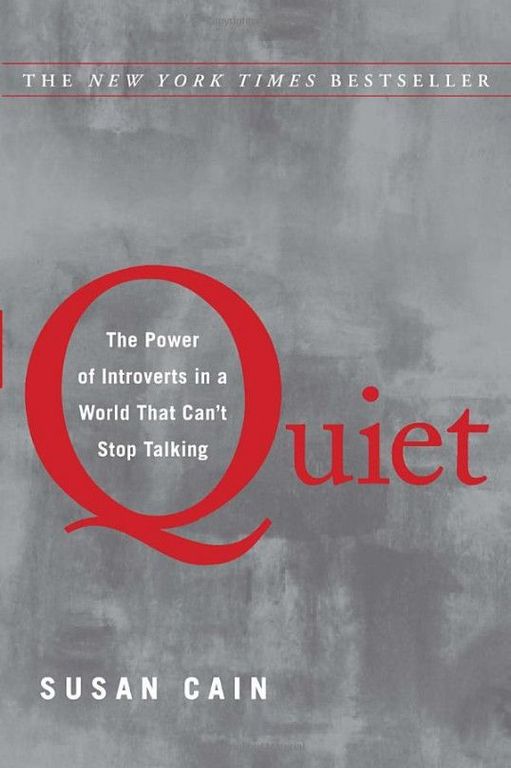
Nova: That's what we're diving into today, exploring Susan Cain's landmark book, Quiet: The Power of Introverts in a World That Can't Stop Talking. And here’s the first shocker: this isn't about a small minority. Cain cites studies suggesting that between one-third and half of the American population are introverts. That’s potentially 150 million people whose natural operating system is being constantly told it’s running the wrong software.
Nova: : One-third to half! That’s staggering. If that many people prefer quiet reflection, why does our entire infrastructure—from school design to corporate culture—seem engineered for the perpetually outgoing?
Nova: Exactly. We’re going to trace the history of this cultural bias, explore the real neurological differences between introverts and extroverts, and look at the concrete ways we can start building a more balanced world. It’s time to give the quiet ones their due.
Nova: : I’m ready to trade the buzz for the buzzkill of reality. Let’s start at the beginning. Where did this obsession with the 'loud' person come from?
Nova: Let's rewind the clock. Our first chapter is all about the historical shift that put extroversion on a pedestal.
Key Insight 1: From Character to Personality
The Rise of the Extrovert Ideal: A Cultural History
Nova: Before the 20th century, American culture largely valued the 'Culture of Character'—think stoicism, diligence, and inner moral fortitude. Then, around the turn of the century, something seismic happened.
Nova: : What was the catalyst? Was it a new philosophy, or maybe an economic shift?
Nova: It was both, but Cain points to a key figure: Dale Carnegie. His transformation from a quiet farm boy to a public-speaking, sales-savvy icon mirrored a national transformation. The focus shifted from to in public. This became the 'Culture of Personality.'
Nova: : So, it’s tied to the rise of modern sales, big corporations, and the need for charismatic leaders who could sell themselves as much as their product?
Nova: Precisely. The ideal person became the one who was quick on their feet, gregarious, and comfortable in large groups. Cain notes that in the 1920s, suddenly, being shy was pathologized. It wasn't just a personality trait; it was seen as a social failing that needed fixing.
Nova: : That explains so much about the pressure I felt growing up. If you weren't the life of the party, you were somehow deficient. Did Cain find any specific data points showing this shift in the workplace?
Nova: She did. She points out that in the 1920s, the traits valued in leadership—teamwork, enthusiasm, sociability—were all the hallmarks of extroversion. Introverts, who thrive on deep, solitary thought, were suddenly seen as less capable of leadership, despite often possessing superior analytical skills.
Nova: : It’s fascinating how quickly a cultural ideal can become the default setting for success. It’s almost like we collectively decided that deep thinking was less valuable than quick talking.
Nova: And the consequences are huge. If you value quick, loud brainstorming, you automatically filter out the best ideas from the people who need time to process internally. It’s a self-fulfilling prophecy where the extroverts dominate the conversation, and everyone assumes their ideas are superior because they were voiced first and loudest.
Nova: : So, we’ve established that society actively prefers extroverted behavior. But are introverts and extroverts actually wired differently? I mean, beyond just liking parties or not liking parties?
Nova: That’s our next deep dive. Cain moves beyond sociology into neuroscience to show us that this isn't just preference; it's biology. We’re talking about the brain’s response to stimulation.
Key Insight 2: Dopamine and Deliberation
The Brain on Stimulation: Biology of Temperament
Nova: This is where the science gets really interesting. Cain explains that the difference between introverts and extroverts often comes down to how their brains process dopamine, the neurotransmitter associated with reward and excitement.
Nova: : Dopamine—the feel-good chemical. So, extroverts are chasing that high?
Nova: Essentially, yes. Extroverts are generally more reward-sensitive. They get a bigger, faster hit of dopamine from external stimulation—a new environment, a fast-paced conversation, a big win. This makes them action-oriented and often more willing to take risks.
Nova: : That makes perfect sense for sales or high-stakes trading, where immediate action is rewarded. What about introverts in that same scenario?
Nova: Introverts, conversely, are more sensitive to the in their environment. Their brains are more easily overstimulated. That same loud party or rapid-fire meeting that gives an extrovert a dopamine rush can quickly become overwhelming, leading to sensory overload.
Nova: : So, an introvert isn't necessarily shy or anti-social; they just hit their stimulation ceiling much faster than an extrovert?
Nova: Exactly. Cain makes a crucial distinction: shyness is the fear of social disapproval, which is learned. Introversion is the preference for a less stimulating environment, which is innate. An introvert can be a fantastic public speaker, but they need significant downtime afterward to recharge their internal batteries.
Nova: : That’s a critical distinction. I always conflated the two. If an introvert is more sensitive to warning signals, does that translate into better performance in certain tasks?
Nova: Absolutely. Because they are less drawn to immediate rewards and more attuned to potential pitfalls, introverts tend to work more slowly and deliberately. They are better at tasks requiring sustained focus, deep concentration, and meticulous error-checking. Cain cites research showing introverts often outperform extroverts on tasks requiring deep immersion.
Nova: : So, in a world obsessed with speed, we are systematically sidelining the people best equipped for depth. It sounds like we’re prioritizing the sprint over the marathon of complex problem-solving.
Nova: It’s a trade-off we haven't been conscious of making. And this trade-off is most visible in the physical spaces we force people to inhabit—specifically, the modern office.
Case Study: Workplaces and Restorative Niches
Designing for Noise: The Failure of the Open Office
Nova: Let’s talk about the open-plan office. For decades, this was sold as the pinnacle of modern, collaborative work. Cain argues it’s an architectural disaster for creativity and productivity, especially for introverts.
Nova: : I’ve been in those spaces. The constant visual distractions, the noise bleeding over from every direction. It feels like being trapped in a perpetual coffee shop where everyone is talking about your project.
Nova: Cain states that research suggests open offices can actually productivity and increase sickness because of the constant, low-level stress. For an introvert, this environment is a constant drain on their limited stimulation budget.
Nova: : If the goal is collaboration, how does constant noise help? I always thought collaboration required focused discussion, not just proximity.
Nova: Cain points out that true collaboration often requires a period of individual thought first. You can’t have a brilliant idea in a group if you never get the quiet space to form the idea in the first place. The open office forces premature collaboration.
Nova: : So, what’s the solution Cain proposes? Does she want us to go back to cubicles from the 1980s?
Nova: Not exactly. She advocates for what she calls 'Restorative Niches'—spaces designed for specific work modes. She partnered with Steelcase to develop 'Quiet Spaces,' which offer five different ways for people to work, including fully enclosed pods for deep focus and semi-private areas for low-key collaboration.
Nova: : That sounds like a practical compromise. It acknowledges that people need different things at different times, rather than imposing one style on everyone.
Nova: It’s about choice and control over one’s environment. And this principle extends to education. Cain talks about 'Quiet Schools,' suggesting we need more spaces for solitary work, more one-on-one teacher interaction, and less reliance on mandatory group projects for every single assignment.
Nova: : It seems like the core message for both schools and offices is: stop rewarding the of engagement and start rewarding the of contribution.
Nova: Precisely. And this applies to leadership too. Cain highlights that introverted leaders, who tend to listen more carefully and allow proactive employees to step up, can be significantly more effective than their extroverted counterparts when managing teams of proactive employees.
Nova: : So, the takeaway isn't that extroverts are bad, but that our system is biased towards them, suppressing the potential of nearly half the population. We need to actively design for balance.
Nova: That brings us perfectly to our final thoughts. We’ve seen the history, the biology, and the architectural failures. Now, how do we take this knowledge forward?
Conclusion
Designing a Balanced Future
Nova: We’ve covered a lot of ground today, from the historical shift fueled by Dale Carnegie to the neurological differences in dopamine response. The central thesis of Quiet is that we have undervalued the immense strengths of introverts—deep focus, careful analysis, and thoughtful leadership.
Nova: : The most actionable insight for me was the concept of the 'Restorative Niche.' It’s not about isolating people; it’s about providing the necessary space for internal processing so that when they engage externally, their contribution is richer and more meaningful.
Nova: Absolutely. For our listeners, whether you identify as an introvert, an extrovert, or somewhere in the vast middle ground of ambivert, the takeaway is to advocate for environmental choice. If you’re an introvert, give yourself permission to schedule solitude. If you’re an extrovert, actively seek out and listen to the quiet voices in the room before making a decision.
Nova: : And for managers, the challenge is clear: stop confusing volume with value. Start designing meeting agendas that allow for pre-reading and written input, not just spontaneous shouting matches.
Nova: Cain’s work is a powerful reminder that diversity isn't just about demographics; it’s about temperament. A truly innovative and resilient society needs both the spark of the extrovert and the steady flame of the introvert.
Nova: : It’s about creating a culture where both types feel safe to bring their whole selves—and their best ideas—to the table.
Nova: Well said. The world doesn't need fewer extroverts, but it desperately needs more space for introverts to thrive as they are. This is Aibrary. Congratulations on your growth!