

The Empathy Advantage: Cultivating Connection in Medical Practice
Golden Hook & Introduction
SECTION
Nova: Atlas, if I told you that the secret to becoming a truly world-class medical practitioner wasn't just about mastering anatomy or pharmacology, but about something far more subtle, something we often dismiss as mere 'soft skills,' what would you say?
Atlas: Hold on, are you suggesting that after years of rigorous scientific training, the real game-changer is...? Because that sounds suspiciously like my aunt trying to convince me essential oils cure everything.
Nova: Not just feelings, Atlas, but a deliberate, active practice. We're diving into "The Empathy Advantage: Cultivating Connection in Medical Practice," a book that argues empathy isn't some fluffy add-on, but the very bedrock of effective healthcare. It's a profound and timely work, especially considering its author, a physician who actually stepped away from clinical practice to dedicate her life to researching and teaching compassionate care, after experiencing firsthand the dehumanizing effects of a system that often prioritizes efficiency over connection.
Atlas: That's fascinating. So, a doctor who became a philosopher of medicine, essentially. This isn't just theory, then, it's born from the trenches. That actually makes me lean in, because for many of our listeners, who are on the front lines, the idea of adding thing to their already overflowing plates can feel... overwhelming.
Nova: Exactly. And that's why this book is so powerful. It reframes empathy not as an emotional burden, but as a strategic asset. Today, we're going to explore how cultivating human connection isn't just good for the patient, but for the practitioner too, and how it can literally transform the medical landscape.
The Power of Human Connection
SECTION
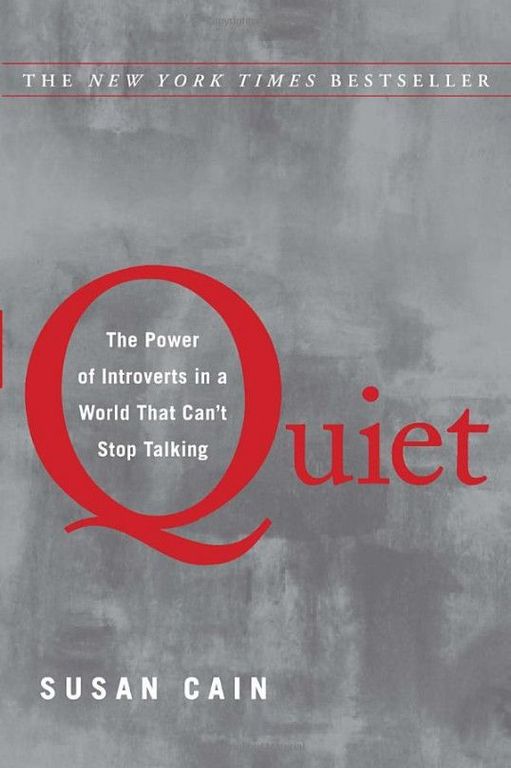
Nova: Our first core idea from “The Empathy Advantage” really hinges on understanding the true power of human connection in medicine. It’s about moving beyond the transactional and into the transformational. The book draws heavily on insights from Susan Cain’s "Quiet: The Power of Introverts in a World That Can't Stop Talking."
Atlas: Oh, I love that book! Cain completely reframed how I think about introversion, not as a deficit, but as a superpower. But how does that connect to empathy in a clinical setting? Are we saying doctors need to be more introverted?
Nova: Not necessarily, but it’s about appreciating different communication styles and the profound value of deep listening and observation. Cain’s work highlights that introverts often excel at these very skills—taking a step back, truly absorbing information, and understanding underlying dynamics. In medicine, this translates to a more nuanced grasp of patient and colleague interactions. It’s about not just hearing someone says, but observing they say it,, and the subtle cues in their body language.
Atlas: That makes sense. It’s like being a detective, looking for clues beyond the obvious. Because in a 15-minute appointment, a patient might not articulate their deepest fears or concerns, but their body language or a slight hesitation could speak volumes. So, a deeper understanding of communication styles, as explored by Cain, helps us tune into those unspoken narratives.
Nova: Precisely. And this is where the "Empathy Advantage" really takes flight. It argues that this kind of deep listening and observation builds bridges of trust. Imagine a patient who feels truly seen and heard, not just processed. Their anxiety decreases, their adherence to treatment improves, and their overall experience of care is profoundly more positive. It changes the entire dynamic.
Atlas: That’s actually really inspiring. Because so often, especially in high-pressure environments, it's easy to fall into a pattern of just ticking boxes and moving on. But what you're suggesting, drawing from Cain, is that slowing down and genuinely observing can actually make the process efficient in the long run, because you're catching things you might otherwise miss.
Nova: Absolutely. And this isn't just about individual patient interactions. The book also weaves in insights from Brené Brown’s "Dare to Lead," which, while a leadership book, has a core message on vulnerability, courage, and empathy that's directly applicable. Brown argues that you can't lead effectively without vulnerability, and you can't build authentic connections without courage.
Atlas: Wow. So we’re talking about vulnerability in doctors? That feels counter-intuitive to the image of the stoic, all-knowing physician. But I can see how it creates trust. If a doctor can admit they don't have all the answers, or acknowledge the inherent uncertainty of medicine, it might actually make them more human and relatable.
Nova: Exactly! It's not about being weak; it's about being authentic. Brown's work emphasizes that empathy isn't just a feeling; it's an active practice that requires courage—the courage to step into someone else's shoes, to feel with them, and to communicate that understanding. This transforms transactional encounters into meaningful relationships. It's about leading with compassion, both with patients and within healthcare teams.
Atlas: That’s a tough ask, though, for many in medicine. They’re taught to be objective, to distance themselves emotionally to make clinical decisions. But Brown's whole point is that true connection requires leaning into discomfort. It's about saying, "I see you, I hear you, and I'm with you in this," even if you can't fix everything.
Nova: And that's the "Nova's Take" from the book: empathy is not just a feeling; it's an active practice that builds bridges of trust and understanding, transforming transactional encounters into meaningful relationships. It's about cultivating a mindset where every interaction is an opportunity for connection, not just a task to be completed. This approach reduces physician burnout, improves patient outcomes, and creates a more humane healthcare system overall. The book makes a compelling case that this isn't a "nice-to-have" but a fundamental shift that's needed.
Your Tiny Step – Perspective-Taking in Practice
SECTION
Nova: So, given all this, Atlas, what’s one concrete tiny step that someone listening could take today, to start cultivating this empathy advantage?
Atlas: Oh, I like this. Because it’s easy to get lost in the grand theories of Brené Brown and Susan Cain. We need something actionable. The book suggests "perspective-taking," right?
Nova: Precisely. The "Tiny Step" recommended is: in your next team meeting or patient consultation, consciously practice 'perspective-taking'—actively trying to see the situation from the other person's point of view before responding.
Atlas: That sounds deceptively simple, but incredibly powerful. Because so often, our first instinct is to react, to defend, or to offer a solution from perspective. But taking a moment to genuinely consider perspective—what are their fears, their priorities, their constraints—completely changes the tenor of the interaction.
Nova: It does. Think about a patient who is non-compliant with medication. Our immediate reaction might be frustration or judgment. But if you pause and actively try to see it from their perspective—maybe they can't afford the medication, maybe they have side effects they're embarrassed to mention, maybe they don't understand the instructions—the conversation shifts from blame to collaboration.
Atlas: I can see how that would deepen connections. It builds trust because the other person feels understood, not judged. And for our listeners who are educators, shaping future physicians, this is an invaluable lesson. It moves beyond just teaching clinical skills to fostering a truly humanistic approach to medicine.
Nova: And for those in high-pressure settings, navigating complex team dynamics, perspective-taking can defuse tension, foster better collaboration, and prevent misunderstandings. It’s about recognizing that everyone is operating from their own unique set of experiences and pressures. It's a skill that builds resilience, too, because it helps you depersonalize difficult situations.
Atlas: It reminds me of that old adage, "seek first to understand, then to be understood." It’s so fundamental, yet so often overlooked in the rush of daily practice. It's about creating that moment of pause, that space for connection, before diving into the solution.
Nova: It’s a micro-practice with macro effects. It shifts the entire interaction from a monologue to a dialogue, from a transaction to a relationship. And that, ultimately, is the essence of "The Empathy Advantage."
Synthesis & Takeaways
SECTION
Nova: So, Atlas, as we wrap up, what’s the profound insight you’re taking away from "The Empathy Advantage" today?
Atlas: Honestly, it’s the idea that empathy isn't a burden, but a tool, a skill even, that makes us at everything else we do in medicine. It’s not just about being a "nice" doctor; it’s about being a more effective, more resilient, and ultimately, a more human doctor. This isn't just about feeling good; it's about better outcomes, for patients and practitioners alike.
Nova: Absolutely. The core of our podcast today is really an exploration of how cultivating human connection transforms medicine from a series of tasks into a meaningful practice. It’s a call to embrace our own narrative as healers and to dedicate time for reflection, because that fuels our resilience in this vital work.
Atlas: And for our listeners who are constantly seeking novel approaches to deepen patient connections, to navigate high-pressure settings with emotional intelligence, and to build resilience strategies, this book offers a clear path. It’s about integrating these "soft skills" not as an option, but as a necessity.
Nova: It’s a powerful reminder that while medical science continually advances, the human element, the power of connection, remains at the heart of healing. And that’s a message that resonates deeply with the compassionate innovators and resilient healers among our audience.
Atlas: It’s about bringing our whole hearts to work, as Brené Brown would say. And that’s a journey worth taking.
Nova: This is Aibrary. Congratulations on your growth!