

The Compliance Trap: Why Carrots and Sticks Fail the Modern Mind
Golden Hook & Introduction
SECTION
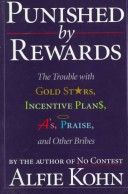
Prof. Eleanor Hart: Imagine you want to optimize a manufacturing line or inspire a breakthrough in a research lab. Your first instinct might be to offer a bonus, a prize, a carrot. But what if that very reward is a psychological handbrake? Today, we're dissecting Alfie Kohn's provocative masterpiece, Punished by Rewards. We'll challenge the deeply ingrained belief that carrots and sticks motivate us. Today, we're going to tackle this book from two different angles. First, we'll explore the behaviorist illusion and why rewards are actually control mechanisms that devalue our work. Then, we'll dive into the Three Cs—Content, Collaboration, and Choice—to discover how we can design systems that fuel genuine, intrinsic drive. Joining me today is Sijin, a PhD candidate in engineering manufacturing who brings a brilliant systems-thinking perspective to this psychological puzzle. Welcome, Sijin.
Sijin: Thanks, Eleanor. It's great to be here. You know, when I first looked at Kohn's work, I immediately saw it through the lens of systems engineering. In manufacturing, we talk a lot about control loops and feedback mechanisms. If you feed a system the wrong control signal, you get instability or systemic failure. And Kohn is essentially arguing that extrinsic rewards are a highly unstable, destructive control signal. We think we're optimizing for performance, but we're actually introducing massive noise into the system.
Prof. Eleanor Hart: That is a fascinating way to frame it, Sijin. A flawed control loop. We think we are steering the ship, but we are actually throwing off the entire navigation system. Alfie Kohn's core argument is that rewards—whether they are gold stars, grades, or corporate bonuses—do not motivate people. They only motivate people to. And in the process, the joy of the task itself gets completely eroded.
Sijin: Exactly. It's the difference between temporary compliance and lasting commitment. From an analytical standpoint, a reward is just a bribe. It works in the short term because humans are responsive to immediate feedback. If you tell an engineer, "I'll give you a thousand dollars to finish this report by Friday," they will probably do it. But what happens to their relationship with the actual engineering work? That's where the system breaks down.
Deep Dive into Core Topic 1
SECTION
Prof. Eleanor Hart: To understand why this happens, we have to look at the foundational psychology. Kohn points directly to B. F. Skinner and the school of behaviorism, which treated humans essentially like pets—do this, get a treat. But humans are infinitely more complex. Let's look at a classic study that Kohn highlights, conducted by Edward Deci, and later expanded by researchers like Mark Lepper, David Greene, and Richard Nisbett. They wanted to see what happens to intrinsic interest when you introduce a reward. They observed a group of preschool children during free-play time and identified those who naturally loved to draw. These kids drew simply for the sheer joy of it.
Sijin: Right, their baseline intrinsic motivation was high. They were self-directed.
Prof. Eleanor Hart: Exactly. So, the researchers divided these artistic children into three groups. The first group was the "Expected Reward" group. They were shown a fancy "Good Player" certificate, complete with a gold seal and a ribbon, and told they would get it if they drew a picture. The second group was the "Unexpected Reward" group. They got the same certificate after they finished drawing, but they didn't know they were getting it beforehand. The third group was the "No Reward" group—they just drew, with no mention of any prize.
Sijin: And then they tracked their behavior later, correct?
Prof. Eleanor Hart: Yes, a couple of weeks later, the researchers observed the children again during free-play time. The results were startling. The children who had expected a reward now showed significantly interest in drawing. They chose to draw far less often than they had before the study. Meanwhile, the kids who got no reward, or got an unexpected one, kept drawing just as much as before. The carrot had essentially poisoned the activity.
Sijin: That study is a perfect demonstration of what psychologists call the overjustification effect. From a systems perspective, the reward rewrites the internal logic of the agent. The child's brain shifts from "I am drawing because it is fun" to "I am drawing to get that piece of paper." Once the reward is removed, the justification for the activity vanishes. In manufacturing, we see this all the time with key performance indicators, or KPIs. If you reward a production line solely on the number of units produced, they will hit that metric. But quality will plummet. They will cut corners, ignore safety protocols, and game the system just to get the reward. You've optimized for the metric, but ruined the product.
Prof. Eleanor Hart: It's so true. And it's not just that quality suffers; our relationship with other people suffers too. Kohn argues that rewards are inherently manipulative. When we say, "Do this and you'll get that," we are establishing a power dynamic. The person holding the carrot is in control, and the person chasing it is being controlled. Sijin, how does that play out in a highly collaborative field like engineering or academic research?
Sijin: Oh, it's incredibly destructive. In research, if you reward individuals based on their publication count or citation metrics, you immediately disincentivize collaboration. Why would I help a colleague solve a complex manufacturing bottleneck if it doesn't contribute directly to my personal reward metric? It turns a cooperative ecosystem into a zero-sum game. People start hoarding information. They become risk-averse because failure—which is a necessary part of innovation—means losing out on the reward. So, instead of aiming for high-risk, high-reward breakthroughs, researchers play it safe. They optimize for incremental, predictable outputs. It's a tragedy for scientific progress.
Prof. Eleanor Hart: It really is. We are essentially training people to be uncreative. Kohn quotes a lot of research showing that the more people are focused on rewards, the more they tend to choose the easiest possible task. If you tell a student they will get an A for completing a worksheet, they will choose the easiest worksheet. If you tell an employee their bonus depends on meeting a specific goal, they will negotiate for the lowest, most achievable goal possible. We are incentivizing mediocrity.
Sijin: It's a classic optimization error. You're optimizing for compliance rather than excellence. In engineering, if you design a system where the feedback loop only measures one variable—like speed or volume—the system will eventually degrade all other variables to maximize that one. Human motivation is no different. If the feedback loop is purely financial or grade-based, the human system will degrade curiosity, creativity, and ethical behavior to maximize the payout.
Deep Dive into Core Topic 2
SECTION
Prof. Eleanor Hart: So, if carrots and sticks are a broken control loop, how do we fix the system? This brings us to the second half of Kohn's book, where he outlines his alternative framework. He calls it the "Three Cs": Content, Collaboration, and Choice. Let's break these down, because they offer a completely different way to design our schools, workplaces, and research labs. Sijin, let's start with Content. How do you interpret that from your perspective?
Sijin: Content is all about the substance of the work itself. Kohn argues that you can't bribe people to do bad work and expect them to care about it. If the task is mindless, repetitive, or meaningless, no amount of rewards will make it engaging. In manufacturing, we've historically treated workers like cogs in a machine—very Taylorist, very behaviorist. But modern manufacturing is shifting. We need to design jobs where workers aren't just turning a wrench; they are problem-solving, understanding the whole system, and seeing the value of what they create. The content of the job has to be inherently interesting and meaningful.
Prof. Eleanor Hart: Exactly. It's about asking, "How can we make this task worth doing?" rather than "How can we bribe them to do it?" If a student is struggling in school, the behaviorist answer is to offer a reward for better grades. The Kohn answer is to look at the curriculum. Is the material boring? Is it disconnected from their lives? We have to fix the content first. And that leads beautifully into the second C: Collaboration.
Sijin: Collaboration is huge. Behaviorism is deeply individualistic. It's about reward, performance review. But real breakthroughs in engineering and science happen in the spaces between people. When we design environments that foster collaboration rather than competition, we tap into a deep human need for connection. Kohn points out that working together in a supportive, non-competitive environment is incredibly motivating in its own right. It creates a sense of shared purpose.
Prof. Eleanor Hart: Yes, and it removes the fear of failure. If we are in this together, and we aren't competing for a single prize, we can support each other through the messy, failed experiments that eventually lead to success. I love how Kohn emphasizes that collaboration isn't just about working in groups; it's about structuring the environment so that our success is linked to the success of others.
Sijin: That resonates so much with my PhD journey. The most productive labs aren't the ones where everyone is trying to outshine each other for the professor's favor. They are the ones where there is a culture of collective problem-solving. If my colleague's experiment fails, we all gather around the whiteboard to figure out why. That's collaboration. And it brings us to the third C, which might be the most critical for an INTJ like me: Choice.
Prof. Eleanor Hart: Ah, autonomy. The power of self-determination. Kohn argues that we are deeply motivated when we have a say in what we do, how we do it, and with whom. Choice is the ultimate antidote to the controlling nature of rewards.
Sijin: Absolutely. In systems design, we talk about distributed control versus centralized control. Centralized control—where a manager or teacher dictates every step and uses rewards to enforce compliance—is incredibly fragile and inefficient. Distributed control, where you give individual agents autonomy to make decisions based on local information, is far more resilient and adaptive. When you give researchers or engineers choice over their projects or their methodology, you aren't just making them happier; you are leveraging their unique, localized expertise. They can optimize their own workflow in ways a centralized manager could never predict.
Prof. Eleanor Hart: That is a brilliant parallel, Sijin. Distributed control. It respects the intelligence of the individual. Let's look at a real-world case study that illustrates this shift. Think of companies like 3M or Google, which famously implemented "20% time"—allowing engineers to spend one-fifth of their time working on projects of their own choosing, with no immediate expectation of a commercial reward.
Sijin: And look what came out of that! Gmail, Google News, Post-it Notes. These weren't the result of a manager offering a bonus for a new product. They were the result of brilliant minds having the autonomy—the Choice—to explore what interested them. The motivation was entirely intrinsic. They saw a problem, they had the freedom to solve it, and the content of the work was deeply engaging. It's the Three Cs in action.
Prof. Eleanor Hart: It really is. And yet, despite all this evidence, why do you think our society is still so obsessed with carrots and sticks? Why is it still the default setting in almost every school and corporation?
Sijin: Honestly? Because it's easy. Designing a system based on the Three Cs requires deep thought, empathy, and structural change. It requires managers to actually talk to their employees, teachers to understand their students, and institutions to trust people. Carrots and sticks, on the other hand, are lazy. You don't have to change the boring content of a job; you just offer a bonus. You don't have to fix a toxic workplace culture; you just name an "Employee of the Month." It's a quick fix that masks the underlying systemic rot.
Synthesis & Takeaways
SECTION
Prof. Eleanor Hart: That is a profound indictment, Sijin, and I think you are absolutely right. It is a lazy shortcut that costs us dearly in the long run. As we wrap up our conversation today, let's synthesize what we've discussed. Alfie Kohn's Punished by Rewards challenges us to look beyond the immediate, superficial compliance that rewards buy us. It forces us to ask: what is the long-term cost to our creativity, our relationships, and our intrinsic drive?
Sijin: From a systems perspective, the takeaway is clear. If you want to build a high-performing, innovative, and resilient system—whether that's a manufacturing plant, a research lab, or a family—you have to stop relying on extrinsic control loops. We need to shift our focus from "How do I get people to do what I want?" to "How do I create the conditions where people can thrive?" That means focusing on the Three Cs: making the work meaningful, fostering genuine collaboration, and granting meaningful autonomy.
Prof. Eleanor Hart: Beautifully said. Let's leave our listeners with a question to ponder. In your own life—whether you are managing a team, teaching a class, raising a child, or just trying to motivate yourself—where are you relying on carrots and sticks? And how could you redesign that system to foster genuine, intrinsic curiosity instead?
Sijin: It's a challenging shift, but the rewards—the real, intrinsic rewards of joy and discovery—are infinitely worth it.
Prof. Eleanor Hart: Thank you, Sijin, for sharing your incredible systems perspective with us today. And thank you to our listeners. Until next time, keep questioning the carrots.