

Legal Frameworks: Decoding the UK Public Sphere
Golden Hook & Introduction
SECTION
Nova: Atlas, I’ve got a quick one for you. What’s one thing that affects every single person in the UK, from the food they eat to the air they breathe, but most people barely understand it?
Atlas: Oh, I like that! Hmm. Is it… the weather? Because that truly impacts everyone, and honestly, who really understands? Or maybe… the monarchy? Deeply influential, often taken for granted.
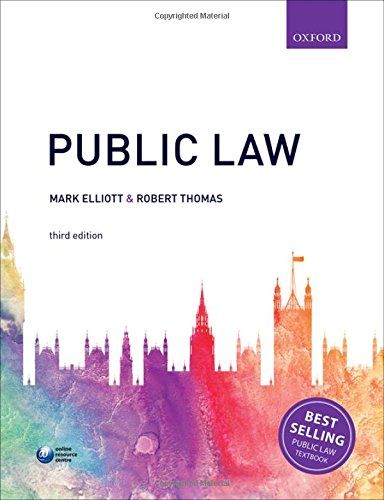
Nova: Good guesses! But no, it's something even more fundamental, more structural. It's the very legal framework that governs public life, the rules of the game for how power is exercised and rights are protected. Today, we're cracking open 'Public Law' by Mark Elliott and Robert Thomas, a book that’s essentially the Rosetta Stone for understanding the UK's constitutional and administrative landscape.
Atlas: Oh, I see. So this isn't just about dusty old statutes; it’s about the foundational code that shapes everything. That makes sense, especially for anyone trying to navigate the complexities of governance or even just understand the news. I’m curious, what's one distinctive detail about this book or its authors that makes it go-to text?
Nova: Absolutely. What's fascinating is that 'Public Law' isn't just a textbook; it's practically a living document itself, constantly updated to reflect the dynamic nature of UK law. Elliott and Thomas are renowned academics, and their work is praised for its meticulous detail and authoritative yet accessible approach, making it an indispensable guide for students and practitioners alike. It’s the kind of book that doesn’t just tell you the law is, but it is, and how it functions as a system.
Atlas: That’s a great way to put it. So, it's less about memorizing rules and more about understanding the underlying operating system.
The Foundational Architecture of UK Public Law
SECTION
Nova: Exactly. And that naturally leads us into our first core topic: the foundational architecture of UK public law. We're talking about the bedrock principles here – parliamentary sovereignty, the rule of law, and human rights. These aren't just abstract concepts; they are the invisible scaffolding that supports the entire public sphere.
Atlas: Hold on. Parliamentary sovereignty, the rule of law, human rights… these are terms we hear all the time, especially in political debates, but what do they mean in practice? For someone who isn't a legal scholar, how do these principles tangibly shape our daily lives?
Nova: Excellent question, and that's precisely what Elliott and Thomas illuminate so well. Let's take parliamentary sovereignty first. At its core, it means Parliament has the ultimate legal authority in the UK. It can make or unmake any law it chooses. There’s no higher legal body that can strike down its legislation.
Atlas: So, Parliament is, in a sense, all-powerful? That sounds a bit… absolute. Does that mean there are no checks and balances? How does that reconcile with protecting individual freedoms?
Nova: That’s the classic tension, isn't it? It’s not about absolute power in a tyrannical sense, but about ultimate legal authority within the constitutional framework. The book makes it clear that while Parliament is sovereign, it operates within a system that values the rule of law. The rule of law means everyone, including the government, is subject to and accountable under the law. It demands that laws are clear, accessible, and applied equally.
Atlas: Okay, so Parliament makes the laws, but then Parliament itself, and everyone else, has to follow them. It’s like setting the rules for a game, but then you also have to play by those rules.
Nova: Precisely! And the third leg of this stool, human rights, provides another crucial layer. While parliamentary sovereignty means Parliament legislate on anything, the Human Rights Act of 1998 incorporated the European Convention on Human Rights into UK law. This means courts must interpret legislation to be compatible with human rights whenever possible.
Atlas: So, even if Parliament theoretically pass a law that infringes on rights, the courts would try to interpret it in a way that respects those rights? It’s a bit of a tightrope walk, isn't it? Like the legal system is constantly trying to balance these powerful forces.
Nova: It absolutely is a tightrope walk, and that’s a fantastic analogy. The book provides a powerful case study of this tension. Think about the debates around national security legislation, particularly after events that raise public safety concerns. Parliament, in its sovereign capacity, might pass laws that enhance surveillance powers. However, the courts, guided by the rule of law and human rights principles, will scrutinize whether those powers are proportionate and necessary, and whether they unduly infringe on privacy or other fundamental freedoms.
Atlas: That’s actually really inspiring. It means there’s a mechanism, even if it’s complex, to prevent an overreach of power. So it’s not just about what Parliament do, but what it do, and how those actions are then held up against a standard of fairness and fundamental rights.
Nova: Exactly. It’s a constant dialogue, a dynamic interplay between legislative power, judicial oversight, and the fundamental expectations of a democratic society. Elliott and Thomas meticulously unpack how this dynamic shapes policy, and by extension, our daily experience of living in the UK. They show how these principles aren't just theoretical; they are the gears turning in the engine of the state, defining the boundaries of governmental action and the scope of individual liberty.
Bridging Theory to Practice: Public Law in Action
SECTION
Nova: And that constant dialogue, that dynamic interplay, brings us beautifully to our second core topic: bridging theory to practice. It’s one thing to understand these principles in the abstract, but what happens when they hit the real world? How do we see public law in action?
Atlas: I've been thinking about this. For our listeners who are managing high-pressure teams or navigating complex organizational structures, the idea of theoretical principles meeting practical realities is incredibly familiar. So, how does this tension between parliamentary sovereignty and the protection of individual rights actually manifest in a recent UK public policy decision? Can you give us an example where we can really see it play out?
Nova: Absolutely. Let's consider the recent debates and policy decisions around vaccine passports or mandates during the pandemic. On one hand, the government, through Parliament, exercised its sovereign power to introduce measures aimed at protecting public health, arguably a legitimate and pressing public interest. These measures, at various points, included requiring proof of vaccination for certain activities or entry into specific venues.
Atlas: Right, so that’s parliamentary sovereignty at work, making laws for what it perceives as the greater good. But I imagine that immediately brought up questions about individual rights, didn’t it? Like, for those who chose not to be vaccinated, or couldn't for medical reasons, their freedom of movement or participation in society was directly affected.
Nova: Precisely. That’s where the rule of law and human rights principles kick in, creating that essential friction. Many argued that such mandates, while aiming for public health, potentially infringed on rights like personal autonomy, freedom of association, or even the right to private and family life. The courts were then tasked with assessing whether these policies were a proportionate response – meaning, were they necessary, and did they go no further than required to achieve their legitimate aim?
Atlas: So basically, the government says, "We need to do X for public safety," and then individuals or advocacy groups say, "But doing X infringes on my Y right." Then the legal system has to decide if X is a justified infringement on Y. It’s not just a simple yes or no, it’s about weighing and balancing.
Nova: It's never a simple yes or no in public law, and that’s the crucial insight Elliott and Thomas offer. They provide the framework for understanding that weighing and balancing is supposed to occur. The courts don't just overturn parliamentary decisions lightly. Instead, they examine whether the government acted within its powers, followed fair procedures, and whether the policy itself was a reasonable and proportionate interference with rights, given the pressing social need.
Atlas: That makes me wonder, how does this balance shape the daily lives of citizens? For example, if I'm trying to decide whether to comply with a new policy, or even if I feel it's unfair, what does understanding this framework do for me?
Nova: It empowers you. Knowing that there's a constitutional and legal architecture designed to scrutinize governmental power, even when Parliament is sovereign, provides a crucial layer of accountability. It means that policies aren't just plucked out of thin air; they have to meet certain legal standards. For the citizen, it means you have a basis to understand the legitimate scope of state power and, crucially, where to challenge it if you believe it oversteps.
Atlas: In other words, it helps you understand the rules of engagement. You might not always agree with the outcome, but you can understand the process and the underlying principles being debated. It’s like knowing the blueprint of a building allows you to spot a crack, rather than just feeling uncomfortable inside it.
Nova: That’s a fantastic analogy! It gives you that strategic explorer’s map. It allows you to connect disparate ideas – a new law, a court case, a human rights debate – and see them as part of a larger, interconnected system. It's about recognizing that public law isn't static; it's a dynamic negotiation of power and rights, constantly evolving, and profoundly impacting the practical realities of every citizen.
Synthesis & Takeaways
SECTION
Nova: So, what we've really explored today is how 'Public Law' by Elliott and Thomas isn’t just an academic text; it’s a vital guide to understanding the very operating system of the UK. From the bedrock principles of parliamentary sovereignty and the rule of law to the dynamic tug-of-war with human rights in real-world policy decisions, this framework is the invisible hand shaping our collective and individual lives.
Atlas: That’s actually really inspiring. It means that even in the face of complex legal decisions, there’s an underlying logic and a set of principles designed to ensure fairness and accountability. It's not always perfect, but the mechanisms are there. For anyone who feels a bit lost in the headlines, understanding this book's core ideas is like getting a decoder ring for the public sphere.
Nova: Exactly. It demystifies the structure, allowing you to move beyond surface phenomena to grasp the profound philosophical meanings that underpin UK governance. It fosters critical thinking and a deeper connection to the systems that shape our world.
Atlas: So, for our listeners, the next time a new public policy is announced, don't just react to the headlines. Ask yourself: how does this align with parliamentary sovereignty? Does it respect the rule of law? And what are the human rights implications? That’s the real takeaway here.
Nova: Absolutely. It’s about becoming a more informed, engaged citizen, equipped with the knowledge to understand and participate in the ongoing conversation about how we are governed.
Atlas: This is Aibrary. Congratulations on your growth!