The Cybernetics of Leadership: Programming Your Mind for Success with Precious and Albert Einstein
Golden Hook & Introduction
SECTION
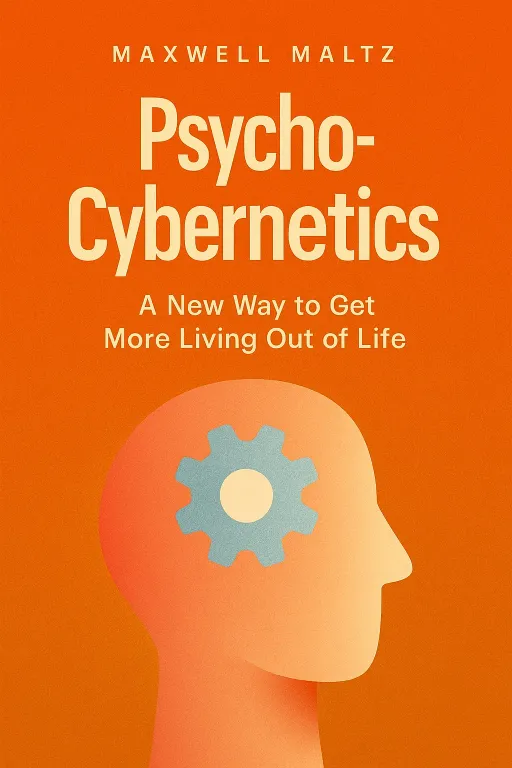
Albert Einstein: Imagine a self-guided torpedo, silently navigating the dark, turbulent depths of the ocean. It does not have a conscious mind, yet it possesses an uncanny ability to find its target. If it drifts off course, a built-in feedback loop detects the error, makes a swift correction, and steers it right back on track. Now, what if I told you that you carry an even more sophisticated guidance system right inside your own mind? Welcome to our discussion today, where we are diving deep into Maxwell Maltz's groundbreaking work, Psycho-Cybernetics. Today, we are going to tackle this book from two distinct angles. First, we will explore the blueprint of the Success-Type personality, looking at how we can consciously program our minds for achievement. Then, we will dissect the Failure Mechanism, learning how to treat negative emotions not as permanent roadblocks, but as simple feedback signals guiding us back to our true path. Joining me today is Precious, an entrepreneur, youth leader, and project manager who knows a thing or two about navigating complex systems and helping others find their direction. Precious, it is wonderful to have you here.
Precious: Thank you, Albert. It is an absolute pleasure to be here with you. You know, when I look at Maltz's work through the lens of project management and entrepreneurship, it immediately resonates. In my work with youth and in the finance sector, I constantly see how people's internal blueprints—their self-image—dictate their capacity to execute projects, lead teams, and handle setbacks. If the internal system is misprogrammed, even the best strategic plans will fail. I am really excited to break down these chapters with you and look at the actual mechanics of how we can reprogram ourselves for success.
Albert Einstein: Ah, mechanics! Yes, that is exactly what it is. Maltz was a plastic surgeon, you see, and he realized that changing a person's physical face was often not enough. There was a non-physical face of personality that needed reconstruction. He looked at the human brain and nervous system as a goal-striving servo-mechanism. It is a beautiful concept, really. It means we do not have to force success through sheer, exhausting willpower. We simply have to feed the mechanism the right target images. But how do we define that target? Maltz gives us a beautiful framework in Chapter 8, spelling out the word success itself as an acronym. Let us start with the very first letter, S, which stands for a Sense of direction. Precious, as a project manager, how do you see this playing out in human behavior?
Precious: It is the absolute foundation, Albert. In project management, if you do not have a clearly defined scope and a well-articulated end goal, your project will suffer from scope creep and eventually collapse. The same thing happens to our personal lives. Without a personal goal, we become stagnant. Maltz uses a wonderful analogy here: he says a human being is like a bicycle. A bicycle maintains its poise and equilibrium only as long as it is moving forward towards something. If you try to balance on a bicycle while sitting completely still, you will shake and fall. Many people feel shaky and anxious in life simply because they are trying to maintain their balance without actually going anywhere. They lack a target.
Albert Einstein: Oh, I love that bicycle analogy! It is simple, elegant, and perfectly captures the physics of human purpose. If you do not have a vector, a direction with both magnitude and intent, you are just a stationary mass subject to gravity. And when we look at the next letter, U, which stands for Understanding, we see how crucial it is to gather accurate data. In physics, we cannot solve an equation with false assumptions. In life, we cannot navigate successfully if we misinterpret the feedback we receive from our environment. Maltz talks about how we often confuse facts with our opinions about those facts.
Precious: That is a massive distinction, Albert. We see this all the time in leadership and communication. People often react to their own internal projections rather than the objective reality of a situation. Maltz shares the story of a housewife who felt completely overwhelmed by her children and constantly irritated by her husband. She was convinced her husband was deliberately trying to annoy her with his habits, and she wanted a face lift to regain her confidence. But the real issue was her self-image and her lack of understanding. Once she realized that her husband's annoying mannerisms were not deliberate personal attacks, she was able to pause, analyze the situation objectively, and change her reaction. In project management, we call this root cause analysis. You cannot solve a problem by fixing a symptom; you have to understand the underlying system.
Deep Dive into Core Topic 1
SECTION
Albert Einstein: Yes! You must look at the system as a whole. And that brings us to the letter C, which stands for Courage. Courage is not the absence of fear, my friends, but the willingness to act in spite of it. It is the willingness to run the experiment even if you are not guaranteed a successful result. In my own life, I had to question the very foundations of Newtonian physics to develop relativity. That took a certain kind of intellectual courage. Maltz suggests that courage is necessary to bridge the gap between our goals and our actions.
Precious: Absolutely. And for young entrepreneurs and leaders, courage is often the deciding factor between an idea that stays on paper and a venture that actually launches. Maltz points out that many people live in constant self-doubt, completely unaware of the deep resources of bravery they possess. He references General R. E. Chambers, who observed that people vastly underestimate their own capacity for heroism until a crisis demands it. If we do not have the courage to make mistakes, we will never make anything at all. In entrepreneurship, failure is just a data point. It is a necessary step in the iterative process of finding what works.
Albert Einstein: Exactly! Every failed experiment is a success in discovering what does not work. That is how we narrow down the possibilities. Now, let us look at the next letter, the second C, which stands for Charity. This might seem like an unusual ingredient for a success-type personality, but Maltz defines it as a genuine regard and respect for other human beings. Why is this so vital for our own internal success mechanism, Precious?
Precious: It comes down to the fact that our feelings about others are inextricably linked to our feelings about ourselves. If you have a low opinion of human nature in general, you will inevitably apply that same harsh, cynical standard to yourself. But when you practice charity—when you start recognizing the unique value, struggles, and potential in other people—you naturally begin to treat yourself with more compassion and respect. For a leader, charity is about empathy. It is about creating opportunities for others to grow, which is the core mission of my work with the Forge Network. You cannot build a thriving community or a successful business if you are treating people as mere instruments rather than valuable individuals.
Albert Einstein: Ah, yes! We are all part of the same interconnected field, are we not? To look down on another is to look down on a part of the whole. And that leads us directly to E, which stands for Esteem. To have self-esteem, we must stop carrying around a mental image of ourselves as defeated, inadequate, or unworthy. Maltz notes that the greatest unbelief is the unbelief in oneself.
Precious: It really is. And this is closely tied to the next letter, S, which is Self-Confidence. Maltz explains that self-confidence is built upon the memory of past successes. Think about how we learn to walk. As infants, we fall down repeatedly. If we focused solely on those failures, we would never stand up again. But our automatic mechanism naturally forgets the falls and remembers the successful attempts, reinforcing that pattern until walking becomes second nature. Unfortunately, as we grow older, we tend to do the exact opposite. We dwell on our mistakes, replay our failures in vivid detail, and completely erase the memory of our achievements.
Albert Einstein: Yes, we write our failures in stone and our successes in water! It is a terrible waste of mental storage. We must treat our past errors the way a computer treats its temporary memory—use the data to correct the course, and then delete the file! We must keep our focus on the successful outcomes. Maltz tells a fascinating story about an advertising executive in his early forties who received a major promotion. Suddenly, he was gripped by intense insecurity. He started worrying about meeting everyone else's expectations, became overly sensitive about his appearance, and lost all his natural poise. He was trying to maintain his balance while sitting still, focusing on the fear of falling rather than the joy of riding.
Precious: That story is highly relevant to so many young professionals, Albert. When you transition into a higher role, the imposter syndrome can easily kick in. You start focusing on what others think of you—which Maltz calls "others consciousness"—instead of focusing on the actual job you need to do. The executive was able to turn things around only when he stopped trying to please everyone else and refocused on his own personal goals for the position. He had to rebuild his self-confidence by remembering his past track record of hard work and successful campaigns, rather than obsessing over the possibility of a future mistake.
Albert Einstein: And that brings us to the final letter of the acronym, the last S, which is Self-Acceptance. This is perhaps the most critical piece of the puzzle. Self-acceptance means accepting ourselves as we are, with all our faults, weaknesses, and past detours. It is about realizing that our mistakes are things we, not who we. We must distinguish between our actual self and our behavior.
Precious: That is a profound distinction, Albert. In my own journey, especially when facing academic setbacks early on, I had to learn that failing an exam did not make me a failure as a person. It was simply an event, a temporary detour. When you accept yourself, you stop wasting energy trying to maintain a false, perfected mask for the world. You free up that energy to actually grow and build. Striving to be someone else is a recipe for misery. True success is about realizing and making the most of your actual, authentic self.
Deep Dive into Core Topic 2
SECTION
Albert Einstein: Beautifully said, Precious. Now, let us pivot to Chapter 9, which explores the dark mirror of what we just discussed: the Failure Mechanism. Just as success has its blueprint, failure has its own set of symptoms. But here is the beautiful, playful twist that Maltz introduces: these symptoms are not indictments. They are not proof that you are a failure. They are simply warning lights on the dashboard of your mind, telling you that your guidance system has drifted off course. If your car's oil light turns on, you do not get angry at the car and declare it a failure; you simply add oil! Let us look at these warning lights, which Maltz organizes under another acronym: F-A-I-L-U-R-E. The first letter, F, stands for Frustration.
Precious: Frustration is a major warning light. It usually arises when we set unrealistic, perfectionist goals, or when we hold an inadequate self-image that makes us feel incapable of achieving our desires. Maltz tells the story of Jim S., a highly successful vice-president who was chronically frustrated. He had risen from a stock clerk to an executive, had a wonderful family, and played golf in the low eighties. Yet, he was miserable because he felt he should be the chairman of the board, have a perfect family life, and shoot in the low seventies. He was aiming for an impossibly small target, which created constant, artificial tension.
Albert Einstein: Ah, yes! He was trying to force the universe to conform to his rigid, mathematical ideals of perfection, rather than enjoying the beautiful, organic process of growth. And when frustration is ignored, it often leads to the next letter, A, which is Aggressiveness. When our goal-striving energy is blocked, it builds up steam. If we do not channel that steam constructively, it explodes as misdirected aggression, harming our relationships and our own well-being.
Precious: Exactly. Maltz references a famous study by Yale scientists documented in the book, which proved that excessive, destructive aggression is almost always a direct consequence of unresolved frustration. If an entrepreneur is frustrated by a business setback, they might come home and snap at their family, or lash out at their employees. The key is to recognize that this aggression is just misdirected energy. We need to find healthy, constructive outlets for it—like physical exercise, writing, or diving back into problem-solving with a fresh perspective—rather than letting it destroy our projects and relationships.
Albert Einstein: Yes, energy must flow! It cannot be destroyed, only transformed. Now, the next letter is I, for Insecurity. Insecurity comes from comparing ourselves to an imagined, perfect ideal, rather than focusing on our own unique progress. We look at others' highlight reels and compare them to our behind-the-scenes struggles.
Precious: That is a massive issue today, especially with social media. We are constantly bombarded with the polished, successful images of others, which can easily induce a sense of inadequacy. But as an INTJ, I like to look at the data. The truth is, everyone has their own struggles, setbacks, and learning curves. When we feel insecure, we are measuring ourselves against a false standard. True security comes from focusing on our own personal growth, tracking our own progress, and realizing that we are on our own unique timeline.
Albert Einstein: Quite right! You cannot compare a wave to a particle; they operate under different principles, yet both are essential parts of the same physical reality. And when we let insecurity isolate us, we run into the next letter, L, which is Loneliness. Loneliness is not just about being physically alone; it is a feeling of alienation from our real self and from others. It is building a protective wall around ourselves to avoid getting hurt, which ultimately cuts us off from the very connections we need to thrive.
Precious: It is a self-defeating strategy. We build these emotional walls to protect our vulnerable self-image, but those walls become our prison. Maltz notes that juvenile delinquents often exhibit this outward toughness, claiming they hate authority and do not need anyone. But psychiatrists like Dr. Bernard Holland have shown that this toughness is just a mask, a defense mechanism to hide deep emotional scars and a desperate desire for connection. To overcome loneliness, we must have the courage to lower our shields, practice vulnerability, and actively engage with others.
Albert Einstein: Yes, you must be willing to run the risk of interaction! A vacuum is safe, but nothing can grow in it. Now, let us look at U, which stands for Uncertainty. Uncertainty is often a clever trick our mind plays to avoid making decisions and taking responsibility. We tell ourselves we do not have enough information, or that the timing is not perfect, so we do nothing. But in doing nothing, we are still making a choice—the choice to remain stagnant.
Precious: That is what we call analysis paralysis in project management. You can spend months gathering data, running simulations, and weighing options, but at some point, you have to make a decision and execute. Maltz quotes Elbert Hubbard, who said, "The greatest mistake a man can make is to be afraid of making one." We have to accept that some of our decisions will be wrong, and that is perfectly okay. We will receive negative feedback, adjust our course, and move forward. Stagnation is far more dangerous than a wrong decision, because a wrong decision at least gives you data to work with.
Albert Einstein: Beautiful! A moving object can be steered, but a stationary one cannot. You must have momentum to make corrections. And if we do not make those corrections, we can fall into the next symptom, R, which is Resentment. Resentment is a highly toxic emotion. It is our attempt to justify our failures by blaming external factors—our parents, our teachers, our environment, or luck. It is like drinking poison and expecting the other person to die.
Precious: It really is. Resentment completely strips us of our power. When we blame others for our situation, we are essentially saying, "I have no control over my life; my success and happiness depend entirely on external circumstances." That is a victim mindset, and it completely jams our success mechanism. To reclaim our power, we have to take full responsibility for our responses, even if we cannot control the initial events. We have to forgive, let go of the resentment, and focus our energy on what we can do in the present moment to build a better future.
Albert Einstein: Yes! The past is a fixed coordinate; we cannot change it. But the present is a vector space where we can choose our direction. And if we do not, we end up with the final letter, E, which stands for Emptiness. Emptiness is the ultimate realization that we are not living creatively. It is the feeling of aimlessness that comes when we have abandoned our goals and stopped striving for anything meaningful.
Precious: It is the shutdown of the guidance system. When the servo-mechanism has no target, it simply spins in circles, consuming energy without producing any forward motion. This leads to a profound sense of futility. But the cure for emptiness is simple: we must choose a new goal, no matter how small, and start moving towards it. We must reactivate our creative mechanism by feeding it fresh, positive target images.
Synthesis & Takeaways
SECTION
Albert Einstein: Aha! We have mapped the entire terrain, from the brilliant coordinates of success to the warning signals of failure. It is clear that our self-image is the ultimate software programming our biological hardware. Precious, as we wrap up our conversation today, what is the most important takeaway you would like to leave with our listeners, especially the young leaders and entrepreneurs who are striving to make a difference?
Precious: I would tell them to treat their self-image as the ultimate project blueprint. Just as you would not start building a house without a solid architectural plan, you cannot build a successful life or career with a marred, negative self-image. When you experience setbacks, academic failures, or business challenges, do not internalize them as part of your identity. Treat them as negative feedback signals—data points designed to help you calibrate your guidance system. Practice self-acceptance, set clear personal goals, and have the courage to keep moving forward, even when the path is uncertain. Your mind is a powerful success mechanism; you just have to give it the right coordinates.
Albert Einstein: Marvelous, Precious! Truly marvelous. My friends, let us perform one final, quiet thought experiment. Tonight, before you close your eyes, close the door to the external world. Step into the quiet room of your mind, and visualize your target. See it clearly, feel the joy of its accomplishment, and let your built-in success mechanism do the rest. After all, imagination is the preview of life's coming attractions. Thank you all for listening, and until next time, keep wondering, keep exploring, and keep riding your bicycle forward!