

Cybernetic Minds: Programming Your Internal Success Mechanism with Precious
Golden Hook & Introduction
SECTION
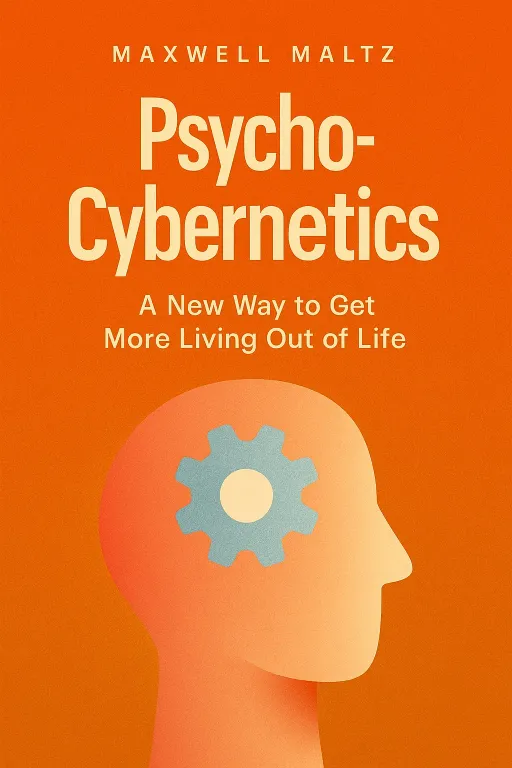
Nova: Have you ever wondered why some of the most brilliant, hard-working people out there constantly hit an invisible ceiling in their careers and lives, no matter how hard they push? It is almost like they have an internal thermostat set to a specific temperature, and the moment they start getting warmer, a cooling system kicks in to drag them right back down. Today, we are diving deep into Maxwell Maltz’s groundbreaking classic,, to understand the hidden programming that dictates our limits. We are going to tackle this from two fascinating angles. First, we will explore the self-image as a literal system blueprint and look at how our subconscious operates as an automatic goal-striving mechanism. Then, we will shift our focus to the practical side: how to dehypnotize ourselves from self-limiting beliefs and use mental rehearsal to upgrade our internal software. And to help us map out this cognitive architecture, we have Precious, a finance project manager and master of systems thinking. Welcome, Precious!
Precious: Thanks, Nova. I am really excited to be here. As someone who spends all day managing project lifecycles, tracking dependencies, and optimizing workflows, I find Maltz's work absolutely fascinating. He essentially treats the human mind not as some abstract, mystical black box, but as a highly structured cybernetic system. It is all about inputs, feedback loops, and goal-directed outputs. When you look at personal development through that lens, it completely changes how you approach self-improvement.
Nova: It really does! We often think of change as just a matter of sheer willpower, right? Like, "If I just force myself to work harder, I will succeed." But Maltz shows us that if the underlying blueprint is flawed, the system will actively work against us.
Precious: Exactly. In project management, if your initial project charter or system architecture has a fundamental design flaw, no amount of overtime or extra resources will make the project succeed. You are just executing a bad plan faster. The same goes for the human mind. If your self-image is programmed for failure, your subconscious mind, which Maltz calls the servo-mechanism, will systematically steer you toward failure to maintain system consistency.
Nova: That is such a powerful way to frame it. Let's dive right into how Maltz actually stumbled upon this system-level view of the mind, because his background was not in psychology at all. He was actually a plastic surgeon!
Deep Dive into Core Topic 1
SECTION
Nova: So, picture this: it is the mid-twentieth century, and Dr. Maxwell Maltz is operating on patients, correcting conspicuous physical flaws—like a severely misshapen nose or a prominent scar. Now, initially, he assumed that if you reconstruct a person's physical face, their personality and self-esteem would automatically get a massive upgrade. And for many patients, that is exactly what happened. They would look in the mirror post-surgery, see a beautiful new nose, and within about twenty-one days, their entire personality would blossom. Shyness turned into confidence, and they started living fully. But then, Maltz hit a major anomaly.
Precious: An anomaly? As an analyst, those are always the most interesting data points. What happened?
Nova: Well, he had patients like a certain Duchess who had a very prominent hump on her nose. He performed a flawless surgery, completely removing the hump and giving her a beautiful, classic profile. But when the bandages came off, she looked in the mirror and insisted nothing had changed. She would say, "It still looks exactly the same, Dr. Maltz." Physically, the hump was gone. But psychologically, she was still carrying the mental image of her old, flawed face. Her internal map had not updated to match the new physical reality.
Precious: That is a classic system-model mismatch. In systems engineering, we talk about the difference between the actual state of a system and the system's internal model of itself. If the internal model is not updated, the system continues to behave as if the old parameters are still active. The Duchess was operating on outdated data. Her physical face was reconstructed, but her "non-physical face"—her self-image—remained completely untouched.
Nova: Yes! And Maltz realized that this internal self-image is the real key to human personality and behavior. It sets the absolute boundaries of what we believe is possible for us. If you think of yourself as a "failure-type" person, your brain will find ways to make you fail, even when success is handed to you on a silver platter.
Precious: It is a self-fulfilling feedback loop. Think about it: our actions, feelings, and even our physical abilities are always consistent with this self-image. It acts as a mental blueprint. If a student has a self-image that says, "I am terrible at math," they will approach math with anxiety, which scrambles their working memory, leading to a poor test score. That poor score then reinforces the original belief: "See? I really am terrible at math." The system is just maintaining homeostatic balance.
Nova: Homeostatic balance, I love that term. It is like a guided missile, right? Maltz actually uses the analogy of a self-aiming torpedo or a target-seeking missile.
Precious: Yes, the cybernetic servo-mechanism! This is where the book gets incredibly practical for anyone who loves structure. Cybernetics is the science of control and communication in both animals and machines. A target-seeking missile doesn't have a conscious mind, but it has a goal programmed into it. It uses sensors to detect errors in its path—negative feedback—and then makes automatic corrections to get back on track toward the target. Maltz argues that our brain and nervous system function exactly like this. Once you feed a goal into your subconscious mind, it works automatically as a success mechanism to achieve it.
Nova: But here is the catch, right? It can also work as a failure mechanism if we feed it the wrong target.
Precious: Precisely. The mechanism itself is completely impersonal. It doesn't judge the quality of the goal; it just executes the programming. If you constantly dwell on your mistakes, visualize worst-case scenarios, and tell yourself, "I am going to mess this up," you are actively programming the target-seeking mechanism to steer you straight into the obstacle. You are setting the coordinates for failure.
Nova: Hmm. That makes so much sense. It is like the center fielder catching a fly ball. He doesn't consciously calculate the wind speed, the trajectory, the rate of deceleration, and the exact angle of his run. His conscious mind just sets the goal: "Catch the ball." And then his automatic success mechanism takes over, utilizing feedback from his eyes and ears to coordinate his muscles in real-time.
Precious: Exactly! The conscious mind is the programmer, the one who defines the "what" and the "why." But the subconscious is the engine that handles the "how." The problem is that we often try to use our conscious mind, our forebrain, to force the "how." We overthink, we get anxious, we try to micro-manage our automatic responses, and we end up jamming the machine. It is like trying to manually control every single muscle fiber in your leg while trying to walk. You would trip and fall immediately!
Nova: Oh, absolutely! I think we have all had those moments where we overthink a simple task—like typing a password we know by heart—and suddenly we can't do it because we are trying too hard to do it consciously.
Precious: Yes, that is the "law of reversed effort." The more conscious, anxious effort you put into forcing a creative result, the more you inhibit the automatic mechanism. We need to learn to set the goal, trust the system, and then relax and let it work for us.
Deep Dive into Core Topic 2
SECTION
Nova: That transition to trusting the system brings us perfectly to our second core topic: how do we actually change this programming? How do we dehypnotize ourselves from the false, limiting beliefs we have accumulated over a lifetime, and how do we feed our success mechanism the right data?
Precious: This is where Maltz's insights on the power of imagination become incredibly valuable. From a cognitive science perspective, the brain is essentially a prediction machine. And Maltz highlights a fundamental psychological truth that has been proven in clinical laboratories: the human nervous system cannot tell the difference between an actual, physical experience and an experience imagined vividly and in detail.
Nova: That is a mind-blowing concept when you really sit with it. The nervous system reacts to what we or to be true, not necessarily what is objectively happening in physical reality.
Precious: Exactly. Think about the hypnotic experiments Maltz mentions, like the research by Dr. Theodore Xenophon Barber. When a hypnotized subject is told they are at the North Pole, they will actually start shivering, and their skin will develop goosebumps. Their body is reacting to a purely imagined environment because their mind is completely convinced of its reality. Or think about the famous basketball free-throw experiment.
Nova: Oh, yes! The one where they divided students into three groups to test the effects of mental practice.
Precious: Right. Group one practiced throwing basketball free throws physically on the court for twenty days. Group two did absolutely nothing. And Group three spent twenty minutes a day just sitting relaxed, vividly imagining themselves throwing the ball at the hoop, and mentally correcting their aim whenever they missed.
Nova: And the results were astonishing!
Precious: They really were. Group one, who practiced physically, improved their scoring by twenty-four percent. Group two, who didn't practice, showed zero improvement, as expected. But Group three, who only practiced in their minds, improved by twenty-three percent! That is almost identical to the physical practice group, without ever touching a basketball.
Nova: That is incredible. It shows that mental rehearsal actually builds the physical neural pathways—the "engrams" in the brain—just like physical practice does.
Precious: Yes, it is all about synaptic efficacy. Every time you vividly imagine yourself performing a task successfully, you are strengthening the neural connections associated with that success. You are building a "habit of success" in your brain. This is why world-class athletes, like the golfer Ben Hogan or the pianist Artur Schnabel, heavily relied on mental rehearsal. Schnabel famously took piano lessons for only seven years and rarely practiced physically at the keyboard because he did most of his practice in his head, memorizing and playing the pieces mentally before ever touching the keys.
Nova: That is so fascinating. But Precious, how does someone like you, who is highly analytical and logical, reconcile this with the reality of our daily struggles? It is easy to say "just imagine success," but when you are facing a high-stress project deadline or a difficult conversation, how do you apply this without it feeling like empty positive thinking?
Precious: That is a crucial distinction, Nova. This is not about wishful thinking or creating a fictitious, all-powerful fantasy self. That actually causes more cognitive dissonance and anxiety because your brain knows it is a lie. Maltz emphasizes that the goal is to find the self, to align our mental images with the truth of our actual potential. In project management, we use simulations and scenario planning to prepare for risks. We don't just "wish" the project will go well; we mentally walk through the steps, anticipate the obstacles, and visualize ourselves successfully navigating them.
Nova: Ah, so it is about practicing the of overcoming challenges, not just fantasizing about the trophy at the end.
Precious: Exactly. It is active, creative experiencing. You sit in a quiet place, relax your muscles completely—which quietens the conscious mind—and you mentally rehearse the upcoming scenario. If you have a big presentation, you don't just imagine everyone cheering for you. You imagine standing at the podium, feeling the pressure of your feet on the floor, noticing a difficult question from the audience, and visualizing yourself responding calmly, clearly, and professionally. You are pre-programming your servo-mechanism with successful response patterns so that when the actual event occurs, your brain can simply retrieve those pre-built pathways.
Nova: It is like running a simulation in a safe sandbox environment before deploying the code to production!
Precious: Yes! That is the perfect analogy. You are reducing the "cost of failure" to zero during the simulation phase, which allows you to build confidence and competence without the paralyzing fear of real-world consequences. And this is especially important when we talk about dehypnotizing ourselves from past failures. Many of us are walking around hypnotized by a single mistake we made years ago. We let that one bad data point define our entire system blueprint.
Nova: Like the story of the $5,000 salesman Elmer Wheeler analyzed.
Precious: Yes, that is a classic case of a self-imposed ceiling. This salesman was highly competent, but he consistently earned exactly $5,000 a year, regardless of the territory he was given or the commission rate. If he was given a brilliant territory, he would perform well early on, reach his $5,000 mark, and then unconsciously slack off or get sick to avoid earning more. If he was given a terrible territory, he would work like a dog to make sure he reached exactly $5,000. He was literally hypnotized by the belief that he was a "$5,000-a-year man." His success mechanism was perfectly calibrated to that specific target, and it adjusted his behavior to maintain that exact output.
Nova: Wow. He was micro-managing his own failure to stay consistent with his self-image. How do we break free from that kind of deep-seated hypnosis?
Precious: We have to use rational thinking to challenge the validity of those beliefs. We have to look at the data and ask: "Is this belief actually true, or is it just an assumption I accepted as fact during a moment of vulnerability?" In project management, we call this "challenging assumptions." You have to audit your mental database. When a negative thought pops up, like "I can't handle this presentation," you don't just accept it. You say, "It ain't necessarily so." You look for counter-evidence from your past successes, no matter how small, and you use those to rebuild your self-image.
Synthesis & Takeaways
SECTION
Nova: This has been such an eye-opening conversation, Precious. We have covered some incredibly deep territory today. We looked at how our self-image acts as the ultimate system blueprint, dictating our limits and steering our subconscious servo-mechanism. We explored how Dr. Maltz discovered this through his plastic surgery patients, and how we can use the power of vivid mental rehearsal and rational thinking to dehypnotize ourselves from past failures and upgrade our internal programming.
Precious: It really comes down to realizing that we are goal-striving beings by design. Our brain is built to find solutions, but it needs us to feed it the right targets. If we spend our time worrying, dwelling on past mistakes, and visualizing failure, we are misusing our most powerful creative tool—our imagination. But if we can learn to relax, define clear, positive goals, and mentally rehearse our success, we can unlock our real personality and achieve a much higher level of performance and happiness.
Nova: I love that. And for our listeners today, we want to leave you with one very practical, actionable challenge that you can start practicing right now. Maltz recommends a twenty-one-day trial. For the next three weeks, commit to spending just fifteen minutes a day in a quiet, relaxed state. Close your eyes, breathe deeply, and vividly imagine yourself handling your daily challenges successfully. See yourself acting with poise, speaking with confidence, and navigating obstacles with ease. Don't debate whether it is working; just run the simulation and let your success mechanism do the rest.
Precious: Treat it as a twenty-one-day pilot project. Gather the data, run the trials, and see how your internal system responds. You might be surprised at how quickly your automatic behaviors start aligning with your new mental blueprint.
Nova: Thank you so much for sharing your incredible analytical insights with us today, Precious. This has been a truly masterclass conversation.
Precious: Thank you, Nova. It was an absolute pleasure.
Nova: And to all our listeners out there, remember: your mind is a powerful success mechanism. Make sure you are programming it for the life you actually want to live. Until next time, keep optimizing, keep growing, and we will talk to you soon!









