

The Unseen Architect: How Your Subconscious Shapes Your Reality, and How to Guide It
Golden Hook & Introduction
SECTION
Nova: What if the biggest decisions you make every day aren't actually yours? What if an unseen force dictates your choices, your successes, even your limits, and you don't even know it?
Atlas: Whoa, that's a pretty bold claim, Nova. Are you saying I'm just a puppet on strings, and I'm not even holding them? Because that goes against pretty much everything I thought I knew about free will.
Nova: It's certainly a paradigm shift, Atlas. We often pride ourselves on our conscious, strategic thinking, right? But beneath all that, there’s a vast, powerful subconscious mind at work, a blind spot we often ignore. This powerful idea is at the heart of what we’re exploring today, drawing heavily from two groundbreaking thinkers.
Atlas: So, we’re talking about the unseen architect shaping our reality, as the title suggests? And not necessarily in the way we consciously intend? That sounds like a recipe for self-sabotage if we're not aware of it.
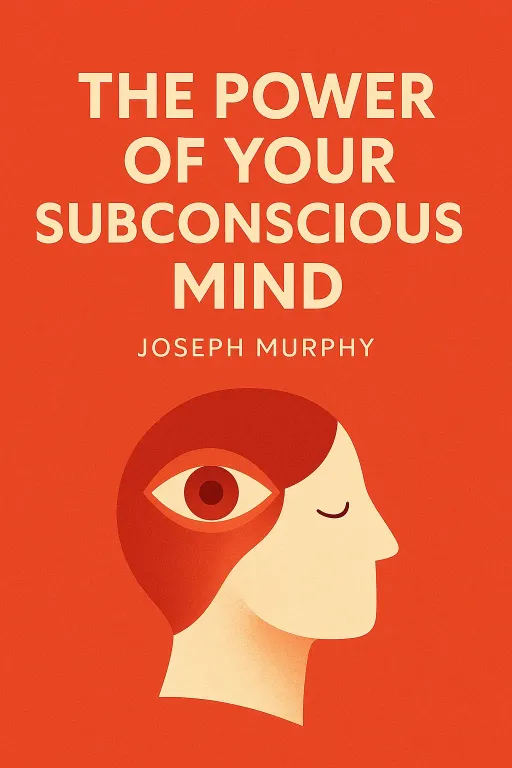
Nova: Exactly. And one of the most influential voices on this topic was Joseph Murphy, with his perennial classic,. Published in the mid-20th century, Murphy was a foundational figure in the New Thought movement. He had a remarkable ability to distill profound psychological and spiritual principles into incredibly accessible language, making these ideas available to millions who might not have otherwise encountered them. His work basically cracked open the door to understanding this inner world.
Atlas: So, he made the esoteric accessible. I appreciate that. But then, how do we move from just knowing it's there to actually guiding it? Because for anyone who values actionable wisdom, just understanding the problem isn't enough.
Nova: That’s where our second guide comes in: Maxwell Maltz and his revolutionary book,. What's fascinating about Maltz is his background. He was a plastic surgeon, and he noticed a profound disconnect. He'd perform life-changing surgeries, giving patients the physical appearance they desired, only to find many of them still retained their old, negative self-image. They looked different, but they the same. This led him to realize the critical role an internal "self-image" plays, often overriding external reality.
Atlas: Right, so Murphy lays out the power of the subconscious, and Maltz gives us a way to interact with it, to shape it. It's like understanding the engine, and then learning how to drive the car.
Nova: Precisely. And the core of our podcast today is really an exploration of how our subconscious mind isn't just a storage unit, but an active, unseen architect shaping our entire reality, and how we can consciously step into that architect's role.
The Subconscious: Your Unseen Reality Architect
SECTION
Nova: So, let’s start with Murphy's core premise from. He argues that your subconscious mind is utterly non-discriminating. It doesn't judge, it doesn't question, it doesn't filter. Whatever belief you impress upon it, whether positive or negative, it accepts as truth. And then, with immense power, it works to bring that belief into your reality.
Atlas: Really? So, if I keep telling myself I'm not good enough, my subconscious just... agrees? It doesn't offer a counter-argument? That sounds a bit out there, isn't that just confirmation bias on steroids?
Nova: It’s more profound than confirmation bias, Atlas. Think of your subconscious less like a critical thinker and more like an extremely powerful, obedient servant, or a highly sophisticated printer. It just prints whatever you feed it. If you feed it blueprints for success and abundance, it prints success. If you feed it blueprints for failure and limitation, it prints that too. It doesn't care about the content; it just executes the command.
Atlas: That’s a great analogy, the printer. So, it's not judging the quality of the image, just reproducing it with perfect fidelity.
Nova: Exactly. Let me give you an example. Imagine a brilliant entrepreneur, let's call her Sarah. Consciously, she desperately wants her business to succeed. She works tirelessly, puts in the hours, has great ideas. But deep down, from childhood experiences, she has an unconscious belief that she's not truly deserving of massive success, or that wealth is inherently corrupt.
Atlas: Oh, I know that feeling. The conscious drive pushing one way, but an invisible hand gently, or sometimes not so gently, nudging you in another.
Nova: Precisely. So, Sarah might unconsciously take on too much debt, make a series of "unlucky" hiring decisions, or consistently undervalue her services. Her conscious mind is saying "grow, grow, grow," but her subconscious is diligently fulfilling the deeper, hidden program of "I am not worthy of great wealth" or "success is dangerous." And the subconscious, being the more powerful force, usually wins in the long run, leading to what looks like self-sabotage.
Atlas: That's fascinating. So it's not about her willpower failing, but about her internal operating system running an outdated, potentially damaging program. For our listeners who are constantly strategizing, this idea of an unseen internal program running things has to be both alarming and incredibly insightful. It’s the ultimate blind spot.
Nova: It is. It reveals that true change isn't just about trying harder with your conscious mind; it's about delving into those deeper beliefs, those unconscious narratives that are literally shaping your world without your explicit permission. This is the "unseen architect" at its most powerful.
Reprogramming Your Inner Blueprint: The Power of Self-Image
SECTION
Nova: And that's precisely where Maltz steps in, taking us from understanding the problem to actively engaging with a solution. If Murphy showed us the power of the subconscious to manifest beliefs, Maltz gave us a practical handle on to impress those beliefs, specifically through the concept of the self-image.
Atlas: Okay, so if my subconscious is the architect, is the self-image the blueprint it's working from? How do I actually that blueprint, especially if it's been hardwired for years? What if someone, for example, has always seen themselves as a "struggler" or "not good with money"? That’s a tough pattern to break.
Nova: It's a fantastic question, Atlas, and you've hit on the core. Maltz describes the self-image as a kind of internal thermostat. Your body, your mind, your actions, they all tend to adjust themselves to match the temperature you've set on that internal thermostat. If your self-image is "I'm a struggler," your internal mechanisms will work to maintain that identity, even if it means sabotaging opportunities for ease or abundance.
Atlas: Right, like a heating system kicking in to maintain 68 degrees, even if you consciously want it to be 72. Your internal system defaults to what it knows.
Nova: Exactly. Maltz, observing his patients, realized that changing the self-image was paramount. He wasn't just talking about superficial affirmations. He advocated for a systematic process of mental conditioning, primarily through conscious visualization and mental rehearsal. He called it "creative imagination."
Atlas: So, it's not just "think positive thoughts," it's actively yourself in a new way, repeatedly, until it becomes your new internal default? Can you give an example of how this plays out in real life?
Nova: Absolutely. Think of a public speaker who has crippling stage fright. They consciously want to deliver a powerful speech, but their self-image is "I'm terrible at public speaking; I always freeze up." Maltz would say that instead of just practicing the speech, they need to spend time every day, in a relaxed state, delivering an incredible, confident speech. They would see the audience engaged, feel the power in their voice, hear the applause.
Atlas: So, they're not just rehearsing the words; they're rehearsing the of a confident speaker.
Nova: Precisely. This mental rehearsal, repeated consistently, starts to impress a new blueprint onto the subconscious. The subconscious, that non-discriminating servant, begins to accept this new self-image as reality. And when the actual event comes, the internal thermostat has been reset. The body, the voice, the mind, all begin to align with the new, confident speaker identity. It’s about creating an internal experience so vivid that the subconscious can’t tell the difference between the imagined and the real.
Atlas: Wow, that’s actually really inspiring. It’s not just wishful thinking; it’s active, internal training. But what about the "ethical explorer" side of things? Is there a risk of becoming disconnected from reality, or even manipulative, if we're constantly trying to project a new self-image?
Nova: That’s a crucial point, and Maltz was careful to emphasize that this isn't about delusion or denial of reality. It's about your internal system to operate at its highest potential, aligned with your conscious, ethical goals. It’s about removing the unconscious blocks that prevent you from being who you genuinely want to be and achieving what you ethically aspire to. It’s about internal alignment, not external deception.
Synthesis & Takeaways
SECTION
Nova: So, bringing Murphy and Maltz together, we see that it’s not just about understanding the subconscious, but actively engaging with it. It’s about making the unconscious conscious, and then consciously guiding it to build the reality you desire. True, lasting change doesn’t start with sheer willpower alone; it begins with reprogramming those deeper beliefs, that fundamental self-image held within your subconscious mind.
Atlas: Oh, I like that. So it's not about forcing yourself to be someone you're not, but aligning your deep beliefs with who you to be. For our listeners who are constantly strategizing, and seeking self-mastery, this sounds like the ultimate strategy – mastering the internal game first. This really makes me think about what deeply held, unconscious belief might be subtly shaping my own actions or limiting potential without me even realizing it.
Nova: Exactly, Atlas. And that's the powerful question we want to leave our listeners with. For anyone looking for a concrete step, start by observing your self-talk. Pay attention to the stories you’re telling yourself when no one else is listening, especially in moments of challenge or failure. Because your subconscious is always listening, and it's taking notes.
Atlas: That's a perfect example of actionable wisdom. Start listening to your inner architect.
Nova: Absolutely. It's a journey, but one that promises profound transformation.
Atlas: This is Aibrary. Congratulations on your growth!









