

The 'Product-Market Fit' Trap: Why You Need 'Product-Led Growth'.
Golden Hook & Introduction
SECTION
Nova: Atlas, what’s the one thing in business that everyone talks about but deep down, most people secretly dread?
Atlas: Oh man, that's a good one. Easy. Performance reviews. Or maybe those "fun" team-building exercises that always feel a bit forced.
Nova: You're not wrong about those, Atlas, but I'm thinking about something even more foundational, something that everyone chases like it's the Holy Grail: 'product-market fit.'
Atlas: Product-market fit! Ah, the promised land! The ultimate goal for every startup, every product team. What's wrong with that, Nova? Isn't that the dream?
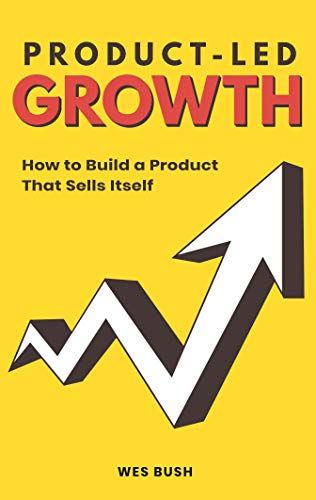
Nova: That's exactly the trap, Atlas. Today, we're diving into why treating product-market fit as a finish line can actually be a dangerous illusion. We're drawing insights from visionary thinkers like Wes Bush and Eric Ries. Wes Bush, for example, didn't just write a book; he built an entire movement around product-led growth after seeing firsthand how traditional sales models were struggling. His work is incredibly grounded in real-world application, not just theory.
Atlas: That makes me wonder, if it’s a trap, what are we missing?
The 'Product-Market Fit' Delusion
SECTION
Nova: Here's what actually happens: many teams treat product-market fit as a static achievement, a single moment of triumph. They launch, they find their initial audience, and then they think, "We've made it!"
Atlas: I can definitely relate to that feeling. For those of us constantly analyzing the market and trying to build a defensible ecosystem, hitting that 'fit' feels like the ultimate validation. What's the problem with celebrating that win?
Nova: The problem is, the market never stops moving. User needs evolve, competitors emerge, technology shifts. When you view product-market fit as a finish line, you become blind to all of these ongoing changes. It's like building a perfect sandcastle and then walking away, expecting the tide to just... stop.
Atlas: Oh, I see. So the danger isn't in reaching fit, but in the complacency that can follow?
Nova: Exactly. Consider a company that launched a revolutionary social media app years ago. They had incredible product-market fit initially; everyone was on it. But they became so focused on defending their turf, they stopped truly listening to how users' social habits were evolving. They missed the shift towards more visual content, shorter video formats, and niche communities.
Atlas: Like how the cause was complacency after initial success, the process was ignoring subtle user behavior changes, and the outcome was losing relevance to more agile competitors. That sounds rough, but how do we even spot this 'trap' if we're so focused on achieving the initial fit? What are the warning signs for a strategic builder?
Nova: Great question. You'll start to see declining engagement, even if your user numbers look stable. You might notice an increase in churn that you can't quite explain, or user feedback that feels increasingly disconnected from your product roadmap. It's a subtle but insidious drift. It’s like the product is slowly losing its grip, but because you’re still celebrating the ‘big win,’ you don’t notice the small erosions.
Embracing Product-Led Growth as a Continuous Journey
SECTION
Nova: This brings us to the antidote, the proactive approach: product-led growth. This is where thinkers like Wes Bush and Eric Ries really shine, offering a path forward.
Atlas: Okay, 'product-led growth' sounds great in theory, but for a visionary navigator, how does that actually work on the ground? What does it mean for the product to 'sell itself,' as Bush puts it? That sounds a bit out there.
Nova: It’s not magic, Atlas. Bush argues it's about designing an experience where users find immediate, undeniable value the moment they interact with your product, reducing reliance on traditional sales and marketing teams. Think of a project management tool that lets you create your first board and invite teammates in minutes, without a demo or a sales call.
Atlas: So basically you’re saying, the product itself becomes the primary engine for acquisition, retention, and expansion? Can you give an example? Like how does that work?
Nova: Absolutely. Take a famous design tool that started with a freemium model. Their product is so intuitive and delivers so much value from the get-go, even the free version, that users quickly understand its power. The cause is a deeply intuitive user experience, the process is immediate value delivery and seamless collaboration features, and the outcome is users happily upgrading because they've already experienced the full potential. The product's design inherently drives user adoption and retention.
Atlas: That makes sense, but what about keeping that value dynamic? So, it's not just about the initial value, but constantly refining it? Like Eric Ries's continuous iteration?
Nova: Exactly! Ries's "Lean Startup" methodology emphasizes continuous iteration and validated learning. It means constantly testing assumptions and adapting your product based on real user feedback, keeping your fit dynamic. You're not just building features; you're running micro-experiments on what truly resonates and what doesn't.
Atlas: I can see that. That sounds like a continuous conversation with your users, driven by the product itself. For a 'talent architect' building a defensible ecosystem, this feels less like a product strategy and more like a cultural shift, doesn't it?
Nova: It absolutely is. It's embedding growth directly into the product experience, making it a continuous journey, not a destination. It’s a profound shift from a siloed approach to one where product, marketing, and sales are all aligned around the user’s experience within the product itself.
Synthesis & Takeaways
SECTION
Nova: So, to synthesize, product-market fit isn't a single event. It's an ongoing state that you continuously earn and re-earn through product-led growth and constant iteration. The real win isn't finding fit once, it's building a system that allows you to perpetually adapt and deliver value.
Atlas: That’s a great way to put it. The real goal isn't just to find fit, but to continuously it through the product experience. It's about building a product that inherently adapts, almost like a living organism. For someone driven by impact, constantly analyzing the market, this mindset shift feels incredibly empowering.
Nova: It is. And the tiny step you can take today? Identify one core feature in your product. Then, design a micro-experiment to measure if new users instantly grasp its value without any external guidance. See if your product can truly speak for itself.
Atlas: I love that. It’s about trusting your instincts but also empowering your team to find those answers. Let your product, and your people, shine.
Nova: Absolutely.
Atlas: This is Aibrary. Congratulations on your growth!