

The Psychology of Delay
Golden Hook & Introduction
SECTION
Nova: Atlas, five words: "The Psychology of Delay."
Atlas: Oh, easy. "My life. Every. Single. Day. Help!"
Nova: Perfect! Because today, we're flipping that script entirely. We’re diving into the fascinating, often frustrating, world of procrastination, not as a moral failing, but as a complex psychological phenomenon.
Atlas: That’s intriguing. Most of us just chalk it up to a lack of willpower, right? Like we just need to "try harder." But you're telling me there’s a deeper game being played?
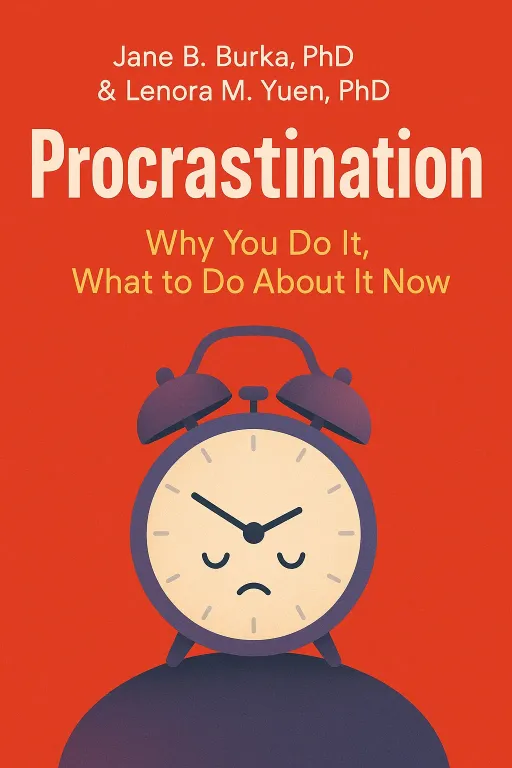
Nova: Absolutely. Our insights today are primarily drawn from two incredibly influential works. First, "Procrastination" by Jane B. Burka and Lenora M. Yuen, whose foundational work really shifted the conversation from blame to understanding. And then, a revolutionary approach from Neil Fiore's "The Now Habit." Fiore, a psychologist who worked extensively with high-achievers, recognized that even the most driven among us fall into this trap, often for reasons that defy conventional wisdom.
Atlas: So this isn’t just about getting things done; it’s about understanding we don't, especially when we to. For those of us who are focused strategists, always seeking clarity and efficiency, this sounds like it could unlock a lot.
Nova: Precisely. And it starts with understanding the insidious cycle that keeps us stuck.
Understanding the Procrastination Cycle: The Trap of Temporary Relief
SECTION
Nova: Burka and Yuen brilliantly mapped out what they call the 'Procrastination Cycle.' It goes like this: we face a task, it triggers anxiety—maybe fear of failure, fear of not doing it perfectly, or even fear of success.
Atlas: Oh, that's interesting. Fear of success? That sounds counterintuitive.
Nova: It is, but it's real. It could be the fear of the expectations that come with success, or the fear of the unknown. Whatever the anxiety, our natural response is avoidance. We put off the task.
Atlas: And the immediate result of avoidance is… relief. A temporary calm, a moment of peace from that nagging feeling.
Nova: Exactly! And this is the critical, deceptive part. That temporary relief acts as a powerful, immediate reward. It teaches our brain, "Hey, avoidance works! It made me feel better!"
Atlas: So we're essentially self-medicating with avoidance? And that’s why it’s so hard to break? Because our brain has learned that dodging the task equals a quick hit of calm? For someone in a high-stakes environment, that temporary relief can feel incredibly potent when the pressure is mounting.
Nova: That’s spot on. The cycle then reinforces itself. The next time you face a daunting task, your brain remembers that avoidance brought relief, so it pushes you towards it again. It's not about being lazy; it's a sophisticated, albeit maladaptive, coping mechanism. It’s a habit, deeply ingrained, because it good in the short term.
Atlas: Wow. So it’s less about a character flaw and more about a psychological loop that’s actually trying to protect us, but ends up hindering us. That’s a huge reframe. I imagine a lot of our listeners, those pragmatic explorers driven by meaningful progress, have felt that internal battle. The desire to achieve, clashing with this inexplicable urge to just… not start.
Nova: It’s a universal experience. And understanding this cycle is the first step towards dismantling it. Because once you see it for what it is—a temporary, deceptive relief that reinforces a habit—you can start to look for healthier ways to manage that initial anxiety.
Breaking the Cycle with the 'Unschedule': Reclaiming Time and Reducing Resentment
SECTION
Nova: So if anxiety is the fuel for this cycle, how do we starve the fire? This is where Neil Fiore, in his highly acclaimed book "The Now Habit," introduces a concept that sounds utterly counter-intuitive to every productivity guru out there. He calls it the 'Unschedule.'
Atlas: The 'Unschedule'? That sounds like something I’d accidentally do on a Sunday. What does that even mean?
Nova: It means you flip the traditional scheduling model on its head. Instead of blocking out all your work first and squeezing in personal time, you block out all your commitments first.
Atlas: Wait, hold on. As a focused strategist, my calendar is already packed with "work." You're telling me to schedule sleep, meals, social time, and before I even look at my to-do list? That feels risky. That feels like I'm actively to be less productive.
Nova: And that's exactly why it's so revolutionary and often met with skepticism. But Fiore's insight is profound: much of our procrastination stems from resentment. Resentment towards the tasks we "have" to do, resentment that work is always encroaching on our personal lives, resentment that we never feel truly free.
Atlas: So the constant pressure, the feeling that work is always looming, actually makes us push back against it?
Nova: Precisely. By prioritizing your personal life—your rest, your hobbies, your social connections—you reduce that resentment. You create a sense of control and freedom. You're telling yourself, "My well-being comes first, and then I'll tackle my work." This isn't about avoiding work; it's about making work feel less like a chore and more like a choice you make from a place of strength.
Atlas: That’s a powerful reframe. So, by scheduling my downtime, my play, my rejuvenation, I'm actually fueling my ability to tackle the work when it’s time. It’s like tending to the machine before asking it to run a marathon.
Nova: Exactly! And once those essential non-work blocks are in, Fiore suggests scheduling work in 30-minute bursts. Not huge, daunting blocks, but manageable, achievable segments.
Atlas: Ah, the 30-minute burst. That makes sense. It’s less intimidating. It reduces that initial anxiety we talked about earlier. It’s almost like saying, "I just need to commit to," which feels far more achievable than "I need to tackle this mountain for eight hours straight."
Nova: It’s about building momentum and reducing the perceived threat of the task. You know you have dedicated time for yourself already blocked out, so the 30-minute work burst isn't stealing from your life; it's a focused effort within a life that you've already prioritized for well-being. This approach helps you make meaningful progress without the constant internal battle.
Atlas: This sounds like a strategic way to build resilience. It's not about forcing yourself through burnout, but about creating a sustainable, effective rhythm. I can see how this would appeal to empathetic leaders who understand the importance of well-being, not just for themselves, but for their teams.
Synthesis & Takeaways
SECTION
Nova: So, what we've learned today is that procrastination isn't just a sign of laziness; it's often a complex psychological dance between anxiety and the temporary relief of avoidance. And the brilliant counter-strategy from Neil Fiore is to actively schedule the things that bring us joy and rest, to reduce the resentment that fuels that avoidance.
Atlas: It’s a profound shift in perspective. Instead of beating ourselves up for procrastinating, we can understand its roots in anxiety and then implement a strategic, almost empathetic, approach to our own productivity. It’s about building a life that supports our work, rather than letting work consume our life.
Nova: Exactly. It's about embracing the journey of learning, understanding our own psychology, and then taking strategic action. Every step forward, even a small, guilt-free play session, is progress. It’s about finding that clarity amidst complexity and boosting effectiveness in a way that feels sustainable.
Atlas: So, the takeaway isn't just a new calendar technique, it's a re-evaluation of how we approach our well-being and effectiveness. What if giving ourselves permission to play is the most productive thing we can do?
Nova: A powerful question to ponder. We challenge you, our listeners, to try the 'Unschedule' for just one week. Block out your sleep, your meals, your social time, your hobbies, and only then schedule your work in 30-minute bursts. See how it transforms your relationship with your tasks and your time.
Atlas: It's about finding that balance, making meaningful progress, and truly thriving.
Nova: This is Aibrary. Congratulations on your growth!









