

The Hidden Engines of Global Markets: Understanding the World's Unseen Forces
Golden Hook & Introduction
SECTION
Nova: Alright Atlas, imagine you're a seasoned market analyst, meticulously tracking all your charts, all your data points. What's the last thing you'd expect me to tell you is the real, underlying driver of that sudden stock dip you’re seeing?
Atlas: Oh, I'd probably brace myself for some obscure algorithmic glitch. Or maybe a rogue tweet from a central bank official? I'm guessing you're going for something... significantly more foundational, though. Something I might be overlooking entirely.
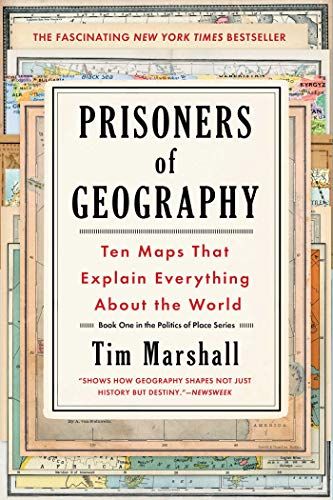
Nova: More foundational indeed! Today, we're pulling back the curtain on what we're calling "The Hidden Engines of Global Markets." We're diving deep into the profound insights from two pivotal books: Robert D. Kaplan's "The Revenge of Geography" and Tim Marshall's "Prisoners of Geography."
Atlas: Ah, Marshall. I know he was a diplomatic editor for Sky News for years. That’s not your typical academic ivory tower, is it? It gives his work a really grounded feel.
Nova: Exactly! Marshall brought his extensive field experience, reporting from places like Bosnia and Afghanistan, to show how physical landforms—from mountains to rivers to coastlines—don't just influence; they national destinies, shaping economies and geopolitical strategies. And Kaplan, well, he doubled down on that, arguing that geography is far from obsolete in our digital age. These aren't just academic texts, Atlas. For anyone aiming to master global markets, these are essential lenses, helping us bridge the gap between abstract numbers and the tangible, unyielding world we live in.
Atlas: That makes sense. For those of us who are trying to integrate macro trading with broader strategic thinking, understanding these deeper forces must be key to anticipating, rather than just reacting, right?
The Geographical Imperative in Global Markets
SECTION
Nova: Precisely. And that brings us to what we call "The Blind Spot." We often analyze global markets purely through economic data – GDP, inflation, interest rates. But this approach often overlooks the profound and persistent influence of geography and geopolitics. It’s like trying to understand a chess game by only looking at the pieces moving, without seeing the board itself.
Atlas: I can definitely see how that would be a blind spot for many. We're so focused on the immediate, measurable data. But how does a mountain range, for instance, directly affect, say, the price of oil or a specific stock market index? That feels like a huge leap for someone tracking daily market movements.
Nova: It's not a leap; it's a fundamental truth, and Tim Marshall illuminates it brilliantly in "Prisoners of Geography." Let's take China as a prime example. Look at its physical geography: the Himalayas to the west, vast deserts to the north, the Pacific Ocean to the east. China has, for millennia, been effectively eastward. Its population centers, its economic power, its historical empires have all pushed towards the fertile plains and the coast.
Atlas: So you're saying its very physical layout dictated its focus?
Nova: Absolutely. This geographical reality has profoundly influenced its economic expansion and its strategic priorities. Think about its current drive for maritime trade routes, its claims in the South China Sea, and the Belt and Road Initiative. These aren't random policies; they're direct consequences of its geographical constraints. China needs resources, it needs markets, and its easiest access points are often across the sea or through specific land corridors that avoid those massive natural barriers.
Atlas: Oh, I see! So if you're tracking global supply chains or commodity prices, understanding that China's internal geography essentially pushes it outwards, seeking resources and trade routes, makes its actions far more predictable. It helps you anticipate where the next infrastructure project might be, or why certain sea lanes are so strategically vital.
Nova: Exactly! Those physical barriers dictate its economic vulnerabilities and its strategic push. If you're wondering why certain shipping costs are high, or why there's tension in a particular maritime region, it's often because geography has made that route indispensable, or that resource critical. For those of us trying to integrate macro trading with broader strategy, understanding China's "prison" helps us anticipate market shifts, rather than just react. It’s about seeing the long game, the deeply etched patterns in the earth itself.
Atlas: That makes a lot of sense. It’s not just about what a country to do, but what its physical reality it to do. It’s a powerful perspective to consider, especially when you're looking for those underlying currents that influence global indicators.
Revenge and Resilience: Geography's Enduring Power
SECTION
Nova: And that naturally leads us to the second key idea, which often acts as a counterpoint to the idea that geography is a static constraint: Robert D. Kaplan's concept of "The Revenge of Geography." He argues that in our interconnected, digital age, we mistakenly believed geography had become obsolete. But he reveals it's far from it; it's reasserting its power with a vengeance.
Atlas: Whoa. That's a surprising claim. In a world of fiber optics and cargo planes, it seems like we've conquered distance and terrain. How can geography be relevant now?
Nova: Because while technology allows us to geographical barriers more easily, it doesn't them. In fact, it often highlights their importance, especially when resources become scarcer or geopolitical tensions rise. Think about the conflict between Russia and Ukraine. This isn't just about current political leaders; it’s a story written deep in the earth.
Atlas: Can you give us an example? For leaders making strategic decisions, or traders trying to understand market volatility, how does this 'revenge' play out?
Nova: Let's look at Russia's historical imperative. Russia is a vast, flat country, historically vulnerable to invasions from the West – Napoleon, Hitler. This expansive, open geography has instilled a deep-seated need for buffer zones and secure borders. Ukraine, geographically, is a crucial land bridge between Russia and Europe. It's also home to warm-water ports, which Russia has historically coveted due to its largely ice-bound northern coastline.
Atlas: So you're saying the current conflict isn't just a modern political spat, but a continuation of deeply ingrained geographical anxieties and strategic needs?
Nova: Precisely. This geographical vulnerability, coupled with Russia's desire for a buffer and access to key ports, directly fueled the conflict. And what was the market impact? Global energy markets sent into a tailspin, food security threatened as Ukraine is a major "breadbasket" for the world, and international relations completely reshaped. That's geography's revenge: the physical realities of the land dictating global events, creating market volatility, and forcing strategic shifts for every player on the global stage.
Atlas: That’s actually really inspiring. It makes you realize that understanding these deep historical and geographical drivers allows for a more proactive, rather than reactive, strategic planning. It builds resilience, doesn't it? For someone aiming for mastery and purposeful influence, this perspective must be invaluable for anticipating geopolitical flashpoints and market shifts.
Nova: Absolutely. It's about developing a geographical literacy that goes beyond just looking at a map. It's about understanding the deep currents that shape nations and, by extension, the global economy. It helps you see where long-term investment in specific regions might be strategically sound, or why diversifying supply chains away from certain choke points is critical.
Synthesis & Takeaways
SECTION
Nova: So, whether we're talking about Tim Marshall's "Prisoners of Geography" or Robert Kaplan's "The Revenge of Geography," the core message is clear: the physical world exerts an undeniable, persistent influence on global markets. Ignoring these forces is like trying to navigate a ship without understanding the ocean currents.
Atlas: I guess that makes sense. For someone aiming for mastery, who wants to integrate macro trading with impactful leadership, this isn't just about knowing facts, is it? It's about developing a different kind of foresight, a deeper intuition for the underlying forces at play.
Nova: It’s exactly that, Atlas. It's about developing what I call "geographical intelligence." It allows you to anticipate market shifts driven by underlying physical realities, rather than being blindsided by them. For example, understanding the choke points of global trade, like the Strait of Malacca or the Suez Canal, isn't just trivia; it's recognizing vulnerabilities that can send shipping costs soaring and disrupt entire industries overnight.
Atlas: That's a great example. It really makes you wonder, what other "hidden engines" are we overlooking in our daily analysis because we're too focused on the immediate, tangible data?
Nova: And that's the question we want to leave you with: how might a specific geographical constraint influence a key economic indicator are currently tracking? It’s a question that can transform your entire strategic outlook.
Atlas: Food for thought indeed.
Nova: This is Aibrary. Congratulations on your growth!