

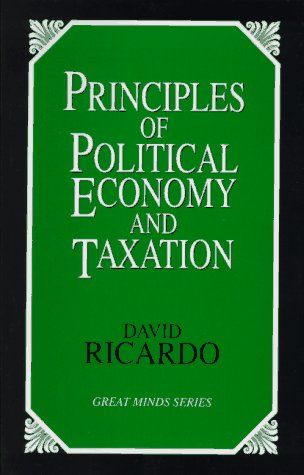
Principles of political economy and taxation
Introduction
Nova: Imagine you are a retired stockbroker in the early 1800s. You have already made a massive fortune, enough to buy a country estate and a seat in Parliament. Most people would just enjoy the quiet life, but instead, you decide to write a book that fundamentally changes how every nation on Earth thinks about money, trade, and power. That man was David Ricardo, and the book is Principles of Political Economy and Taxation.
Nova: It is actually surprisingly relevant. Ricardo is the reason we have the global trade systems we see today. He was the one who figured out why countries should trade with each other even if one country is better at making everything. He also predicted exactly why your rent keeps going up while your paycheck feels like it is standing still. He basically took the messy, emotional world of politics and turned it into a cold, hard logic of numbers.
Nova: He definitely leaned into the dismal side. While Adam Smith was all about the invisible hand making everything better, Ricardo was looking at the limits of growth. He saw a future where landlords got richer, workers stayed poor, and the whole engine of capitalism eventually ground to a halt. Today, we are going to dive into his world, from the battle over grain prices to the secret logic of international trade.
Key Insight 1
The Battle of the Corn Laws
Nova: To understand Ricardo, you have to understand the drama of his time. Britain was coming out of the Napoleonic Wars, and there was a massive fight over something called the Corn Laws. Now, corn back then meant all grains, like wheat and barley. These laws were basically high taxes on imported grain to keep the prices high.
Nova: The landowners. The aristocracy. They owned the fields, so high grain prices meant they could charge higher rents. But the new class of factory owners hated it because if bread was expensive, they had to pay their workers more just so they would not starve. Ricardo jumped into this fight with his Theory of Rent.
Nova: It was deeper. He argued that rent is not actually a cost of production, but a result of it. He said that as a population grows, you have to start farming on worse and worse land. The first guy gets the best, most fertile soil. The next guy gets the rocky soil. Because the rocky soil is harder to farm, the price of grain goes up to cover that extra work. But that means the guy with the best soil is now making a huge surplus without doing any extra work. That surplus is rent.
Nova: Exactly. Ricardo called it differential rent. He argued that as society progresses, more and more of the national wealth gets sucked up by landlords. This was a direct attack on the ruling class of his day. He wanted the Corn Laws abolished so Britain could import cheap grain from abroad, which would lower the price of food, lower the pressure on wages, and keep the industrial engine humming.
Key Insight 2
The Magic of Comparative Advantage
Nova: If the Theory of Rent was his local battle, Comparative Advantage was his global legacy. This is the idea that still drives the World Trade Organization today. Before Ricardo, people thought that if you were better at making everything than your neighbor, you should just make everything yourself and not trade.
Nova: That is what everyone thought until Ricardo used his famous example of England and Portugal. Imagine England is okay at making cloth but terrible at making wine. Portugal is amazing at making both. Ricardo showed that even if Portugal is more efficient at both, they should still specialize. Portugal should focus entirely on wine and England should focus on cloth.
Nova: Because of opportunity cost. If Portugal spends its time making cloth, it is giving up the chance to make even more of that high-value wine. By focusing on what they are relatively best at, and letting England focus on what they are least bad at, the total amount of wine and cloth in the world goes up. Both countries end up with more than they started with.
Nova: It really is. It suggests that every nation has a place in the global economy, regardless of how advanced they are. But there is a catch that people often forget. Ricardo assumed that capital and labor stay put. He did not imagine a world where a factory could just pack up and move to another country overnight. He thought the machines and the workers would stay in their home countries, and only the goods would travel.
Key Insight 3
The Labor Theory of Value and the Iron Law
Nova: Now we get to the part that actually earned economics the dismal science nickname. Ricardo believed in the Labor Theory of Value. He argued that the price of a product is determined by the total amount of labor required to produce it. Not just the guy holding the hammer, but the labor that went into making the hammer and the building where the work happens.
Nova: He absolutely did. Marx took Ricardo's logic and ran with it. But Ricardo used it to explain why wages were stuck. He talked about the natural price of labor, which is basically the cost of the food, clothes, and shelter a worker needs to survive and keep their family going. This became known as the Iron Law of Wages.
Nova: In Ricardo's view, if wages went up, workers would have more kids. Those kids would eventually enter the workforce, increasing the supply of labor, which would then drive wages back down to that subsistence level. It was a cycle that kept the working class right at the edge of survival. He saw it as a mathematical certainty of the system.
Nova: He thought the only way to delay the pain was through trade and getting rid of those Corn Laws we talked about. If you could keep the price of food low, you could keep the natural price of labor low without the workers actually starving. But he was very skeptical about the long term. He predicted a stationary state where profits would eventually fall to zero because the cost of supporting workers on increasingly poor land would eat up everything.
Key Insight 4
Taxation and the Ricardian Equivalence
Nova: We cannot talk about this book without mentioning the taxation part of the title. Ricardo had a very specific take on government debt that economists still argue about today. It is called Ricardian Equivalence. Basically, he asked: does it matter if the government pays for a war by raising taxes now or by borrowing money and paying it back later?
Nova: Ricardo would tell you that you are falling for an illusion. He argued that if the government borrows money today, taxpayers are smart enough to realize that their future taxes will have to go up to pay that debt back. So, instead of spending the extra money they have now, people will just save it to pay those future taxes.
Nova: That is the big criticism. Most people do not actually behave that way. We tend to be much more short-sighted. But the theory is still a huge deal in modern economics. It is used to argue that government stimulus packages might not work as well as we hope because people might just save the money instead of spending it.
Nova: Exactly. He was one of the first to use abstract models to explain the world. He did not care about the specific details of a single shop or a single farm. He wanted to see the whole system as a giant machine. Even his views on taxation were about how it affects the accumulation of capital. He hated taxes that fell on profits because he thought profit was the only thing that kept the economy growing.
Conclusion
Nova: So, looking back at Principles of Political Economy and Taxation, we see a man who was trying to map the limits of the world. He gave us the tools to understand why we trade, why our rents are high, and why government debt is so complicated. He was not always right, especially about the Iron Law of Wages, but he set the stage for everything that came after.
Nova: He really did. Ricardo showed us that economics is not just about money; it is about the struggle between different groups in society. Landowners, workers, and business owners are all locked in this dance, and the rules of that dance are what he tried to write down. Whether you agree with his dismal outlook or not, you are living in the world his theories helped build.
Nova: My pleasure. It is always worth looking at the foundations to understand the skyscraper we are standing on. This is Aibrary. Congratulations on your growth!