The Global Thinker's Edge: Rethinking Market Dynamics.
Golden Hook & Introduction
SECTION
Nova: Atlas, I want to start by asking you: What's the biggest lie we've been told about global markets?
Atlas: Oh, easy. That they're random. A chaotic, unpredictable beast that you can't possibly tame. It's just... noise. That's the biggest lie.
Nova: Exactly! And that, my friend, is the myth we're busting today. We're diving into "The Global Thinker's Edge: Rethinking Market Dynamics," an exploration that helps us see past the noise to the underlying patterns and, crucially, the hidden hand of human psychology.
Atlas: I love that framing. Because it feels like most of the time, the financial news is just a firehose of numbers and headlines, and it's impossible to connect the dots.
Nova: It absolutely can be. But what if we told you there are profound principles and psychological insights that, once understood, transform that chaos into something decipherable? We're drawing heavily today from the wisdom of giants like Ray Dalio and Daniel Kahneman.
Atlas: Dalio, he's the hedge fund legend, right? The guy who basically wrote the book on how to run a massive investment firm with... well, with principles.
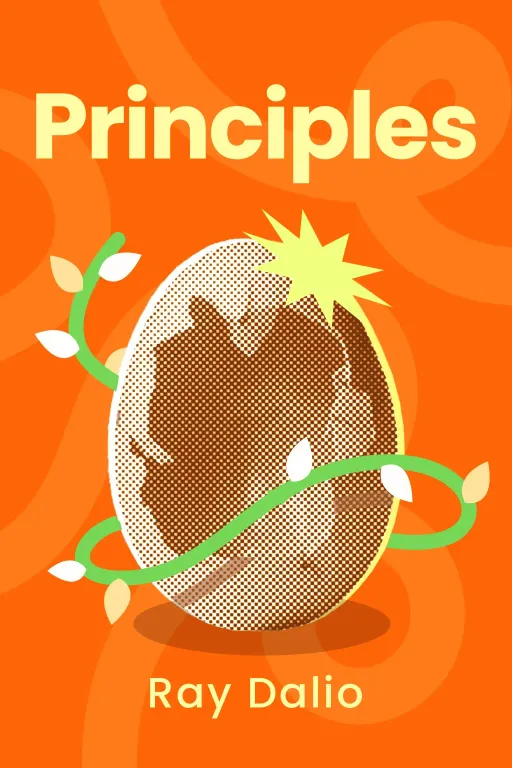
Nova: Precisely. Ray Dalio, the founder of Bridgewater Associates, one of the largest hedge funds in the world. What's fascinating about him is that "Principles: Life and Work" isn't just a business manual. It's a deeply personal manifesto born from decades of navigating extreme market volatility, personal failures, and relentless self-examination. He codified his entire decision-making process into an almost algorithmic system, convinced that even seemingly random market events could be understood and systematized.
Atlas: That's incredible. So he turned his own mistakes and observations into a universal toolkit.
Nova: Exactly. And that quest for universal principles is where we start our journey today, because it’s the key to understanding those underlying market patterns.
The Illusion of Chaos: Understanding Underlying Market Patterns
SECTION
Nova: Dalio's core idea revolves around what he calls "radical truth and radical transparency." He believes that to make effective decisions, especially in complex systems like markets, you must relentlessly pursue the unvarnished truth, even if it's uncomfortable. And you must be completely transparent about it. It’s about seeing the world as a machine, and then figuring out how that machine works.
Atlas: But wait, isn't that just hindsight? How do you apply "radical truth" when everything's moving so fast, when a stock can drop 20% in an hour because of a tweet? It feels like we're always reacting to something new.
Nova: That's the brilliant part. Dalio would argue that while the might be new – the tweet, the specific news headline – the underlying of human behavior and economic cycles often rhyme with history. Think about the 2008 financial crisis. Many people were caught off guard. But Dalio and his team, through their radical truth-seeking, were looking at the systemic debt accumulation, the housing market mechanics, and the historical precedents of similar bubbles. They weren't just reacting to daily news; they were analyzing the 'machine' itself.
Atlas: So, it's about seeing the forest, not just the trees. Like, if you understand how a car engine works, you can diagnose a problem even if the specific symptom is a weird new sound.
Nova: That’s a perfect analogy, Atlas. They built models, or "principles," that acted like algorithms, helping them make decisions based on how they believed the market machine operate, rather than just how it in the moment. It's about recognizing that history often rhymes, and while the actors and specifics change, the fundamental economic and human behaviors that drive cycles often repeat.
Atlas: I imagine a lot of our listeners, especially those in tech or global business, are constantly trying to predict the next big trend or avoid the next downturn. This idea of a "market machine" sounds like it could provide a kind of operating manual.
Nova: It offers a framework. Take, for example, the concept of a "debt cycle." It’s a recurring pattern where debt builds up, fuels growth, then becomes unsustainable, leading to a deleveraging. It’s happened throughout history. If you understand that "machine," you're not surprised when it eventually corrects. You anticipate it.
The Human Element: Cognitive Biases in Economic Decision-Making
SECTION
Atlas: Okay, so there are patterns, there are machines. But what about the messy human part? Because last time I checked, markets are full of people, and people are... well, not always rational. That’s where the chaos feels real, right?
Nova: Absolutely. And that’s where Daniel Kahneman, with his groundbreaking work in "Thinking, Fast and Slow," steps in. He unpacks the two systems that drive our thinking: System 1, which is fast, intuitive, and emotional; and System 2, which is slow, deliberative, and logical. The problem is, System 1 often overrides System 2, especially in high-stakes situations like market decisions.
Atlas: So we're hardwired to make irrational choices, even when we think we're being smart? That sounds like a recipe for financial disaster.
Nova: It can be. Take "loss aversion" for example. Kahneman showed that the pain of losing something is psychologically about twice as powerful as the pleasure of gaining the equivalent amount. So, an investor might hold onto a losing stock far longer than they should, hoping it will recover, just to avoid realizing that loss. Or they might sell a winning stock too early to "lock in" a small gain, missing out on bigger returns.
Atlas: Oh, I've been there! That gut wrenching feeling of watching a stock drop, and you just can't bring yourself to sell it. It feels like you're admitting defeat.
Nova: Exactly. Or "anchoring," where people tend to rely too heavily on the first piece of information they receive. If a stock was once trading at $100, and it drops to $50, an investor might anchor on that $100 price, believing it's "cheap" now, even if the underlying fundamentals have changed dramatically and it's actually overvalued at $50.
Atlas: So, even if I about loss aversion, I'm still going to feel it, right? How does knowing about it actually help me in a high-stakes trading situation? It sounds like we're still at the mercy of our own brains.
Nova: Not entirely. Awareness is the first powerful step. Kahneman’s work doesn't just describe these biases; it helps us design systems or rules to counteract them. For a global thinker, someone who needs foresight and practical impact, understanding these biases means you can build personal 'circuit breakers.'
Atlas: Like, setting a stop-loss order automatically, so you don't have to make an emotional decision in the moment?
Nova: Precisely! Or having a pre-defined set of criteria for buying or selling, rather than reacting to daily news. It’s about building a framework that protects you from your own System 1. It helps you recognize when that fast, emotional thinking is trying to take over, and gives you a mechanism to engage your slower, more logical System 2.
Building Resilience: Frameworks for Navigating Market Volatility
SECTION
Nova: So, we have the market patterns, the 'machines' Dalio talks about, and we have our own messy psychology, the biases Kahneman illuminated. How do we put this together to actually something effective? That's the real global thinker's edge.
Atlas: Because it’s one thing to understand the theories, it’s another to apply them when your portfolio is flashing red or when a major tech trend is suddenly disrupted.
Nova: Right. Nova's Take, from our core insights, states it perfectly: "Mastering market dynamics requires not just data analysis, but a deep understanding of human psychology and robust decision-making frameworks." It’s about creating your own 'algorithmic thinking' for decisions. Dalio’s principles are essentially algorithms for life and work. Kahneman shows us the bugs in our own mental algorithms.
Atlas: So, it's about building a better mental operating system that takes both the market's patterns and our own psychological quirks into account.
Nova: Exactly. It means developing a disciplined approach. For instance, when a market event happens, instead of immediately reacting, you engage your Dalio-inspired 'radical truth' lens: What are the underlying, systemic forces at play here, beyond the headlines? Is this a recurring pattern? And then you layer on your Kahneman-inspired lens: What cognitive biases might be influencing my interpretation of this event or my decision to act? Am I succumbing to herd mentality? Is loss aversion making me hesitant?
Atlas: That’s a powerful two-step process. For someone who's trying to make sense of, say, the latest crypto dip or a sudden shift in AI stock valuations, what's one immediate reflection they can do? How can they apply Dalio's 'radical truth' or Kahneman's biases?
Nova: A tiny step: Reflect on a recent market event that surprised or challenged you. Ask yourself: How might Dalio’s principles of relentlessly seeking the underlying truth, or Kahneman’s insights on cognitive biases like herd mentality or overconfidence, offer a clearer explanation than the surface-level news? Was it truly a random shock, or did human psychology and predictable patterns play a bigger role than you initially thought?
Synthesis & Takeaways
SECTION
Nova: Ultimately, the global thinker's edge isn't in knowing every single piece of news or predicting the future perfectly. It's in understanding the timeless interplay of systemic patterns and human nature. It's about building a robust "thinking machine" for yourself, one that accounts for both the external market dynamics and your own internal mental landscape.
Atlas: That's a profound shift in perspective. It moves us from passive observers, constantly battered by market waves, to active interpreters of our financial reality. It’s about recognizing that curiosity and a solid framework are far more powerful than trying to chase every headline. It’s about foresight through understanding, not just prediction.
Nova: Exactly. What seemingly chaotic event in your world can you now re-examine through the lens of patterns and psychology? That’s the challenge we leave you with.
Atlas: That's a powerful challenge. It moves us from passive observers to active interpreters of our financial reality.
Nova: This is Aibrary. Congratulations on your growth!