

Stop Overthinking, Start Acting: The Art of Decisive Ethical Leadership.
Golden Hook & Introduction
SECTION
Nova: Alright, Atlas, five words. "Stop Overthinking, Start Acting: The Art of Decisive Ethical Leadership." What's your five-word review of that concept?
Atlas: Ethical dilemmas, no more paralysis.
Nova: Ooh, I like that! No more paralysis. Because honestly, Atlas, that's often the biggest hurdle, isn't it? We know we want to do the right thing, we value integrity, we strive for impact, but when faced with a truly complex ethical decision, we freeze.
Atlas: Oh, I know that feeling. It's like your brain becomes a traffic jam of conflicting values and potential consequences. For anyone leading a team or trying to build a truly ethical culture, that hesitation can feel like a real roadblock to progress.
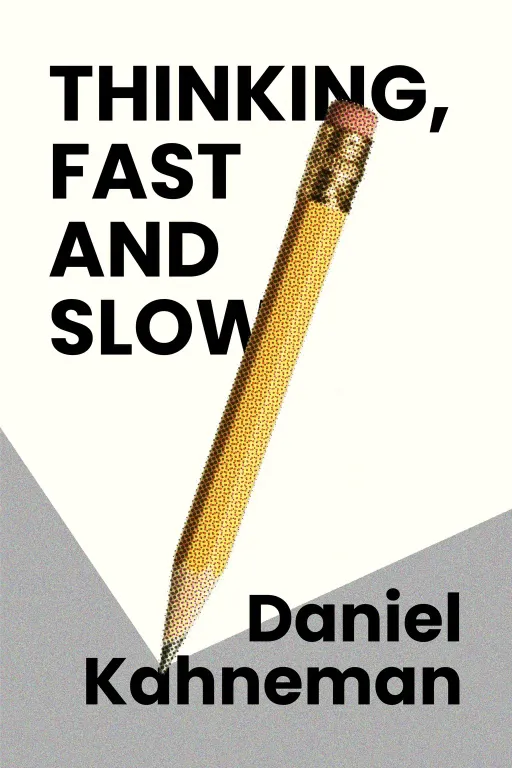
Nova: Exactly. And that's precisely what we're tackling today, drawing profound insights from two giants in the world of decision-making: Daniel Kahneman, the Nobel laureate and author of "Thinking, Fast and Slow," and Ray Dalio, the legendary investor behind "Principles." Kahneman, a psychologist, won the Nobel Prize in Economic Sciences, which just tells you how foundational his work is to understanding how we make choices, even ethical ones.
Atlas: That’s amazing. I’m curious, how do these seemingly academic concepts from psychology and finance translate into practical, decisive ethical leadership? Because for our listeners who are trying to empower their teams and streamline processes, the 'how' is everything.
Understanding Our Ethical Brains: System 1 vs. System 2 in Moral Dilemmas
SECTION
Nova: That's the perfect question, Atlas, because it all starts with understanding our own internal machinery. Kahneman introduces us to two distinct modes of thought: System 1, which is fast, intuitive, and emotional; and System 2, which is slow, deliberate, and logical. Think of it like this: System 1 is what lets you instantly recognize a familiar face or slam on the brakes in traffic. It's automatic.
Atlas: Right, like that split-second decision when a ball flies at your head. No thinking, just reacting.
Nova: Precisely. System 2, on the other hand, is what you engage when you're solving a complex math problem or carefully weighing the pros and cons of a major life decision. It requires effort and concentration.
Atlas: Okay, so you’re saying in ethical dilemmas, we often default to that fast, intuitive System 1? But isn't intuition sometimes valuable, especially for experienced leaders? Is my gut feeling ever right, or is it always a trap in ethical situations?
Nova: That’s a brilliant distinction, and it’s where the nuance lies. System 1 is incredibly powerful, and it can be a source of wisdom, especially when you have deep experience. But in ethical dilemmas, it can also be prone to biases – emotional reactions, ingrained prejudices, or even just the desire for an easy answer. System 2 is where we engage deeper, analytical thought. It allows us to step back, consider all angles, and align our actions with our true values, not just our immediate feelings.
Atlas: Can you give an example? Like, a real-world ethical dilemma where System 1 and System 2 would duke it out in a leader's mind?
Nova: Absolutely. Imagine you're a manager, and you have a star performer, let's call her Sarah. Sarah consistently hits her targets, she’s charismatic, everyone loves her. But you've started noticing a pattern: she occasionally takes shortcuts, subtly pushes the boundaries of company policy, or maybe even takes credit for a junior team member's idea. Your System 1, your gut reaction, might be to protect Sarah. She's a high performer, she makes your team look good, confronting her feels uncomfortable and disruptive.
Atlas: Oh, I’ve been there. The immediate thought is, "Don't rock the boat. She's valuable."
Nova: Exactly. But then, your System 2 kicks in. It starts to deliberate. What message does this send to the rest of the team? What about the junior employee whose work was overlooked? What's the long-term impact on team morale, on the company's ethical culture, if this behavior is allowed to continue? Your System 2 pushes you to consider the principles: fairness, integrity, accountability.
Atlas: Wow, that’s tough. It sounds like the first step to decisive ethical leadership is just recognizing which "system" is at the wheel, and knowing when to hit the brakes on System 1 to engage System 2.
Building Your Ethical Compass: Principles and Transparency for Decisive Action
SECTION
Nova: You've hit on the core insight, Atlas. And once you know you're thinking, the next step is to know you're thinking. That's where Ray Dalio's "Principles" become incredibly powerful. Dalio, who built one of the most successful hedge funds in history, champions radical transparency and an idea meritocracy. He believes in having clear, written principles that guide every decision, from hiring to strategy to, yes, ethical dilemmas.
Atlas: Radical transparency sounds great in theory, but doesn't that open you up to a lot of conflict? And "idea meritocracy"—how do you make sure that's genuinely fair and not just the loudest voice winning the argument?
Nova: That’s a really important challenge, and Dalio addresses it head-on. He argues that transparency, when paired with, actually reduces conflict. Instead of emotional arguments or power plays, discussions are grounded in an objective framework. It's like having a shared ethical playbook. When everyone understands the rules of engagement and the underlying values, you can debate an idea, even fiercely, without it becoming personal. The best idea, according to the principles, wins.
Atlas: That’s a great way to put it – a shared ethical playbook. So, for someone trying to lead ethically, how do they even start to these principles for themselves or their team? It feels a bit abstract to just "have principles."
Nova: It’s less about inventing them out of thin air and more about discovering them. Dalio suggests that you reflect on your past decisions – especially the tough ones, the ones that kept you up at night – and identify the underlying beliefs or values that guided you, or that you had guided you. These become your principles. For instance, in our Sarah example, a principle might be "Integrity over short-term gains" or "Fairness for all team members."
Atlas: I can definitely relate. It’s about streamlining the ethical process, right? Building self-sufficiency in decision-making by having that internal compass ready to go. It makes it less about agonizing over every single decision and more about applying a consistent framework.
Synthesis & Takeaways
SECTION
Nova: Exactly. Ultimately, what Kahneman and Dalio show us is that ethical leadership isn't about being perfect, it's about being intentional. It's about understanding your cognitive biases – knowing when your fast, intuitive brain might lead you astray – and then arming yourself with clear, articulated principles that act as your North Star for decisive action.
Atlas: It's almost like they're giving us a roadmap to transform ethical paralysis into ethical agility. Not just avoiding mistakes, but actively shaping a more ethical future, faster, and with more confidence.
Nova: And for our listeners, here's a tiny step you can take today. For your next complex ethical decision, take just five minutes. Don't just rush to a conclusion. Instead, identify which part of your thinking is System 1 intuition, and which part needs that System 2 deliberation. Then, ask yourself what core principle would truly guide your action, making sure it aligns with the impact you want to create.
Atlas: And share with us! We'd love to hear how that process changes your perspective and helps you move from overthinking to acting with purpose. Find us on social media using #AibraryInsights.
Nova: This is Aibrary. Congratulations on your growth!