

The Art of Pricing: Crafting Value Perceptions for Luxury Goods
Golden Hook & Introduction
SECTION
Nova: Okay, Atlas, quick game. Imagine you're at a high-end auction. There's a piece of art, visually stunning, but you have no idea who the artist is, its history, nothing. Then, a few minutes later, another piece, arguably less visually striking, but the auctioneer tells you it's a lost work by a master, with a captivating backstory. Which one do you think fetches the higher price, and why?
Atlas: Oh, I like that. The second one, hands down. It's not even a question, really. The backstory, the master, the 'lost work' aspect—that adds layers of perceived value that the first piece, however beautiful, just can't touch. It taps into something deeper than just aesthetics.
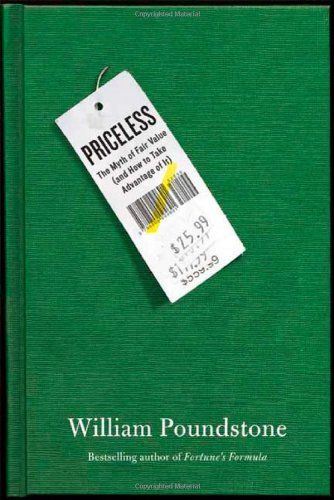
Nova: Exactly! It's that deeper something we're unraveling today. We're diving into the fascinating world of pricing, specifically through the lens of a book that really pulls back the curtain on how we perceive worth: "Priceless: The Myth of Fair Value " by William Poundstone. It's a book that became widely acclaimed for challenging our most basic assumptions about money and value.
Atlas: Right? That title alone is provocative. 'The myth of fair value'—it immediately makes you wonder if everything you thought you knew about pricing is, well, maybe a little naive.
Nova: It absolutely does. Poundstone, who’s known for his sharp, analytical approach and for tackling complex subjects with accessible writing, really unpacks how our brains are wired to make purchasing decisions, especially when it comes to things we consider unique or luxurious. And he shows us how easily those decisions can be swayed.
The Psychology of Perceived Value
SECTION
Atlas: So, if 'fair value' is a myth, what exactly is happening in our minds when we decide something is worth a certain price? Are we just… making it up?
Nova: In a way, yes! Poundstone argues that often, our perception of value is less about objective cost and more about psychological triggers. Think about it: when you buy a luxury item, are you primarily paying for the raw materials, or for the brand, the experience, the status?
Atlas: That makes sense. I mean, nobody buys a designer handbag just for its ability to hold things. You're buying into a whole story, a certain image.
Nova: Precisely. And Poundstone breaks down the mechanisms behind this. He talks about "anchoring," for instance. This is where an initial piece of information, even if irrelevant, influences our subsequent judgments. So, if a high-end jewelry store puts a diamond necklace with a jaw-dropping price tag right at the front, even if it's too expensive for most, it anchors our perception of what a 'high price' is. Suddenly, a slightly less expensive, but still very costly, piece seems more reasonable by comparison.
Atlas: Oh, I’ve definitely felt that. You see something ridiculously expensive, and then the next thing, which is still expensive, feels like a 'deal.' It's a classic sales tactic, but I never thought of it as psychological anchoring.
Nova: It's all about framing. Another example he uses is "compromise effect." People tend to choose the middle option when presented with three choices. So, if you have a cheap, a medium, and an expensive option, the medium one often looks most appealing because it feels like a safe, rational compromise. But the store can manipulate this by simply introducing an even expensive option, making their original 'expensive' item now look like the 'medium' choice.
Atlas: That’s brilliant and a little terrifying! So, a brand could essentially create a super-premium item that they don't even expect to sell much of, just to make their other high-end products look more accessible?
Nova: Absolutely. It's about setting the stage, creating the context within which your customer perceives value. It's not about deceiving them, but understanding how their minds work. Poundstone’s research, which is widely cited in behavioral economics, really highlights how these subtle cues influence decisions. It's why a wine tastes better if you're told it's expensive, even if it's the exact same wine. The expectation, the framing, changes the experience.
Atlas: Wow, that’s kind of heartbreaking, in a way. It makes you wonder how much of our perception of worth is actually genuine and how much is just clever marketing.
Nova: It's a mix, but the key insight is that we, as consumers, aren't as rational as we think when it comes to pricing. And for businesses, especially those in luxury, understanding this isn't just an advantage; it's essential. It moves pricing from a mathematical exercise to a strategic art form.
Atlas: So, for someone creating, say, ethical jewelry, 'fair value' isn't just about the cost of the gold and the gems. It's about how they communicate everything around that.
Nova: Exactly. It's about communicating the story, the craftsmanship, the sustainability, the emotional connection. Strategic pricing reinforces that perceived value and exclusivity. It’s not just a number; it’s a statement.
Crafting Intangible Value for Luxury Goods
SECTION
Nova: And that naturally leads us to the second key idea we need to talk about, which often acts as a counterpoint to pure psychological manipulation: the power of intangible value. If pricing isn't just about numbers, what are these non-material elements that make something truly 'priceless'?
Atlas: I've been thinking about this, especially for ethical brands. They often have higher material costs because they're sourcing sustainably or paying fair wages. But how do they translate those 'good intentions' into something a customer is willing to pay more for?
Nova: That's the million-dollar question, and it's where storytelling becomes paramount. Poundstone’s work, while not directly focused on ethics, lays the groundwork by showing that emotional connections and perceived scarcity drive value. For an ethical jewelry brand, this means highlighting provenance – where did the materials come from? Was it conflict-free? Was it recycled?
Atlas: Like, knowing that a diamond was ethically sourced makes it more valuable to me, not just because I'm a good person, but because it feels like a 'cleaner,' more thoughtful purchase. It adds a layer of integrity.
Nova: Exactly. And that integrity is an intangible value. It's not something you can weigh or measure like gold, but it profoundly impacts desirability and willingness to pay. Then there's the craftsmanship. In an age of mass production, something handmade, with unique design elements and attention to detail, becomes a luxury.
Atlas: So, the story of the artisan, the hours spent, the unique design philosophy—that's all part of the 'priceless' equation. It's not just a piece of jewelry; it's a piece of art, a piece of someone's passion.
Nova: Precisely. And this is where the "deep question" from our ethical innovator comes in: "Beyond the cost of materials and labor, what intangible values does your jewelry offer, and how can your pricing strategy better reflect these elements?" It’s an invitation to look beyond the spreadsheet. To look at the unique design story—is there cultural significance? A personal inspiration behind it?
Atlas: I’m curious, what do you mean by 'unique design story'? Is it enough to say 'it’s unique,' or does it need to be a narrative?
Nova: It absolutely needs to be a narrative. Consider a piece of jewelry inspired by an ancient symbol, or one that uses a rare, hand-cut stone sourced directly from a specific region with a rich artisanal history. The story behind how that design came to be, the journey of the materials, the hands that crafted it—these are all narratives that elevate the item beyond its physical components. They create a sense of history, exclusivity, and emotional resonance.
Atlas: So, instead of just saying 'this is a gold ring,' it's 'this is a gold ring forged by a master artisan using ancient techniques passed down through generations, with ethically sourced gold that supports a small community.'
Nova: There you go! That second description isn't just selling a ring; it's selling a legacy, a conscience, and a piece of art. The price then reflects not just the material cost, but the cost of that legacy, that ethical commitment, that artistic vision. This is how luxury brands, particularly those with a strong ethical foundation, can justify and command premium pricing. They're selling more than a product; they're selling a philosophy, a choice, a statement about who the buyer is and what they value.
Atlas: That’s actually really inspiring. It means ethical brands don't have to compromise on pricing just because their costs are higher. They can leverage those very costs into a powerful value proposition. It’s about being transparent but also being a brilliant storyteller.
Nova: It's about shifting the conversation from 'what does this cost?' to 'what is this worth?' And for luxury items, especially those with inherent ethical stories, that worth is often far greater than the sum of its parts. It's Poundstone's principles applied to purpose-driven brands.
Synthesis & Takeaways
SECTION
Nova: So, what we've really been talking about today is the art of crafting value perceptions. It’s understanding that pricing isn't just a math problem, but a psychological one, deeply intertwined with human behavior and storytelling.
Atlas: Right. It’s about recognizing that the 'fair value' of anything, especially luxury items, is highly subjective and can be shaped through strategic framing, anchoring, and comparison. And for ethical innovators, it’s about actively weaving their intangible values – their provenance, their craftsmanship, their ethical impact – into a compelling narrative that elevates perceived worth.
Nova: Absolutely. It's a powerful reminder that in the luxury market, you're not just selling a product; you're selling a story, an experience, and a statement. Pricing becomes a reflection of that entire ecosystem of value. The real question is, are you telling a story worth paying for?
Atlas: And are you confident enough in that story to price it accordingly? I think that’s the hardest part for many entrepreneurs, especially those driven by purpose. Trusting their vision enough to know their worth.
Nova: It truly is. But when you understand the psychology, and you have a genuinely compelling story, that confidence becomes a natural extension of your brand.
Atlas: That’s a really insightful way to end it. It gives a lot to think about, especially for anyone trying to build a brand that stands for something more than just profit.
Nova: We hope this conversation sparks some new reflections for you. Until next time, remember that value is often in the eye of the beholder, but you have the power to guide that eye.
Atlas: This is Aibrary. Congratulations on your growth!