

Unlocking Your Voice: Mastering the Art of Confident Communication
Golden Hook & Introduction
SECTION
Nova: Atlas, I'm going to give you a scenario. You're walking into a room, maybe it's a big presentation, a crucial negotiation, or even just a difficult conversation with a colleague. What's the very first thing you try to project, consciously or unconsciously?
Atlas: Oh, that's a good one, Nova. Honestly? I'm probably trying to project competence, like I know exactly what I'm doing, even if inside I'm a tangled mess of nerves. It’s that classic 'fake it till you make it' vibe.
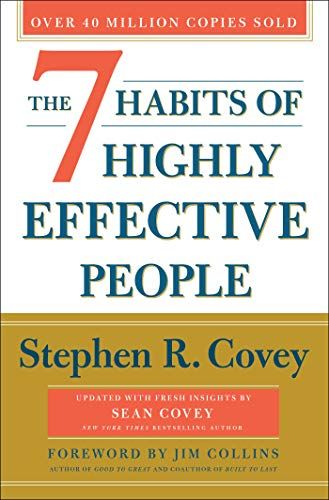
Nova: Exactly! And that 'fake it till you make it' isn't just a clever saying; it's actually grounded in some pretty profound psychology. Today, we're diving into the art of confident communication, drawing insights from two incredibly influential thinkers. We'll be looking at Stephen Covey's timeless wisdom on proactivity from his seminal work,, and then we'll jump into Amy Cuddy's groundbreaking work on presence, which she detailed in her book,.
Atlas: Covey and Cuddy together? That's a powerhouse combo. Cuddy's work on power posing, in particular, really shifted how people thought about body language. I mean, it was everywhere for a while.
Nova: It was, and for good reason. What both of them, in their unique ways, highlight is that true confidence in communication isn't just about what you say, or even just how you feel inside. It's a dynamic interplay between your internal conviction and your external expression. And understanding that interplay is the key to unlocking your voice.
The Power of Proactive Presence: Internal Conviction Meets External Expression
SECTION
Atlas: So, let's start with Covey, because 'proactivity' feels like the bedrock here. Before you even open your mouth, it's about owning your choices.
Nova: Absolutely. Covey's concept of proactivity is foundational. He emphasizes that being proactive means taking responsibility for your choices, rather than reacting to circumstances. It's about focusing on your 'circle of influence' – the things you control – instead of getting bogged down by your 'circle of concern,' which are all the external things you can't.
Atlas: That makes perfect sense. I can definitely relate to getting caught in the 'circle of concern,' worrying about what others might think, or how a situation might unfold, and that totally drains my confidence before I even start.
Nova: Precisely. And when you're communicating, that internal state of feeling like a victim of circumstance, or constantly worrying about external validation, bleeds into your delivery. Proactive communicators, on the other hand, understand that they choose their response. They don't just react to their environment; they act based on their values.
Atlas: So, it's like, if I walk into that big presentation, instead of thinking, "Oh no, what if they don't like my ideas?" I'm thinking, "I've prepared, I believe in this, and I'm choosing to present my best self."
Nova: Exactly. That internal shift, that sense of agency, is the first critical step. Now, let’s layer Amy Cuddy's work on top of that, because she brings in the fascinating world of nonverbal cues. Her research, particularly on 'power posing,' revealed something truly counterintuitive: your body language doesn't just reflect how you feel; it how you feel.
Atlas: Oh, I've heard about this! The whole 'stand like Superman' for two minutes thing. It sounds almost too simple to be true, but it's pretty compelling.
Nova: It's incredibly compelling. Cuddy's core argument is that our nonverbal expressions of power, like expanding our posture, can actually increase our testosterone levels and decrease our cortisol levels – that's the stress hormone. So, when you stand in a high-power pose, hands on hips, chest out, you're not just confident; you're physiologically more confident.
Atlas: Wow. So, Covey gives us the mental framework of taking responsibility, and Cuddy gives us a physical hack to reinforce that internal state. It's like they're two sides of the same coin, both leading to a more robust, authentic presence.
Nova: That’s a perfect way to put it. Nova's Take on this is that true confidence in communication stems from both internal conviction—that proactive mindset Covey champions—and external expression, which Cuddy shows us we can actively shape. By aligning your mindset and your body language, you create a feedback loop. Your body language influences your mind, and your mind influences your body language, amplifying your message and helping you resonate more deeply with your audience.
Atlas: So it's not just about what you're saying, but the entire package. The belief you carry, and the way your body literally projects that belief. That's a powerful combination. It makes me wonder, though, how much of this is conscious? Like, can people if you're faking it, or does the change become genuine?
Nova: That's a great question, and it's where the magic happens. The initial 'fake it till you make it' through power posing often transitions into genuine confidence. Because those physiological changes—the increased testosterone, decreased cortisol—aren't fake. They're real biochemical shifts that make you more powerful and less stressed. Over time, as you repeatedly engage in these proactive mindsets and power poses, your brain starts to associate these behaviors with success and comfort. It becomes less about faking and more about training your system to operate from a place of strength.
Atlas: That’s actually really inspiring. It means you don't have to wait to confident to confident. You can initiate it. And for anyone who struggles with imposter syndrome or public speaking anxiety, that’s a game-changer.
Nova: Exactly. It's about understanding that your internal state isn't a fixed entity; it's something you can influence through your actions and choices. And that’s a profoundly empowering realization for anyone looking to improve their communication.
Mastering the Room: Practical Steps for Command and Control
SECTION
Atlas: Okay, so we've got the internal conviction from Covey and the external expression from Cuddy. Now, let's get really practical. What are the 'tiny steps' or immediate actions someone can take to command the room, even if they're feeling those pre-presentation jitters?
Nova: Excellent question. The beauty of this approach is in its simplicity. One of the most straightforward 'tiny steps' derived from Cuddy's work is to spend just two minutes in a power pose before your next important conversation or presentation. It could be the 'Wonder Woman' pose, or hands on hips, or even just standing tall with your shoulders back and chest open.
Atlas: Two minutes? That's it? That feels incredibly accessible. You can do that in a bathroom stall or even just before you enter a meeting room.
Nova: Precisely. And the key is to how this shifts your internal state and vocal delivery. You'll likely find your voice feels stronger, your thoughts clearer, and your anxiety reduced. It's a quick, physiological reset.
Atlas: That's a great initial step. But what about the proactive mindset aspect? How can listeners integrate that into their daily interactions to reduce anxiety and increase their sense of control over communication outcomes? Because that feels a bit more abstract than striking a pose.
Nova: It’s a deeper question, but equally actionable. The 'deep question' is: How can you integrate a proactive mindset into your daily interactions to reduce anxiety and increase your sense of control over communication outcomes? This isn't about grand gestures; it's about subtle shifts. For example, before a difficult conversation, instead of mentally rehearsing all the negative outcomes, proactively think about your desired outcome and the thing you can control in that interaction – perhaps your tone, your listening skills, or a specific point you want to make.
Atlas: So, it's about identifying your 'circle of influence' in that specific moment and intentionally focusing your energy there. Not just generally being proactive, but applying it to the micro-interactions.
Nova: Exactly. It's about shifting from a reactive stance – "Oh no, this conversation is going to be terrible" – to a proactive one – "I can choose how I approach this, and I can focus on what I want to achieve." This reduces the mental clutter and anxiety that often accompanies high-stakes communication. Another practical application is to prepare not just you're going to say, but you'll recover if something unexpected happens. A proactive mindset anticipates challenges and plans for them, which inherently builds confidence.
Atlas: That’s brilliant. So it's not about preventing all potential problems, which is impossible, but about having a response ready, which gives you a sense of control. It’s like having a mental 'Plan B' for your communication.
Nova: Precisely. And this ties back to the user profile – the aspiring leader, the reflective thinker, the growth seeker. These are individuals who value real-world impact and continuous improvement. For them, incorporating these 'tiny steps' and 'deep questions' isn't just theory; it's a direct path to building the confidence needed to speak their truth and lead effectively.
Atlas: And for those who are driven by personal development, like our listeners, embracing every challenge as a chance to grow, as recommended in their growth profile, really resonates here. Every conversation, every presentation, becomes an opportunity to fine-tune these skills.
Nova: Absolutely. It’s about viewing communication not as a performance you either nail or fail, but as a muscle you strengthen with consistent, intentional practice. And the beautiful thing is that these practices, like power posing and proactive thinking, are available to everyone, right now.
Synthesis & Takeaways
SECTION
Nova: So, to bring it all together, what Covey and Cuddy teach us, and what Nova's Take really emphasizes, is that unlocking your voice and mastering confident communication is truly a holistic endeavor. It’s about cultivating an internal sense of responsibility and control, while simultaneously leveraging the power of your physical presence.
Atlas: It's powerful because it gives people agency. You don't have to wait for confidence to magically appear. You can actively build it, both from the inside out through your mindset, and from the outside in through your body.
Nova: Right. And the impact of this isn't just on you, but on everyone you interact with. When you communicate with conviction and presence, your message lands differently. You inspire trust, you convey authority, and you connect on a deeper level. It's why leaders are often described as having 'presence' – it's not just charisma; it's a cultivated state.
Atlas: So, the next time someone feels that familiar knot of anxiety before a big moment, they have tools. Two minutes of power posing, and a quick check-in on their 'circle of influence.' It sounds like a fantastic way to prepare.
Nova: It truly is. And it's a continuous process. Every interaction is a chance to practice, to refine, and to embody that confident communicator you aspire to be. It's about making conscious choices about how you show up, every single time.
Atlas: That gives me chills, Nova. It’s such a hopeful way to look at something that can feel so daunting for so many people. It’s not a fixed trait; it’s a skill.
Nova: Exactly. And the best part? You can start today. This is Aibrary. Congratulations on your growth!









