

The Unspoken Language: Mastering Non-Verbal Cues
Golden Hook & Introduction
SECTION
Nova: Atlas, quick question for you. How good would you say you are at spotting a lie? On a scale of one to "I could join the FBI tomorrow"?
Atlas: Oh, Nova, I'm easily a solid seven. Maybe an eight on a good day. My poker face is legendary, and I can usually tell when someone's trying to sell me a bridge... or just forgot to do the dishes. Why, what's on your mind?
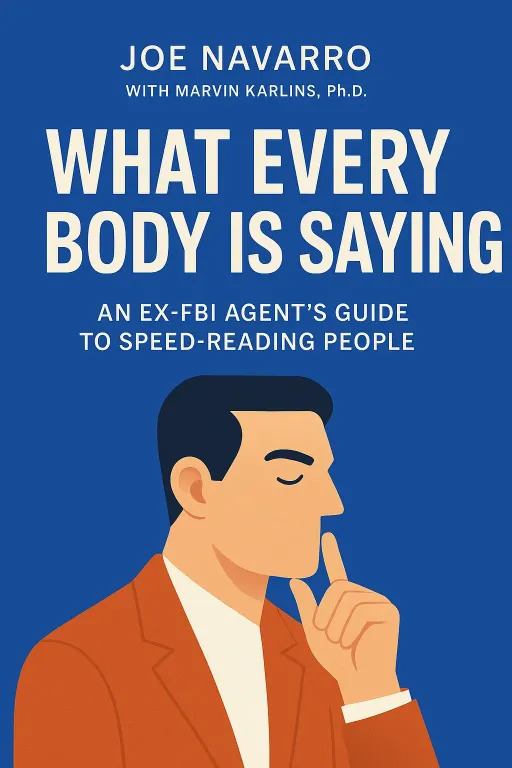
Nova: Well, today we are diving deep into the world of "The Unspoken Language: Mastering Non-Verbal Cues." We're pulling insights from two incredible books: "What Every Body Is Saying" by Joe Navarro, who, by the way, is a former FBI agent, so he knows a thing or two about reading people. And "Presence" by Amy Cuddy, who shows us how our own body can speak volumes, even to ourselves.
Atlas: Wow, an actual FBI agent. That's not just theory, that's real-world, high-stakes observation. I'm intrigued. So, we're talking about more than just crossed arms, right?
Nova: Absolutely. Navarro's background is fascinating because he wasn't just studying this in a lab; he was using these techniques in interrogations, where lives literally depended on understanding the truth behind the words. And Cuddy, she takes it a step further, showing us that our body language isn't just external; it profoundly shapes our internal state, our confidence, and how we feel.
Atlas: So, it's not just about catching someone in a lie, but understanding their true feelings, and even influencing our own. That's powerful.
Nova: Exactly. And the first place we need to start is what I call "The Blind Spot."
Deep Dive into Core Topic 1: The Blind Spot - Why We Miss Half the Message
SECTION
Nova: Think about it, Atlas. Most of us are trained from childhood to focus almost entirely on words. We listen to what people say. We read their emails, their texts. But we miss the rich, constant narrative our bodies are telling, often unintentionally. It's like listening to a song with only half the instruments playing.
Atlas: Yeah, I guess we're all guilty of that. We're so busy formulating our own responses, or just taking words at face value. But how much are we missing? Is it just subtle nuances, or are we missing critical information?
Nova: It's critical information that can lead to profound misunderstandings and missed opportunities for connection. Let me give you a scenario. Imagine a candidate in a crucial job interview. They're articulate, they've got all the right answers, they're saying every single thing the interviewer wants to hear. Verbally, they're a perfect fit.
Atlas: Sounds like a dream candidate on paper.
Nova: But as they speak, their hands are constantly fidgeting under the table. They keep touching their neck, almost subconsciously. Their shoulders are slightly hunched, and their gaze keeps darting around the room, rarely meeting the interviewer's eyes for more than a second. The words are confident, but the body? The body is screaming anxiety, discomfort, maybe even a lack of genuine interest in being there.
Atlas: Oh, I've definitely been in interviews like that. You get a "gut feeling" something is off, but you can't quite put your finger on it. You just know the person doesn't feel... right.
Nova: Precisely. The interviewer, focused solely on the polished verbal responses, might rate them highly on competence but might still feel an inexplicable lack of "fit." Or worse, they might miss a red flag about the candidate's stress management under pressure. The cost here is huge: a potentially great opportunity for the candidate is lost, and the company might miss out on a talent because they couldn't read the whole story.
Atlas: So, it's not just about being polite and listening to the words. It's about recognizing that there's a whole other layer of communication happening that we're often completely oblivious to. It feels overwhelming, honestly. How do we even begin to start seeing this? It's like suddenly realizing you've been walking around with blinders on your entire life.
Deep Dive into Core Topic 2: Decoding the Unspoken & Embodying Non-Verbal Power
SECTION
Nova: That's a great point, Atlas, and it leads us perfectly into the shift we need to make: from merely hearing to truly seeing and feeling. This is where Joe Navarro's work becomes incredibly powerful. He teaches us how to decode these unspoken messages.
Atlas: Okay, so give me some Navarro wisdom. What's one of his big secrets?
Nova: One of his key insights is about what he calls "pacifying behaviors." These are actions we do to comfort ourselves when we're experiencing stress, discomfort, or anxiety. It could be touching your neck, rubbing your hands together, fidgeting with a watch or jewelry, or even stroking your hair. These aren't necessarily signs of deception, but they are undeniable indicators of unease.
Atlas: Oh, I know that feeling! I'm definitely a neck-toucher when I'm under pressure. So it's not about catching someone in a lie, but understanding their? That's a huge distinction.
Nova: Exactly! It's about empathy and understanding, not accusation. If you're negotiating a deal and the other person starts exhibiting a lot of pacifying behaviors, it tells you they're feeling stressed, even if their words are confident. That insight changes how you proceed. It allows you to adapt your approach, perhaps by re-explaining something or offering reassurance.
Atlas: That makes so much sense. It gives you a roadmap. But what about our own body language? How do we make sure we're not sending signals we don't intend, or even worse, undermining ourselves?
Nova: That's where Amy Cuddy's work on "Presence" comes in. She explores how our own body language doesn't just affect how others see us, but profoundly impacts our own internal chemistry. She talks about "power poses."
Atlas: Power poses? Like standing like Superman?
Nova: Precisely! Or Wonder Woman. It's about adopting expansive, open postures – standing tall, hands on hips, or even leaning back with hands behind your head. Cuddy's research suggests that even two minutes in a high-power pose can increase testosterone and decrease cortisol in our bodies.
Atlas: So it's not just faking confidence until you make it, but actually to more confident. That’s incredible.
Nova: It’s embodying power from within. Think about someone about to give a big presentation. They're nervous, their heart is racing. If they spend a few minutes before they go on stage in a power pose in a quiet room, they're not just putting on a show; they're actually biologically preparing themselves to feel more self-assured and less anxious. This isn't about manipulation; it's about aligning your internal state with your desired external presence.
Atlas: So it's not just about reading others, but about our own authentic confidence, and even that confidence internally. That's a practical strategy for anyone who wants to make a stronger impact.
Synthesis & Takeaways
SECTION
Nova: Absolutely. What our bodies say, both consciously and unconsciously, is a powerful force. By understanding Navarro's insights into decoding others' signals, and Cuddy's work on embodying our own power, we move from being passive recipients of communication to active, insightful participants. We become better connectors, more effective strategists, and more authentically confident voices.
Atlas: It really boils down to this, doesn't it? Our bodies are constantly broadcasting, and if you're only listening with your ears, you're missing half the story. That deep question we posed earlier, "How might paying closer attention to non-verbal signals change your next important interaction?" feels even more profound now.
Nova: It's a game-changer. Whether it's a critical negotiation, a first date, a team meeting, or even a casual conversation, truly seeing and understanding the unspoken adds layers of depth and authenticity. It allows you to adapt, to empathize, and to influence more effectively.
Atlas: So, for all our listeners out there, what's one immediate thing they can do to start applying this today?
Nova: I'd say, just for today, choose one person you'll interact with – a colleague, a family member, even a barista. And for a few minutes, consciously try to observe their non-verbal cues. Notice their hands, their posture, their facial micro-expressions. Don't interpret, just observe. And if you're heading into a high-stakes moment, find a private space for two minutes and strike a power pose. See how it feels.
Atlas: Start small, observe the results. I like that. It's about unlocking that confidence that's already within us.
Nova: This is Aibrary. Congratulations on your growth!









