

The Embodied Mind: Why Your Physical Presence Elevates Your Message.
Golden Hook & Introduction
SECTION
Nova: If you think your mind is the only thing that matters when you're under pressure, or trying to project confidence, then you've got a major blind spot. Your body is talking, and it's either your greatest asset or your biggest saboteur.
Atlas: Whoa, that's a bold claim right out of the gate, Nova. Especially for those of us who've been trained to 'think our way' through every challenge. You're saying my posture before a big client pitch could be more critical than my bullet points?
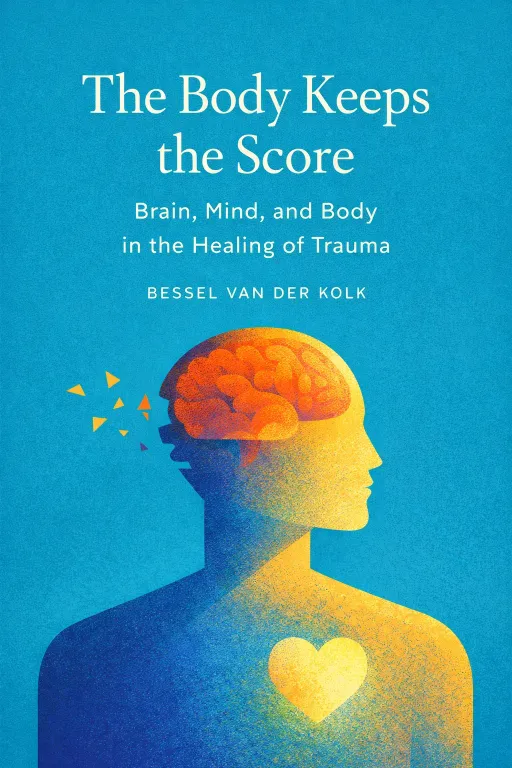
Nova: Absolutely, Atlas. And we're not just talking about external appearances here. Today, we're diving deep into 'The Embodied Mind,' a concept that asks us to reconsider the profound connection between our physical state and our mental clarity, emotional resilience, and overall impact. We're drawing insights from two groundbreaking works: 'The Body Keeps the Score' by the pioneering trauma expert Bessel van der Kolk, and 'Presence' by social psychologist Amy Cuddy, whose TED Talk on power posing became a global phenomenon.
Atlas: I know van der Kolk's work is decades of groundbreaking research into how trauma impacts the brain and body. And Cuddy’s research, I mean, everyone knows that TED Talk. She made the science of body language incredibly accessible. But honestly, Nova, for someone who's constantly strategizing, building, and trying to serve, it can feel like one more thing to manage. How do we actually bridge the gap between these powerful ideas and our daily, high-pressure realities?
The Somatic Wisdom: Unveiling the Body's Hidden Narratives
SECTION
Nova: That's the million-dollar question, isn't it? Let me ask you: have you ever felt an inexplicable knot in your stomach before a difficult conversation, or a sudden surge of energy when you're truly inspired, even if you can't quite pinpoint why?
Atlas: Oh, absolutely. I’ve definitely had those moments where my gut just something’s off, long before my brain catches up. Or that nervous flutter before public speaking, even when I'm fully prepared. It feels like my body has its own agenda sometimes.
Nova: That's exactly it! Bessel van der Kolk's extensive research, built over decades of working with trauma survivors, reveals that our bodies aren't just passive vessels for our minds. Instead, they are active participants in our emotional and psychological lives. He argues that trauma, stress, and even everyday anxieties aren't just 'in our heads'; they are literally in our tissues, our nervous system, our very physiology.
Atlas: So, when I feel that chronic tension in my shoulders after a particularly demanding week, it’s not just muscle stiffness, it could be my body 'keeping score' of all that pressure?
Nova: Precisely. Think of it like this: your body is a brilliant, silent historian. It remembers experiences, especially those that overwhelmed your capacity to cope at the time. These memories manifest as physical sensations, chronic pain, digestive issues, even changes in posture or breathing patterns. It's an internal alarm system, constantly sounding off, often below the level of conscious thought. And if we ignore those signals, or try to override them, we're missing crucial information about our own emotional landscape.
Atlas: That's fascinating, but also a bit unsettling. For someone whose work demands constant mental clarity and strategic thinking, how does ignoring this 'somatic wisdom' impact our ability to lead effectively or connect empathetically? What does 'resilience' even mean if our body is constantly sending out these distress signals?
Nova: It impacts everything. When your body is in a state of chronic alarm, even a low-grade one, it funnels resources away from higher-order thinking – creativity, empathy, long-term planning. Your brain prioritizes survival. So, that leader who feels inexplicably drained or irritable, constantly making reactive decisions? It might not be a failure of willpower; it could be their body's unacknowledged stress response hijacking their cognitive functions. True resilience, then, isn't about powering through; it's about understanding and regulating that internal system.
Atlas: But wait, when you're in a high-pressure meeting, trying to project total confidence and command a room, isn't the natural instinct to any physical discomfort? To just 'think' your way through it, to push past that nervous flutter and just deliver? That's what we're taught, right? To compartmentalize.
Embodied Presence: Leveraging Your Physiology for Impact and Confidence
SECTION
Nova: That’s an excellent point, Atlas, and it leads us directly into our second core idea, which often acts as a powerful counterpoint to what we just discussed. It's not about ignoring the body; it's about with it. What if those simple physical adjustments you make, even for a few minutes, could actually your internal state, not just your external appearance?
Atlas: You're talking about Amy Cuddy's work on 'Presence,' aren't you? The power poses. I remember the buzz around that.
Nova: Exactly. Cuddy’s research on 'Presence' shows us that our body language isn't just a reflection of our internal state; it our internal state. She demonstrated how adopting "high-power poses"—like standing tall with hands on hips, or leaning back with arms spread wide—for just two minutes can actually alter our biochemistry. We see an increase in testosterone, the dominance hormone, and a decrease in cortisol, the stress hormone.
Atlas: So, this isn't just about confident for others; it's about confident from the inside out because your body is sending different signals to your brain. That’s a game-changer for someone who needs to command a room or deliver a persuasive message. How quickly does this work? Can you really 'fake it till you become it' in that short a time?
Nova: The beauty of it is, yes, the biochemical shifts can happen surprisingly quickly. It’s like a physical cheat code for your brain. By expanding your body and taking up space, you're literally telling your nervous system, "I am safe, I am powerful." This isn't about deception; it's about leveraging a fundamental feedback loop between your physiology and your psychology. Imagine stepping into a high-stakes negotiation after two minutes in a power pose. You're not just confident; you're a genuine surge of confidence because your body has primed you for it.
Atlas: That’s incredible. I can see how that would be invaluable before a big presentation or a difficult conversation. But is this sustainable? Doesn't it feel a bit manipulative, especially for someone driven by service and genuine connection? How do we ensure this 'embodied presence' is truly authentic and not just a performance?
Nova: That's a critical distinction. It’s not about putting on an act. It’s about your authentic power. If you understand the somatic wisdom we talked about earlier—how your body stores stress—then you also understand that sometimes, your body might be holding you back from expressing your true, confident self. Power posing isn't about creating something false; it's about removing the physiological barriers that prevent your genuine presence from shining through. It's about empowering yourself to show up as the most resilient, eloquent, and empathetic version of yourself.
Synthesis & Takeaways
SECTION
Nova: So, Atlas, it comes back to that initial blind spot. It's not about choosing between mind or body. It's not about overriding your body's wisdom, but about to it, as van der Kolk teaches, and then it, as Cuddy demonstrates. True presence isn't just a mental state; it's a deeply integrated mind-body experience.
Atlas: That makes so much sense. For the strategic leader, the eloquent communicator, the empathetic guide, this means tuning into your body's signals helps you understand your true emotional landscape. And then, consciously adjusting your physical state allows you to show up with genuine, impactful presence, even when the stakes are incredibly high. It’s about being fully present, mind and body aligned.
Nova: Exactly. So, here's a concrete action for our listeners: tomorrow morning, before you dive into your day, find a private space. Spend two minutes in a high-power pose—Superman, Wonder Woman, whatever feels expansive. As you hold it, simply notice any sensations in your body without judgment. Just observe. Then, carry that awareness into your first challenging interaction.
Atlas: How might paying closer attention to your physical sensations not only deepen your understanding of your own emotions but truly enhance your presence in every interaction?
Nova: This is Aibrary. Congratulations on your growth!









