

Stop Talking, Start Leading: The Guide to Unspoken Influence.
Golden Hook & Introduction
SECTION
Nova: Many leaders believe their voice is their power, that the person who talks the most, or the loudest, is the one truly leading. But what if the most influential leaders are actually masters of silence?
Atlas: Whoa. That’s a bold statement, Nova. Because I think for a lot of us, especially those of us trying to make a real impact, we’re taught to speak up, to assert ourselves, to have a strong voice. You’re telling me that’s… not always the play?
Nova: Exactly. Today, we’re unpacking a powerful idea from "Stop Talking, Start Leading: The Guide to Unspoken Influence." It’s a guide that challenges the very foundation of how we perceive authority and influence in leadership. It suggests that true executive presence isn't about volume at all; it's about resonance.
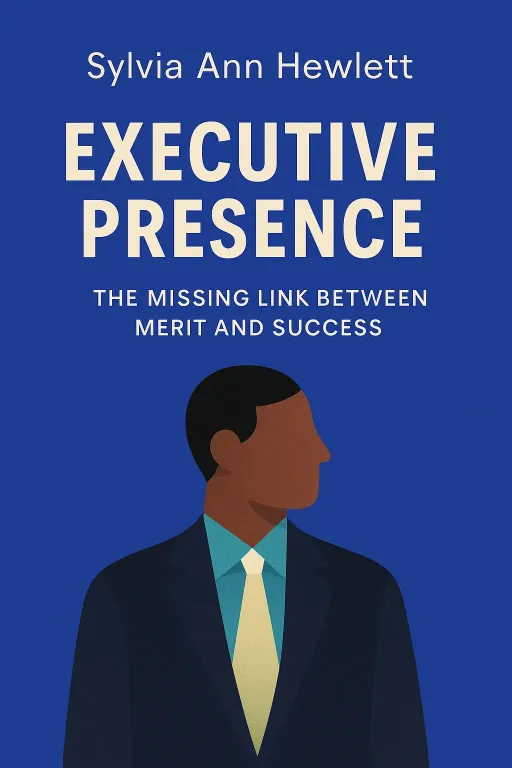
Atlas: And it draws heavily on some fascinating work, doesn't it? I’m thinking about Sylvia Ann Hewlett’s seminal research on what truly constitutes executive presence, which goes way beyond just what comes out of your mouth.
Nova: Absolutely, and we’ll also touch on Amy Cuddy’s groundbreaking insights into how our body language can literally reshape our confidence from the inside out. For anyone aiming to command attention and influence effectively, this is a profound shift in perspective.
Atlas: That makes me wonder, though. For our listeners who are strategic thinkers, who have a clear vision for impact and are driven by advancement, how does this 'unspoken influence' actually translate into tangible results? It sounds a bit… ethereal, perhaps, for someone who needs to move the needle.
The Silent Language of Leadership: Redefining Executive Presence
SECTION
Nova: That’s a great question, Atlas, and it’s precisely what Hewlett’s work begins to unravel. She details how executive presence is a powerful blend of three things: gravitas, communication, and appearance. Gravitas isn't about being the loudest voice in the room; it’s about the weight of your words when you choose to speak them, the calm authority you project.
Atlas: Okay, so it’s not just about the words themselves, but the they land?
Nova: Precisely. Think about a CEO leading a company through a crisis. They're not necessarily shouting directives. Instead, they might be the one who listens intently, asks incisive questions, and then, with a measured tone and unwavering gaze, delivers a single, clear statement that calms the entire room and sets a definitive direction. Their physical posture is open, yet firm. Their eye contact is steady, not aggressive. It’s that palpable sense of calm competence, that quiet conviction that truly resonates.
Atlas: I can see how that would be powerful. But wait, looking at this from a strategist's perspective, isn't focusing on "appearance" a bit superficial? For a results-driven leader, doesn’t that feel… less impactful than, say, a brilliant analysis or a groundbreaking strategy?
Nova: I hear you, and it’s a common misconception. Hewlett's point about appearance isn't about vanity or being perfectly dressed. It's about intentionality and consistency. It’s about ensuring your external presentation—your posture, your grooming, your overall demeanor—aligns with the message you want to send. If you walk into a high-stakes negotiation slouched and disheveled, regardless of your brilliant strategy, your unspoken message undermines your authority. It’s about congruence, making sure your non-verbal cues support your verbal message, not detract from it.
Atlas: That’s a great way to put it. So it’s not about being a fashion plate, it’s about strategic alignment. You’re saying it’s a tool to amplify your core message, rather than a distraction. And gravitas then, is really about projecting that inner calm and decisive nature, which is crucial when you’re trying to inspire and lead.
Nova: Exactly. It's about being felt, not just heard. And that naturally leads us to the second key idea we need to talk about, which often acts as a powerful, almost immediate lever for cultivating this kind of presence.
Harnessing Body Language: The Science of Internal and External Authority
SECTION
Nova: This is where Amy Cuddy’s work on power posing becomes incredibly illuminating. Cuddy explores how deliberately adopting powerful body language can actually change your internal state, boosting confidence and making you appear more authoritative. It’s a two-way street between your mind and your body.
Atlas: So you’re saying I can literally my brain into confidence just by standing differently? That sounds almost too simple for someone who’s constantly strategizing for real-world influence, where the stakes are high and the pressure is intense.
Nova: It sounds simple, but the science is compelling. Cuddy’s research suggests that adopting expansive, open postures—like standing with your hands on your hips, chest out, or arms wide—for just a couple of minutes can actually change your body chemistry. It can increase testosterone, the dominance hormone, and decrease cortisol, the stress hormone.
Atlas: Really? So, if I’m about to walk into a crucial board meeting, or deliver a presentation where I need to command attention, I could just… stand like Superman in the bathroom stall beforehand?
Nova: Precisely! Imagine Sarah, a project manager, is about to pitch a high-risk, high-reward initiative to a skeptical executive team. Her heart is pounding, she feels the familiar pre-presentation jitters. Instead of hunched over her notes, she steps into an empty office, takes a wide stance, hands on her hips, chin slightly up. She holds it for two minutes. She doesn't feel like a superhero instantly, but she notices a subtle shift: her breathing deepens, her shoulders relax a fraction, and the frantic internal monologue quietens. When she walks into that room, she’s not performing confidence; she’s a genuine, albeit subtle, boost. And that internal shift is what allows her words to land with greater impact. Her posture literally shapes her presence.
Atlas: That’s fascinating. It’s like a biological hack for leadership. But does this work for everyone, or is it just a temporary boost? Could someone, like myself, who might be naturally more reserved, really leverage this without feeling like they’re putting on an inauthentic act?
Nova: It’s not about becoming someone you’re not; it's about amplifying the best version of yourself. The "fake it 'til you become it" idea suggests that these small physiological shifts, practiced consistently, can actually lead to more profound, lasting internal changes over time. It’s a feedback loop. When you project confidence, others respond to it, which in turn reinforces your own sense of confidence. It's a powerful tool for someone who wants to own their authority and trust their voice, making their insights more valuable. Mastering these non-verbal cues allows your message to land with greater impact, making your words more potent when you choose to use them.
Synthesis & Takeaways
SECTION
Nova: So, it really comes down to this: true executive presence and leadership influence isn't about being the loudest voice, but about being the most resonant. It's about understanding that our influence extends far beyond our spoken words. It’s in our posture, our calm demeanor, our intentionality.
Atlas: So, it’s about being felt, not just heard. For our listeners who are aiming to lead with greater influence, to make a significant difference, and to cultivate that executive presence, what’s one tiny step they can take tomorrow to start cultivating this unspoken power?
Nova: The guide offers a brilliant tiny step: tomorrow, before your first meeting, take two minutes to intentionally adopt a power pose and simply notice the shift in your internal state. It’s a small, private experiment that can yield profound insights into your own capacity for influence.
Atlas: I love that. It’s a practical, actionable step that doesn’t require a grand gesture, but can start a powerful internal shift. It's about strategically leveraging the subtle to achieve the significant. That’s something any ambitious leader can implement.
Nova: Absolutely. Because ultimately, the most powerful leaders don't just speak; they emanate. They don't just instruct; they inspire through their very being.
Atlas: That’s actually really inspiring. It’s a powerful reminder that sometimes, the most profound changes start with the quietest actions.
Nova: Couldn't agree more.
Atlas: This is Aibrary. Congratulations on your growth!









