Stop Guessing, Start Measuring: The Guide to Data-Driven Digital Marketing.
Golden Hook & Introduction
SECTION
Nova: Forget gut feelings and creative genius. What if I told you the best marketing campaigns aren't born from inspiration, but from a spreadsheet and a crystal ball?
Atlas: Oh man, a crystal ball? I like that. So, are you saying all those late-night brainstorming sessions, the 'aha!' moments, the creative sparks... they're just, what, for show? Because for many strategic analysts, that creative intuition feels like a core part of the process.
Nova: Not for show, Atlas, but perhaps for context. What I'm saying is, to truly lead and innovate in digital marketing, we need to move beyond intuition. We need to leverage data to predict future trends and consumer behavior. Today, we're diving into a realm where intuition takes a backseat to hard numbers, guided by insights from Eric Siegel's "Predictive Analytics" and Mark Jeffery's "Data-Driven Marketing." What's fascinating about Jeffery is his background as a former management consultant, bringing a very practical, results-oriented lens to marketing strategy, which perfectly aligns with our listeners who are focused on real-world impact.
Atlas: Okay, so it’s not about ditching creativity, but about grounding it in something more… tangible. That makes sense for anyone who's ever had a brilliant idea totally flop because the audience just wasn't there for it. So, where do we start with this data-driven foresight?
Nova: We start with the art and science of knowing what's coming next.
Predictive Analytics: Decoding the Future of Consumer Behavior
SECTION
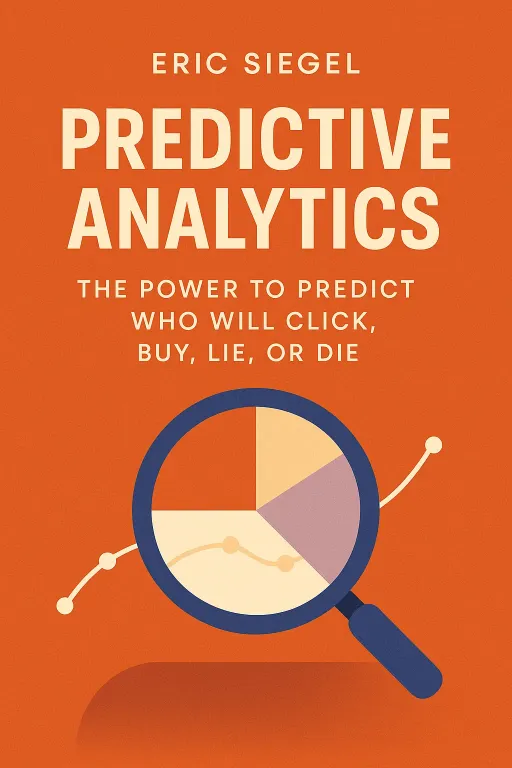
Nova: That’s right. The first big idea we’re tackling is predictive analytics. Eric Siegel, in his book "Predictive Analytics," essentially demystifies how we can use data to forecast what customers will do. It's not just about what they did yesterday, but what they're to do tomorrow. This capability is essential for optimizing campaigns, personalizing experiences, and gaining a competitive edge. Think of it like this: instead of just seeing the footprints in the sand, you're predicting where the person is going to step next.
Atlas: Wait, isn't that just a fancy way of saying "guessing better"? Because for a strategic analyst, the stakes are high. We can't just 'guess better'; we need reliable intelligence. How does this actually work without being a shot in the dark?
Nova: That’s a great question, Atlas. And it highlights the crucial distinction. We’re not talking about intuition here. We’re talking about algorithms, historical data, and statistical models. Let me give you an example. Imagine a major streaming service. They're not just recommending shows based on what you watched. They're using predictive analytics to understand your viewing patterns, your genre preferences, the time of day you watch, how long you stick with a series, and even how often you stop watching partway through an episode.
Atlas: So they’re dissecting my viewing habits, basically.
Nova: Exactly. They build a model from millions of user behaviors. The cause is this massive dataset of past actions. The process involves identifying correlations and patterns – 'users who watched X, Y, and Z also watched A, B, and C.' The outcome is a highly accurate prediction of what you're most likely to binge-watch next, or even when you might churn and cancel your subscription. This allows them to proactively suggest content, or offer a personalized incentive to keep you engaged, before you even realize you're getting bored. It transforms them from a reactive content provider to a proactive entertainment curator.
Atlas: That's a perfect example. I've definitely felt that uncanny accuracy sometimes. But for our listeners who are trying to make a significant mark in their own companies, how does this translate beyond streaming? Could predictive analytics help, say, a retail company anticipate economic shifts or even competitor moves?
Nova: Absolutely. Take a major apparel retailer. They can use predictive analytics not just for individual customer recommendations, but for inventory management. By analyzing past sales data, seasonal trends, macroeconomic indicators, and even social media chatter about fashion trends, they can predict which styles will be hot, how much stock they'll need in specific regions, and even how a competitor's new line might impact their own sales. This allows them to proactively adjust supply chains, launch targeted marketing campaigns, and even influence pricing strategies well in advance. It's about turning raw data into actionable intelligence that drives superior marketing outcomes.
Data-Driven Marketing: Measuring Impact and Optimizing Every Dollar
SECTION
Nova: And that naturally leads us to the second key idea, which often acts as the essential follow-through to prediction: data-driven marketing. Once you have these predictions, Atlas, how do you make sure your actions land with maximum impact and that every dollar spent is effective?
Atlas: That's the million-dollar question for any impact driver. Prediction is great, but without measurable results, it's just theoretical. So, what's one key difference between just 'tracking metrics' and being truly 'data-driven'?
Nova: That's a fundamental distinction, and Mark Jeffery's "Data-Driven Marketing" really drills into this. Tracking metrics is like looking at a speedometer; you know how fast you're going. Being data-driven is like having GPS, knowing where you're going, if you're on the right path, and how to adjust if you hit traffic. It’s about using data to make informed decisions and continuously optimize. The difference is intentionality and action.
Atlas: I see. So it's not just collecting numbers, but interpreting them to guide strategy. Can you give us an example where this made a tangible difference?
Nova: Of course. Consider a company running a digital advertising campaign. They might be tracking clicks and impressions. But a truly data-driven approach would involve A/B testing multiple versions of their ad copy, different images, and various calls to action. They’d be meticulously tracking which combinations lead to the highest conversion rates, the lowest cost per acquisition, and the best return on ad spend.
Atlas: Like how…?
Nova: Well, they might discover that a specific headline, even if it gets fewer initial clicks, generates significantly more sales. Or that allocating 20% more budget to Instagram stories instead of Facebook feed ads, based on conversion data, doubles their ROI for a particular product. The cause is the desire for optimal performance. The process is continuous experimentation, measurement, and adjustment. The outcome is ensuring every marketing dollar is spent effectively, not just broadly. Jeffery emphasizes moving beyond vanity metrics to those that directly tie to business objectives.
Atlas: Okay, that makes sense. It’s about accountability and proof of impact, which is huge for anyone in a leadership role. But aren't there things data measure, like brand love or true innovation? Sometimes, a campaign just right, and the data might not immediately reflect its long-term value.
Nova: That's a valid point, and it’s where the art meets the science. Data-driven marketing doesn't mean ignoring qualitative factors or creative leaps entirely. It means that even those 'feel-good' campaigns should have measurable touchpoints. For brand love, you could track social sentiment, repeat customer rates, or referral traffic. For innovation, you might track early adoption rates, engagement with new features, or even how often your new ideas are mentioned in industry publications. The goal is to find proxies in the data, even for those seemingly intangible elements, so you can still make more informed decisions and justify your investments, always striving for that competitive edge.
Synthesis & Takeaways
SECTION
Nova: So, bringing it all together, Atlas, the synergy between predictive analytics and data-driven marketing is where the magic truly happens. Predictive analytics gives us the foresight, allowing us to anticipate consumer needs and market shifts. Data-driven marketing then ensures that our response to those predictions is optimized for maximum impact and efficiency. It’s about transforming raw data into actionable intelligence, driving superior outcomes.
Atlas: That’s actually really inspiring. For someone who wants to lead and make a significant mark, and really master data's story, what's the very first 'tiny step' they should take to truly integrate this into their approach? Because theories are great, but application is key.
Nova: The tiny step is deceptively simple: identify one key marketing metric you currently track. It could be website traffic, conversion rate, email open rates—anything. Then, ask yourself: how could you use your data for that metric to predict its future movement? Start small. Look for patterns, trends, seasonality. Even a simple spreadsheet analysis can reveal insights you weren't seeing before. It’s about embracing that journey, understanding that not every step is perfect, but every step is progress towards a more proactive, data-intelligent approach.
Atlas: So, instead of just reporting on what happened, we can start to forecast what happen and then strategically act on that. That gives me chills, in a good way. It's about truly understanding the behavior, not just the numbers.
Nova: Exactly. It's about moving from reacting to responding, from guessing to knowing. And that's how you future-proof your marketing.
Nova: This is Aibrary. Congratulations on your growth!