AI in Marketing is a Trap: Why You Need Strategic Foresight.
Golden Hook & Introduction
SECTION
Nova: Most marketers are rushing to adopt AI, thinking it's their golden ticket. What if I told you that very rush is leading them straight into a strategically blinding trap?
Atlas: Whoa, Nova, that's quite the statement. A trap? Isn't AI supposed to be the ultimate competitive advantage right now? It feels like everyone's scrambling to implement it in every aspect of their business. For someone driven by competitiveness, this is the tool everyone's talking about.
Nova: Exactly, Atlas. And that's precisely where the blind spot lies. We're talking about a fundamental shift, not just another feature to bolt onto your existing strategy. It’s the difference between seeing AI as a fancy new hammer, and understanding it as a complete re-engineering of the entire construction process. Today, we're diving deep into why a superficial understanding of AI in marketing is a dangerous trap, and how embracing strategic foresight can unlock its true, transformative power for customer journeys. We'll explore the common "AI blind spot" that many marketers fall into, and then discuss how redefining AI's value through strategic foresight can fundamentally change your approach to the customer journey.
Atlas: Okay, but how does that distinction actually play out in the real world? For our listeners who are trying to master in-demand tools and quantify their impact, what does this "fundamental shift" truly entail beyond the buzzwords?
The AI Blind Spot: Beyond Tool Adoption to Fundamental Shift
SECTION
Nova: Let's look at it through a common scenario. Meet Marketing Manager Mia. Mia's company is feeling the pressure to "do AI." So, she invests in an AI-powered content generator. It's fantastic! She can churn out blog posts, social media updates, even email copy at lightning speed. Her team is more efficient, and initial metrics show a boost in output. She's thinking, "Great, I've leveraged AI, I'm ahead of the curve."
Atlas: That sounds like a win to me. Increased efficiency, more content—isn't that the goal for most marketing teams right now? For someone who values immediate application and practical guides, automating tasks like content creation feels like a no-brainer. What's the trap there?
Nova: The trap is this: Mia is treating AI as just another tool for. She's optimizing existing processes, making them faster, cheaper. But while she's busy automating, her competitors, let's call them the "Strategists," are asking a much deeper question: "How does AI fundamentally change our itself?" Mia's content is faster, but is it creating fundamentally value? Is it reshaping the customer experience in a way that’s truly innovative? Probably not. She’s still operating within the old paradigm, just with a new, faster engine.
Atlas: So, the danger isn't the AI itself, but how you its purpose. It's not about making the old ways faster, but about finding entirely new ways to operate? That resonates with anyone trying to future-proof themselves in a rapidly changing landscape.
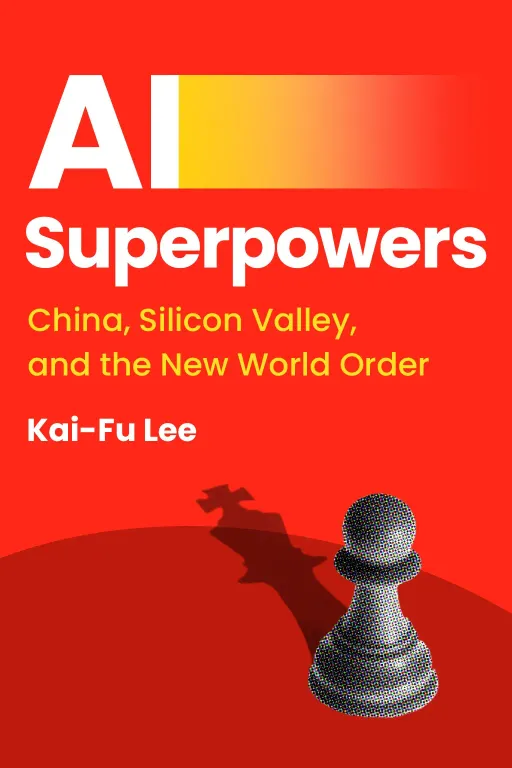
Nova: Exactly. This is what Kai-Fu Lee, a brilliant mind in the AI world, emphasizes in his work. He explains how AI is reshaping entire industries and global power structures, not just individual tasks. Mia is looking at the tree, while the Strategists are seeing the entire forest being replanted. The "blind spot" is missing these macro forces at play, focusing on micro-efficiencies while the tectonic plates underneath her industry are shifting.
Atlas: I see. So, while Mia is celebrating her increased blog post count, her competitors might be using AI to predict customer churn before it happens, or to design entirely personalized product recommendation pathways that don't even exist yet. How does Mia’s approach actually fail her customers in the long run? What are they missing out on?
Nova: Her customers are missing out on innovation. They're getting faster content, yes, but not necessarily more or experiences. Imagine a customer who consistently buys your product but is showing subtle signs of dissatisfaction across their digital footprint. Mia's automated content might still blast them with generic offers. A strategically-minded AI, however, could that dissatisfaction and trigger a proactive, personalized intervention – a tailored support message, a unique loyalty offer, or even a personalized product modification suggestion – that customer even thinks about leaving. Mia's customers get more of the same, just quicker. The Strategist's customers get a journey that anticipates their needs and evolves with them.
Strategic Foresight: Redefining AI's Value in Marketing
SECTION
Nova: This leads us directly to the antidote to the blind spot: strategic foresight, and understanding AI's true nature. This is where insights from "Prediction Machines" by Ajay Agrawal, Joshua Gans, and Avi Goldfarb become incredibly powerful. They redefine AI not just as automation, but specifically as a.
Atlas: Hold on, "prediction technology"? What does that even mean in marketing terms? Isn't all marketing trying to predict what customers want and what campaigns will work? What's the fundamental difference here between traditional market research and AI's predictive power?
Nova: That's a great question, Atlas, and it's key to understanding the shift. Traditional market research predictions from historical data and surveys. It's often slow, expensive, and based on aggregates. AI, as a prediction technology, takes vast, complex datasets – far beyond what any human could process – and with incredible speed and accuracy. It can predict micro-level behaviors: which specific customer will respond to which ad, what price point they'll accept, which product feature they'll use next, or even when they're most likely to convert. It's not just better market research; it's a new form of input for decision-making.
Nova: This redefinition helps you identify where AI creates, not just. Automation replaces human labor for existing tasks. Leverage, powered by prediction, allows you to make better, faster, and more numerous decisions, opening up entirely new possibilities.
Atlas: Okay, so the real competitive edge isn't just having AI, it's knowing to predict and to use those predictions to redefine the customer journey, not just tweak it. For someone who wants to master new tools and stay impactful, this feels like the real deep dive. Give me an example of "Strategic Marketer Sam" leveraging this.
Nova: Absolutely. While Mia is automating content, Sam is using AI to predict the for every customer at every touchpoint. Sam's AI might predict that a certain segment of customers, based on their browsing history and past purchases, is highly likely to churn within the next month unless they receive a very specific, high-value offer. Or, it might predict that combining two seemingly unrelated products will significantly increase customer lifetime value for another segment. Sam doesn't just automate emails; Sam uses AI to predict the optimal sequence of personalized interactions, product recommendations, and support interventions that guide the customer through a truly bespoke journey. This isn't just about making ads better; it's about making the entire relationship proactive and predictive.
Atlas: That's a fundamental difference. It's shifting from reacting to customer behavior to it, and then designing the entire experience around those predictions. That’s how you truly stay ahead and make an impact.
Synthesis & Takeaways
SECTION
Nova: Precisely. The fundamental question for marketers isn't "how do I use AI?" but rather, "how will AI fundamentally change my customers' journey in the next five years, beyond mere automation?" It forces you to think about entirely new value propositions, new business models, and new ways of connecting with people.
Atlas: This really means embracing the uncomfortable, doesn't it? It's about looking beyond the quick wins and dedicating specific time each week to explore these deeper shifts, even if it's just a few hours. It’s seeing change as opportunity, which is exactly what our listeners, the pragmatists and innovators, are striving for.
Nova: Indeed. The future of marketing isn't about AI replacing human intelligence; it's about intelligence amplified by AI, creating entirely new forms of value and interaction. It’s about visionary leadership, not just feature adoption. It’s about understanding that the biggest trap isn't failing to adopt AI, but adopting it without strategic foresight.
Atlas: For our listeners who are driven to stay impactful, this isn't just theory; it's a call to rethink their entire strategic playbook. What's one area in your customer journey you could start to predict, rather than just automate, this week?
Nova: A powerful question, Atlas.
Atlas: And a necessary one.
Nova: This is Aibrary. Congratulations on your growth!