

Beyond Logic: Why Emotions Drive Decisions and How to Master Them
9 minGolden Hook & Introduction
SECTION
Nova: You know, Atlas, we often tell ourselves we're these perfectly rational beings, meticulously weighing pros and cons, making decisions like human supercomputers. But what if I told you that building robust systems and cultivating thriving communities isn't just about logic and meticulously planned blueprints, but often about the very human, messy, and sometimes profoundly irrational world of emotions? We think we’re so logical, but our brains are playing tricks on us all the time.
Atlas: Whoa, hold on a second, Nova. Isn't logic, rigorous analysis, and data the absolute foundation of good design, good leadership, even good community building? If I’m architecting a complex system, I need certainty, not emotional whims. That sounds… risky.
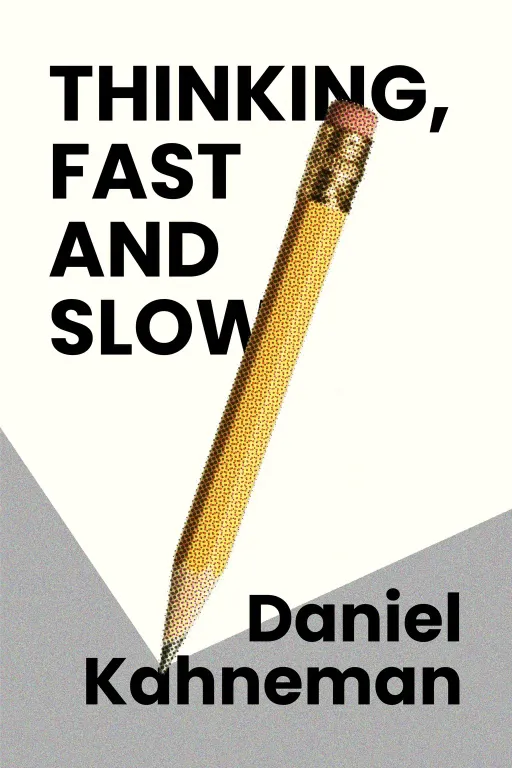
Nova: Exactly the point, Atlas! That's the blind spot we're talking about today. We're diving into two groundbreaking books that fundamentally shifted our understanding of human decision-making: Daniel Kahneman's seminal and Dan Ariely's incredibly insightful. Kahneman, a Nobel laureate in Economic Sciences, literally changed how we view economics and psychology by proving just how much our brains operate on these hidden, often illogical, biases. Ariely, through his engaging experiments, then shows us how consistently irrational we are.
Atlas: So basically, these guys are telling us our brains are kind of… unreliable? That’s going to resonate with anyone who thinks they’re making purely objective choices every day.
Nova: Precisely. The core insight from their work, and really the heart of our discussion today, is that recognizing this powerful interplay of emotion and reason isn't about despair. It's about gaining a clearer lens through which to view your own choices and those of others, leading to more informed and effective actions. It's about understanding the internal architecture of our own decision-making.
The Illusion of Pure Logic: Unmasking Emotional Drivers in Decision-Making
SECTION
Nova: Let's start with Kahneman's brilliant framework: System 1 and System 2 thinking. System 1 is fast, intuitive, emotional, almost automatic. It’s what tells you to duck when something flies at your head, or what gives you a 'gut feeling' about a person. System 2 is slow, deliberate, logical, and effortful. It’s what you use to solve a complex math problem or fill out your taxes. The critical thing is, System 1 often dominates, often without us even realizing it.
Atlas: So you’re saying that quick, intuitive reaction isn't just a shortcut, it's actually making the decision us sometimes? That’s a bit unsettling. Can you give me an example where System 1 clearly overrules System 2, especially in a context where someone might think they're being totally rational? Like, evaluating a new project or a potential hire?
Nova: Absolutely. Think about the 'anchoring effect,' a classic from behavioral economics. Imagine you're negotiating a budget for a new community initiative. If the first number mentioned, the 'anchor,' is extremely high, even if you consciously try to be rational, your subsequent counter-offers will likely be higher than if the initial anchor had been low. Your System 1 latches onto that first number, subtly influencing your entire negotiation, even as your System 2 tries to logically calculate fair value.
Atlas: That’s fascinating. It’s like when you see a "regular price" crossed out next to a "sale price," even if you know the regular price is inflated, it still makes the deal feel better. So, my initial reaction to a budget proposal, or even a salary request, is being subtly manipulated by the first number I hear, even when I I’m being objective?
Nova: Exactly! Or consider what Ariely calls 'predictably irrational' behavior. He did an experiment where he offered students a subscription to The Economist: an online-only for $59, a print-only for $125, and a print-and-online bundle for $125. Most people chose the bundle. But when he removed the 'print-only for $125' option—which was effectively useless because you could get print online for the same price—the bundle became less popular, and the online-only became more popular.
Atlas: Wait, so just by having a option on the table, it made the more expensive bundle seem like a better deal? That’s wild. That means our decisions aren't just about the intrinsic value of an option, but how it's presented in relation to other choices, even the bad ones.
Nova: Precisely. Our System 1 is quick to make relative comparisons, and it's easily swayed by context. We don't evaluate things in isolation. This is why understanding these patterns allows for better personal and professional choices. It’s not that you're for having a gut feeling; it’s about understanding that gut feeling might be leading you in a certain direction without a full logical assessment.
Atlas: I see. So it’s not always about our gut feeling being, but rather that it’s often by things we don't consciously perceive. That’s a crucial distinction for anyone trying to build something sustainable. You need to know if your foundation is truly solid or if it’s built on a cleverly framed illusion.
Mastering the Interplay: Leveraging Intuition and Logic for Better Outcomes
SECTION
Nova: Understanding these biases isn't about despair, Atlas; it's about empowerment. It's about learning how to use both systems effectively. The goal isn't to eliminate emotion or intuition, but to recognize when System 1 is likely to lead us astray and how to consciously engage System 2 more deliberately.
Atlas: For someone like me, who's always thinking about building robust systems and cultivating communities, relying on 'gut' feels like a huge risk. How do you actually intuition when the stakes are high, but still avoid those predictable biases? It feels like a tightrope walk. You recommend trusting intuition as much as data, but how do you do that without falling into one of these irrational traps?
Nova: That's the art of it. It's about a conscious integration. Take the example of top chess players or experienced firefighters. In high-pressure situations, they often make lightning-fast, intuitive decisions that appear miraculous. But that intuition isn't random; it's System 1 operating on a vast database of learned patterns and experiences. Their System 2 has trained their System 1.
Atlas: So, it's not blind intuition, but informed intuition. It’s like an experienced architect who can glance at a blueprint and if something is off, not just logically verify it. That 'feeling' comes from years of building, of seeing what works and what doesn’t.
Nova: Exactly! A great leader might have an intuitive sense that a new market strategy will fail, even if the initial data looks promising. An inexperienced leader might dismiss that 'gut feeling.' A seasoned leader, however, would that intuition to prompt a deeper System 2 analysis: "My gut tells me something's off here. Let's dig deeper into these specific assumptions, let's stress-test this part of the data." They don't ignore the intuition; they use it as a signal to engage their deliberate thinking.
Atlas: That makes perfect sense. So, it's about using the intuition as a flag, not the final answer. It triggers the deeper dive, the more structured investigation. But how do we cultivate that balance in our daily decision-making, especially when you're under pressure to make quick calls in a fast-paced environment?
Nova: One powerful way is through intentional reflection. It’s about creating space to review your decisions, both the good and the bad. Ask yourself: When did my gut feeling lead me in the right direction? What data later confirmed it? And when did my intuition mislead me? What logical analysis could have prevented that?
Synthesis & Takeaways
SECTION
Nova: So, the real mastery comes not from favoring logic over emotion, or intuition over data, but from acknowledging the power and pitfalls of both. The goal isn't to eliminate emotion from our decisions, which is impossible, but to understand its profound influence so we can guide it, question it, and ultimately, leverage it. It's about making our irrationality predictable to ourselves, so we can then build more robust and resilient decision-making processes.
Atlas: That’s actually really inspiring. So, it’s not about ignoring your gut, but about giving it a proper interrogation. It’s about building a stronger relationship between the intuitive and the analytical parts of your brain. For those of us who are architects and cultivators, constantly trying to build lasting value, this isn't just theory; it’s a foundational skill.
Nova: It truly is. And this brings us right back to a core recommendation for our listeners: dedicate 15 minutes daily to reflective journaling. This isn't just about processing daily events; it’s a dedicated practice for observing your own decision-making. It helps you track when your intuition served you well, when your logic was flawed, and how the two interacted. It’s how you train your System 1 to be more accurate and your System 2 to be more discerning. It’s how you build that inner compass for sustainable growth and connection.
Atlas: That’s a powerful, concrete action. It’s about intentionally sculpting your own mental architecture, isn't it? Processing the wins, processing the lessons, and learning from the interplay.
Nova: Absolutely. It transforms how you approach every choice, from the smallest daily task to the biggest strategic pivot. It helps you build systems that are not just logically sound, but deeply human-centered and resilient.
Nova: This is Aibrary. Congratulations on your growth!









