

Unpacking Behavioral Economics: Beyond Rationality
Golden Hook & Introduction
SECTION
Nova: Atlas, I've got a quick game for you. I'm going to say a seemingly straightforward decision, and you tell me the first irrational thought that pops into your head about it. Ready?
Atlas: Oh, I love these! Lay it on me, Nova. I'm ready to embrace my inner chaos.
Nova: Alright, buying coffee. Specifically, a fancy latte.
Atlas: Oh, man. My first irrational thought is, "It's only five dollars, that's practically free if it makes me happy." Even though I know five dollars every day adds up to a small fortune by the end of the month.
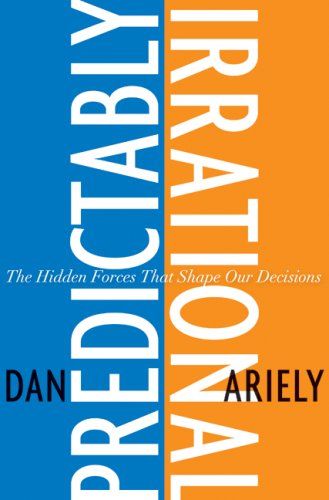
Nova: Exactly! That's the perfect illustration of what we're diving into today. We're talking about the brilliant, often mind-bending work of Dan Ariely, specifically his groundbreaking book, "Predictably Irrational: The Hidden Forces That Shape Our Decisions."
Atlas: That's a classic! I remember when it first came out, it just blew open so many conversations about human behavior.
Nova: It absolutely did. Ariely wasn't just some academic making abstract claims; he's a behavioral economist who, after a severe burn accident, experienced firsthand how pain and decisions are shaped by context, not just pure logic. That personal journey really informed his research, giving it a deeply empathetic and practical edge. His work has been widely acclaimed as a cornerstone of behavioral economics.
Atlas: That's a great way to put it. It feels less like a dry economic textbook and more like a user manual for our own quirky brains.
The Myth of Rationality
SECTION
Nova: And that's exactly where we start with our first big idea: the myth of rationality. For a long time, traditional economics built its models on the idea that humans are rational agents. We weigh pros and cons, calculate utility, and always make the choice that maximizes our self-interest.
Atlas: Right, the 'Homo Economicus' – this perfect, logical robot who always makes optimal decisions. I can see how that's a neat framework for theory, but it just doesn't feel like real life.
Nova: It really doesn't. Ariely, along with other pioneers like Richard Thaler, showed us that our irrationalities aren't random deviations from this perfect logic. They're systematic, predictable patterns. We consistently make the same types of mistakes over and over again. Think about the decoy effect.
Atlas: Oh, the decoy effect! I've fallen for that so many times.
Nova: It’s fascinating, isn't it? Imagine you're at the movie theater, and you have two popcorn options: a small for $3 and a large for $7. Most people might go for the small, thinking the large is too expensive. But what if they introduce a medium for $6.50?
Atlas: Okay, so now I have a small for $3, a medium for $6.50, and a large for $7.
Nova: Precisely. Suddenly, that large for $7 looks like an incredible deal compared to the medium for $6.50. The medium, the "decoy," makes the large appear far more attractive, even though your original preference might have been for the small. You're predictably nudged towards the more expensive option.
Atlas: That's incredible. It's like my brain is being tricked, but it doesn't even realize it. It's not that I randomly decided I wanted a large popcorn, it's that the options were presented in a way that me want the large.
Nova: Exactly! And it's not just popcorn. Think about subscription models, product tiers, or even how job offers are structured. Companies understand these predictable irrationalities and design their offerings around them. Another classic is the power of free.
Atlas: Oh, I've seen that in action. "Buy one, get one free!" or "Free shipping!" It's like my brain just shuts off all logical processing at the word 'free.'
Nova: It's powerful because "free" isn't just a price point; it's an emotional hot button. Ariely demonstrated this with an experiment involving Hershey's Kisses and Lindt truffles. If a Lindt truffle was 15 cents and a Hershey's Kiss was 1 cent, most people would choose the truffle because it's a much better perceived value.
Atlas: Makes sense. A Lindt truffle is definitely worth 15 times a Hershey's Kiss.
Nova: But if you drop the price by one cent for both, so the Lindt truffle is 14 cents and the Hershey's Kiss is free? Suddenly, everyone flocks to the free Hershey's Kiss. The perceived value of the truffle hasn't changed much, but the allure of "free" is so strong it overrides our rational assessment of quality and value.
Atlas: Whoa. So it's not even about the absolute cost, but the psychological trigger of zero cost. That’s a bit out there, but it makes so much sense when you think about how we react to promotions. So, you’re saying that these aren't just random quirks, but deep-seated patterns in how our minds work?
Nova: Absolutely. They're hardwired. And this understanding is profound because it means we can start to predict where people will stumble, where they'll make suboptimal choices, and crucially, why. It's not about judgment; it's about understanding the actual operating system of human decision-making.
Designing for Human Imperfection
SECTION
Nova: Which brings us to our second big idea: designing for human imperfection. If our choices are so easily influenced, and our irrationalities are predictable, what responsibility do we have as strategic analysts, as designers, as leaders, to design systems that guide users towards their long-term well-being?
Atlas: That's a deep question. It moves beyond just understanding human flaws to actively doing something about them. It’s like, once you know how the brain works, you can either exploit it or empower it.
Nova: Exactly. Thaler, another giant in behavioral economics, who actually won a Nobel Prize for his contributions, has championed the idea of "nudge theory." It's about subtly altering the environment to influence behavior without restricting choices. Think about the default option.
Atlas: Default options. Like when you sign up for a new service, and a certain setting is already checked, or you're automatically enrolled in something.
Nova: Precisely. Organ donation rates, for example, vary wildly between countries. In some countries, you have to opt-in to be an organ donor, and rates are low. In others, you're automatically an organ donor unless you opt-out, and rates are significantly higher. The choice is the same, but the default changes everything.
Atlas: That's a perfect example. I imagine a lot of our listeners, who are strategic analysts, see how powerful that could be in product design or policy. If you want people to save more for retirement, you make the default option automatic enrollment in a savings plan, rather than requiring them to actively sign up.
Nova: It’s about recognizing that people often stick with the path of least resistance. Or consider calorie labeling in restaurants. Simply providing nutritional information often doesn't change behavior much because people aren't rational calorie calculators in the moment. But if you put the calorie count right next to the price on the menu, making the information more salient and easy to process, it can subtly shift choices toward healthier options.
Atlas: That’s a great way to put it. It’s not about taking away the cheesecake, it’s about making the salad look a little more appealing without even saying a word. This also makes me wonder about ethical marketing. Is there a line between nudging people towards well-being and manipulating them?
Nova: That's the core ethical dilemma, and it's a crucial one. Behavioral economics isn't inherently good or bad; it's a tool. The responsibility lies with the designer. A well-designed system, like the organ donation example, respects autonomy while subtly guiding towards a socially beneficial outcome. A manipulative system, however, might leverage these same insights to exploit biases for short-term profit, potentially at the expense of long-term well-being.
Atlas: So it’s about transparency and intent, then. Are you designing to help people make better choices for themselves, or for your bottom line at their expense?
Nova: Exactly. It's about designing for real humans who have predictable flaws, rather than for the idealized rational agents of economic theory. It requires empathy, foresight, and a commitment to positive impact. If you're designing a new product or a marketing campaign, you shouldn't just think, "How would a perfectly rational person react?" You should ask, "How would a real human, with all their biases and shortcuts, actually behave?"
Atlas: That’s such a hopeful way to look at it. It means we can use this knowledge to build better systems and make the world a little more user-friendly for human beings.
Synthesis & Takeaways
SECTION
Nova: So, what we've really explored today is how understanding our predictable irrationalities, as illuminated by groundbreaking thinkers like Dan Ariely and Richard Thaler, isn't just an academic exercise. It's a crucial lens for understanding ourselves and for designing a world that genuinely supports human flourishing.
Atlas: That’s a really powerful thought. It means moving beyond a simplistic view of human nature and embracing its beautiful, messy complexity. And then, once you understand that complexity, using it to build something better. It’s not about fixing humans, but about making the world fit humans better.
Nova: Precisely. It’s about leveraging these insights to create systems where the easy choice is also the good choice, or at least a better one. It's about recognizing that our environment shapes our decisions far more than we often realize, and that gives us incredible power to design for positive impact.
Atlas: And that’s going to resonate with anyone who wants to connect their deep dives to tangible applications, because this is the ultimate bridge between theory and practice.
Nova: Absolutely. It’s a profound insight that has the potential to transform how we approach everything from personal finance to public policy. It truly provides lasting intellectual value and life insights.
Atlas: This is Aibrary. Congratulations on your growth!