

Mapping the Terrain of Influence: The Science of Guiding Others
Golden Hook & Introduction
SECTION
Nova: Atlas, I was thinking about how often we're trying to guide someone, whether it's a mentee, a colleague, or even just our kids. And it hit me: so much of what we do is reactive. But what if we could actually for success long before we utter a single word?
Atlas: Oh, I like that, Nova. I imagine a lot of our listeners, especially those deeply invested in guiding others, feel that pull. It's like, you prepare your message, you know your stuff, but sometimes it just… doesn't land. You're talking about something beyond just the words themselves, aren't you?
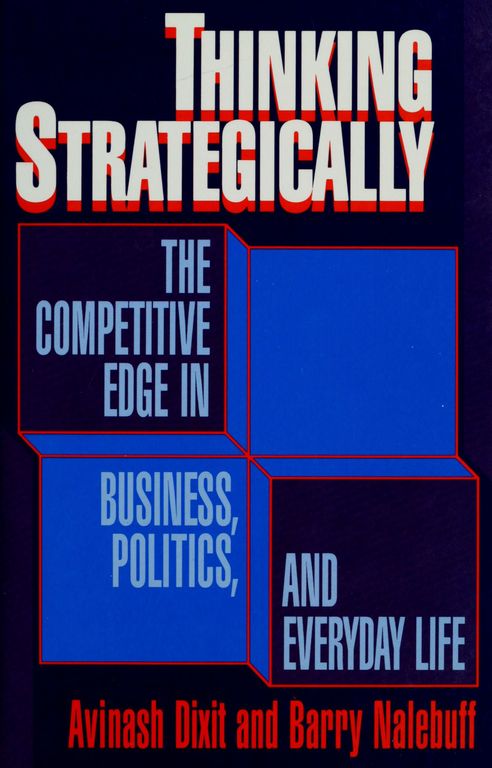
Nova: Exactly! It’s about the invisible architecture of influence. And today, we’re unpacking two brilliant works that lay out this terrain: “Thinking Strategically: The Competitive Edge in Business, Politics, and Everyday Life” by Avinash K. Dixit and Barry J. Nalebuff, and then we’re diving into the revolutionary “Pre-Suasion: A Revolutionary Way to Influence and Persuade” by the renowned psychologist Robert Cialdini.
Atlas: Cialdini, now that name rings a bell. Didn’t he have that groundbreaking book on influence that basically defined an entire field?
Nova: He absolutely did. Cialdini is a titan in social psychology, and 'Pre-Suasion' builds on decades of his research, including his earlier, highly acclaimed work that introduced the six principles of persuasion. He’s spent his career studying why people say 'yes,' often by embedding himself in sales organizations and observing real-world tactics. His approach is rooted in rigorous academic study, but his books are known for being incredibly accessible and practical, which is why they’ve resonated with millions.
Atlas: That’s a great way to put it. So, Cialdini is giving us the 'before the pitch' playbook, but you mentioned 'Thinking Strategically' first. What’s the connection there? Are we talking about two sides of the same coin?
Nova: In a way, yes. We’re starting with Dixit and Nalebuff because before you even about pre-suading someone, you need a strategic mindset. You need to understand the game you’re playing, the players involved, and how to anticipate their moves. It’s the competitive edge, as they say, for everything from business deals to even how you navigate a family discussion.
The Strategic Mindset: Game Theory in Everyday Life
SECTION
Atlas: Okay, so 'game theory' sounds a bit… academic. Like something for economists or chess masters. How does this apply to someone who’s focused on guiding journeys or empowering others, as many of our listeners are?
Nova: That’s a fantastic question, and it’s precisely what Dixit and Nalebuff demystify. They show that game theory isn't just for geopolitical strategists; it's a lens through which to view interaction where your outcome depends on the choices of others, and their choices depend on yours. Think of it as mapping the decision landscape.
Atlas: So you're saying every conversation, every mentorship session, every leadership decision is a kind of 'game'?
Nova: In essence, yes. Not a manipulative game, but a strategic interaction. For example, they introduce the concept of 'thinking forward, reasoning backward.' This is where you imagine the end result you want, and then you trace back all the steps, anticipating the choices others will make at each juncture, to figure out your optimal first move.
Atlas: That’s actually really inspiring. It means you’re not just reacting; you’re proactively shaping the future. Can you give us an example of how this 'thinking forward, reasoning backward' plays out in a real-world scenario?
Nova: Absolutely. They use a brilliant example: a parent trying to get their child to eat vegetables. The parent's goal is for the child to eat the broccoli. If the parent just it, the child might refuse, leading to a standoff. But if the parent thinks forward: 'If I demand, the child might refuse. If I offer a dessert only after vegetables, the child might eat them to get the dessert.' Reasoning backward, the parent realizes the best first move isn't a demand, but setting the conditions. Offer the dessert on the broccoli.
Atlas: Oh, I see! So it's like creating a scenario where the other person's self-interest aligns with your desired outcome, without them even feeling forced. It's not about winning against them, but winning them.
Nova: Exactly! Dixit and Nalebuff emphasize that it's about understanding incentives and information. They talk about the 'prisoner's dilemma,' which is a classic game theory problem where two individuals acting in their own self-interest don't produce the optimal outcome. But in real life, you can design interactions to such dilemmas. A mentor, for instance, might anticipate a mentee’s reluctance to take on a challenging task. Instead of just assigning it, the mentor frames it as a unique growth opportunity that will unlock future possibilities the mentee values.
Atlas: That makes me wonder, how does this game theory approach help with ethical leadership? Because 'strategic thinking' can sometimes sound a bit cold or manipulative.
Nova: That's a critical distinction. Dixit and Nalebuff stress that game theory is a tool for understanding, not necessarily for exploitation. A good strategist uses it to foster cooperation, build trust, and ensure all parties benefit. For instance, understanding the 'first-mover advantage' might mean you strategically offer a partnership deal that’s so attractive, others can't refuse, creating a win-win before anyone else even gets to the table. It's about designing better interactions, not just dominating them.
Atlas: So it's about being proactive and designing the game, rather than just playing the hand you're dealt. That’s a profound shift for anyone in a leadership role.
Nova: Precisely. It’s about being the architect of the interaction, rather than just a participant. And this strategic foresight, this ability to think several moves ahead, naturally leads us to our next big idea: pre-suasion. Because once you know the game you want to play, how do you set the stage so everyone is receptive to your opening move?
Pre-Suasion: Setting the Stage for Influence
SECTION
Atlas: Okay, so if Dixit and Nalebuff teach us to play the game strategically, Cialdini's 'Pre-Suasion' sounds like he’s teaching us how to before the game even begins. Is that right?
Nova: That’s a perfect analogy, Atlas. Cialdini’s core insight is that the moment you deliver your message is the most crucial time to influence effectively. He argues that what you say or do your message can dramatically change how receptive someone is to it. It’s about directing attention to a concept that makes your message seem more important or valid.
Atlas: Wait, so it’s not about you say, but the fleeting moment you say it? That sounds a bit out there. Can you give an example of this 'pre-suasion' in action?
Nova: Think about an online furniture store. Cialdini recounts a study where visitors to the site were asked to rate furniture. Half the visitors first saw a pop-up with fluffy clouds as the background image. The other half saw a pop-up with coins. The result? Those who saw the clouds were more likely to prioritize comfort and choose softer, more expensive sofas. Those who saw coins prioritized price and opted for cheaper alternatives. The background image, a 'pre-suasive' element, shifted their focus before they even looked at the furniture.
Atlas: That’s incredible! So, if I’m a mentor trying to encourage a mentee to embrace a challenging opportunity, I shouldn’t just jump into the opportunity itself. I should somehow prime them for 'challenge' or 'growth' beforehand?
Nova: Exactly! Cialdini talks about 'privileged moments' – those moments right before a message is delivered when the audience is uniquely receptive to it. For a mentor, this might mean starting a conversation by sharing a story of resilience or a past success that came from overcoming a significant hurdle. You're not talking about the mentee's challenge, but you're activating the concept of 'overcoming' in their mind.
Atlas: So basically you’re saying, if I want someone to be open to a new idea, I might first ask them about a time they successfully adapted to change. Or if I want them to be creative, I might start by talking about innovation.
Nova: Precisely. You’re not overtly persuading them; you're subtly guiding their attention to a concept that makes your subsequent message more compelling. Another powerful pre-suasive technique is 'self-suasion,' where you ask a question that leads someone to persuade. For instance, instead of saying, "You should really focus on personal growth," you might ask, "How important is personal growth to you in your career?" By answering, they affirm the importance to themselves.
Atlas: That’s a great way to put it. That’s not manipulative; that’s empowering. It sounds like pre-suasion, when used ethically, is about helping people align with their own values, or guiding them to a mental state where they are more open to beneficial ideas.
Nova: Absolutely. Cialdini is very clear that these are ethical tools. He’s not advocating for deception, but for understanding how human psychology works so you can communicate more effectively and empathetically. For someone who guides journeys, this is gold. You're not just telling people where to go; you're illuminating the path and preparing them to see its value.
Atlas: And the intersection of these two books is fascinating. First, you strategize the optimal path, then you use pre-suasion to ensure the person is ready and receptive to walk that path with you. It’s like being a master architect and a master landscaper, all rolled into one.
Nova: You’ve hit the nail on the head. One maps the terrain, the other cultivates the soil. Together, they provide an incredibly powerful framework for anyone looking to genuinely influence and empower others.
Synthesis & Takeaways
SECTION
Atlas: This has been incredibly insightful, Nova. I’m thinking about how many times I’ve approached a conversation just focusing on I’m going to say, and completely overlooking the strategic context and the pre-suasive elements.
Nova: It’s a common oversight, but once you see it, you can’t unsee it. The strategic foresight from Dixit and Nalebuff helps you design the interaction for optimal outcomes, anticipating moves and counter-moves. And Cialdini’s pre-suasion gives you the tools to create that 'privileged moment,' where your audience is already leaning towards your message before it’s fully delivered.
Atlas: So, for our listeners who are keen observers, strategic thinkers, and empathetic mentors, what’s one concrete takeaway? What’s a tiny step they can take this week to apply these big ideas?
Nova: Before your next important conversation, whether it’s a mentorship discussion, a team meeting, or even a difficult personal chat, take five minutes. First, think forward and reason backward: What’s the ideal outcome, and what steps would the other person need to take? Then, consider the 'pre-suasive' element: What concept or idea, if activated in their mind your actual message, would make them most receptive to it?
Atlas: That’s actionable. It’s about being intentional, not just reactive, and understanding the deeper psychology at play. It really reframes influence not as a push, but as a thoughtful, guided journey.
Nova: Absolutely. It transforms communication from a simple exchange of words into an art of guiding attention and shaping perception, ultimately leading to more impactful and empathetic interactions.
Atlas: That’s such a hopeful way to look at it. This is Aibrary. Congratulations on your growth!