

Beyond the Surface: The Psychology of Manipulation & Persuasion
Golden Hook & Introduction
SECTION
Nova: Atlas, five words to describe the combined insights from 'Games People Play' by Eric Berne and 'Pre-Suasion' by Robert Cialdini? Go!
Atlas: Okay, five words... I'd say: Mind-bending, insightful, unsettling, empowering, essential.
Nova: Ooh, 'unsettling' and 'empowering' in the same breath. That's a perfect tension for today's topic. Because we are diving deep beyond the surface, into the psychology of manipulation and persuasion, through the lenses of two absolute giants.
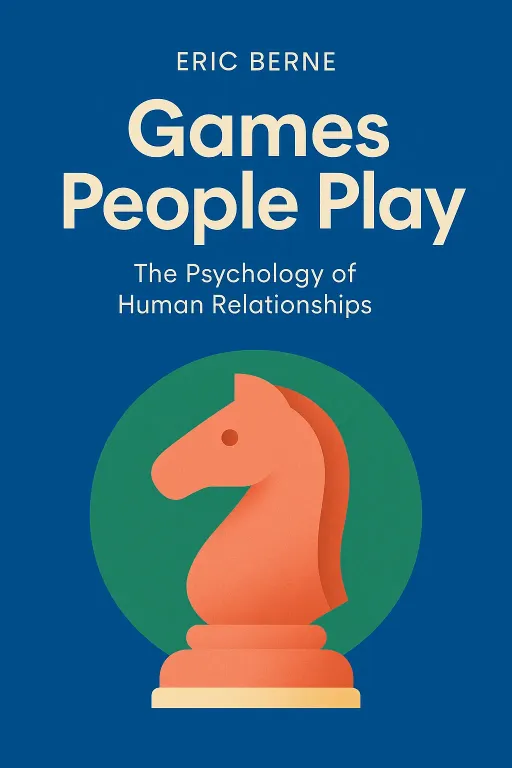
Atlas: Absolutely. We're talking about Eric Berne's foundational work, 'Games People Play,' and Robert Cialdini's revolutionary 'Pre-Suasion.'
Nova: What's fascinating about these two authors is their unique paths to these profound insights. Berne, a psychiatrist, developed Transactional Analysis after observing these almost theatrical, repetitive patterns—these 'games'—in his patients' interactions. He saw how deeply rooted they were, often unconsciously stemming from childhood experiences.
Atlas: And Cialdini, a social psychologist, took a completely different route. He spent years infiltrating actual sales organizations, undergoing their training, working undercover, to understand real-world persuasion from the inside out. His insights are incredibly practical because they come from the trenches, not just the lab.
Nova: Exactly! These two books, though distinct in their origins and immediate focus, converge on a critical point: to truly understand influence, you have to look beyond the obvious. You have to peer into the psychological undercurrents and the subtle setups that often precede any overt attempt at persuasion.
Atlas: It's like they're giving us the blueprints to the hidden architecture of human interaction.
The Unseen Architects of Influence: Unpacking Interpersonal Games and Pre-Suasion
SECTION
Nova: Precisely. Let's start with Berne and these 'games.' When he talks about 'Games People Play,' he's not talking about board games. He's talking about a series of ulterior transactions, often unconscious, that lead to a predictable outcome, a 'payoff,' that serves a hidden psychological purpose for one or both players.
Atlas: Wait, so you're saying a lot of our conversations aren't genuine exchanges, but rather these pre-set 'scripts' we're running? That sounds... a little cynical, actually.
Nova: It can sound that way, but it's more about awareness than cynicism. Berne introduced Transactional Analysis, which views our personality as having three 'ego states': Parent, Adult, and Child. We shift between these states, often unconsciously, and games arise when we engage in crossed transactions, especially from a Child or Parent state, seeking a particular emotional payoff.
Atlas: Can you give us an example? Because 'Parent-Adult-Child' sounds a bit abstract.
Nova: Of course. One classic is 'Why Don't You—Yes But.' Imagine someone complaining about a problem: "I really need to get fit, but I just don't have time to go to the gym."
Atlas: Oh, I know this one. Someone, usually me, tries to offer solutions. "Why don't you try home workouts? Why don't you just wake up earlier?"
Nova: Exactly! And the 'player' responds, "Yes, but I don't have the equipment," or "Yes, but I'm not a morning person." No matter what solution you offer, they find a 'yes, but.' The 'payoff' for the person complaining is often to prove that no one can help them, reinforcing a victim identity, or perhaps to simply avoid taking action while still getting attention.
Atlas: So the 'game' isn't about solving the problem; it's about the interaction itself and the hidden psychological reward. That's actually quite unsettling when you think about it in professional settings. You see this in team meetings where someone consistently shoots down ideas, not because they're bad, but because the 'game' is about maintaining a certain power dynamic or avoiding responsibility.
Nova: It's everywhere once you start looking. And that brings us to Cialdini's concept of 'pre-suasion,' which is about shaping people's receptivity to a message it's even delivered. It's the art of getting people to say 'yes' to your message before they even hear it.
Atlas: Okay, so Berne is about the internal scripts, and Cialdini is about the external setup. How does Cialdini's 'pre-suasion' work in practice? Like how do you 'pre-suade' someone?
Nova: Cialdini gives a brilliant example. He talks about a furniture store that wanted to boost sales of expensive sofas. Instead of just telling customers about the quality, they instructed their salespeople to ask, "What's most important to you when buying furniture: quality or price?"
Atlas: Most people would probably say 'quality.'
Nova: Precisely. And by getting them to focus on 'quality' upfront, they were 'pre-suaded.' When they then saw the higher-priced, high-quality sofas, they were already primed to value quality over price, making them more receptive to the higher-end options. The question itself made them internally align with a preference, setting the stage for the sale. The environment, the preceding question, reshaped their mindset.
Atlas: That's incredibly subtle. It's not manipulation in the overt sense, like twisting arms, but it's definitely guiding someone's thought process without them fully realizing it. It's almost like setting the emotional and cognitive stage before the main act. So, for a strategist, this is gold, but it also raises questions about ethical boundaries.
Empowerment Through Awareness: Navigating Influence with Integrity
SECTION
Nova: And that's exactly where the 'empowering' part comes in. Understanding these mechanisms isn't about learning how to manipulate; it's about recognizing when you're being influenced and, more importantly, how to use these insights to foster more authentic and productive relationships. It's about navigating influence with integrity.
Atlas: But how does someone actually a 'game' in real-time, or realize they're being 'pre-suaded'? It sounds like these things are designed to be invisible.
Nova: They are, by their very nature. But the tiny step here is observation. Next time you're in a conversation, listen not just to the words, but to the of the interaction. Are you offering solutions only to have them rejected? Are you feeling a familiar frustration? That's a sign a 'game' might be afoot. Or, when someone asks you a seemingly innocuous question before a pitch, ask yourself: 'Why did they ask me that? What are they trying to get me to focus on?'
Atlas: So, it's about stepping back for a moment and analyzing the meta-communication, the interaction the interaction. For someone who values deep understanding, that kind of self-awareness could be incredibly powerful.
Nova: It is. When you recognize a 'game,' you can choose not to play. You can respond from your Adult ego state, acknowledging the feeling but not engaging in the pattern. This disarms the game and opens the door for genuine communication. For example, instead of offering another solution in 'Why Don't You—Yes But,' you might say, "It sounds like you're feeling really stuck right now. What would feel most helpful to you?"
Atlas: That's a complete shift in dynamic. It moves from a reactive 'game' to a proactive, empathetic engagement. But what about pre-suasion? If I'm aware of it, how does that help me, beyond just protecting myself?
Nova: It empowers you in two ways. Firstly, it makes you incredibly resilient to undue influence. You become a critical consumer of information, aware of how your attention is being directed. Secondly, if you're someone who wants to genuinely influence for good—to lead a team, to inspire change, to build strong relationships—you can use these principles ethically.
Atlas: Like, instead of just presenting facts, you could ethically pre-suade your team by asking them what outcomes they most desire from a project, before you even propose your solution?
Nova: Exactly! You're aligning their internal values with your message, not covertly manipulating them. It's about creating a receptive environment based on shared values and genuine intent. The healing moment here is finding liberation in understanding these psychological undercurrents. It allows you to engage with greater awareness and integrity, fostering authentic connections instead of falling into old patterns. You’re not just influencing; you’re building trust on a deeper level.
Synthesis & Takeaways
SECTION
Nova: So, whether we're talking about Berne's games or Cialdini's pre-suasion, the core insight is that human interaction has these hidden layers. It's not always about what's said, but what's unsaid, what's implied, and what's set up before the conversation even begins.
Atlas: And for the strategist, the inquirer, the polished performer—the person who wants to master influence—this is profound. It's not just about learning tactics, but about understanding the very fabric of human decision-making and interaction. It's about moving from reacting to consciously creating.
Nova: When you lift the veil on these processes, you gain a kind of superpower. The liberation isn't just in avoiding being played; it's in the profound understanding of human nature that allows you to connect more deeply, lead more effectively, and build relationships founded on genuine awareness. It's about choosing integrity over manipulation.
Atlas: That's an incredible thought. So, for our listeners, how might an awareness of these subtle forms of manipulation empower you to foster more authentic and productive relationships in your own life? What 'games' have you seen or played?
Nova: We'd love to hear your thoughts on that. This is Aibrary. Congratulations on your growth!